



When Najannguaq Hegelund lived in Denmark, Greenland’s seemingly unshakeable safety was a comforting source of reassurance. In times of global instability, she would joke with her family, “Well, we will just go to Greenland, nothing ever happens in Greenland.” However, the past two weeks have shattered that perception. U.S. President Donald Trump has repeatedly threatened military action on the largely autonomous Arctic territory, claiming he “needs” Greenland for national security purposes, despite its status as part of the Danish kingdom.
“Look where we are today,” Hegelund, 37, says incredulously. “It’s just so crazy.” Like many of Greenland’s 57,000 residents, she finds herself worrying about evacuation plans in case of a U.S. invasion and fielding questions from her children about becoming American. Others have been watchful of the skies and seas around Greenland, tracking U.S. planes on flight trackers and discussing plans on how best to respond if captured. Anxiety and sleep struggles have become common.
Historical Context and Present Concerns
Greenland has never faced a situation like this. “How do you deal with it when you haven’t experienced anything like that, at all, at any point in history?” Hegelund asks. Almost exactly a year ago, Trump talked about acquiring Greenland by military force if necessary. Back then, the mood in Nuuk was more lighthearted and skeptical. Today, many are openly alarmed, seeking practical advice from authorities. The big difference now, Hegelund notes, is the precedent of Venezuela.
The prospect of a high-stakes meeting in Washington between Greenlandic and Danish foreign ministers and the U.S. Secretary of State has brought some relief. However, the involvement of U.S. Vice-President JD Vance, who previously stated the critical need for U.S. control of Greenland, adds a worrying unknown quantity.
Local Reactions and Global Implications
Trump’s renewed desire to take Greenland has made headlines worldwide, prompting fraught statements from European leaders and dramatic social media content. Yet for most residents, this is existential. If U.S. troops were to arrive in Nuuk tomorrow, many Greenlanders feel powerless. “What could we do?” Hegelund asks. “We are like 20,000 in Nuuk. How are we going to go against American troops?”
Joint Arctic Command (JAC), the Danish military forces tasked with protecting the kingdom’s sovereignty in the Arctic, has run preparedness courses for young Greenlanders in response to the region’s heightened security situation. Still, many say they lack basic information on what to do in case of invasion.
Hedvig Frederiksen and her daughter, Aviaja Fontain, have taken Greenland’s surveillance upon themselves. “It’s scary,” says Fontain, struggling to focus on her university exams. Frederiksen, who uses flight trackers, recently got a scare when she spotted a Hercules plane leaving Pituffik and thought it was coming to Nuuk to invade.
Generational Trauma and Political Dynamics
Greenland already carries the generational trauma of Danish colonization. “Are we going to have another one?” Fontain asks, adding that there is much on people’s minds. “I hope to God that we won’t be Americans. Trump can just make bases here instead of making threats. It is people’s lives he is talking about, and we are not violent here.”
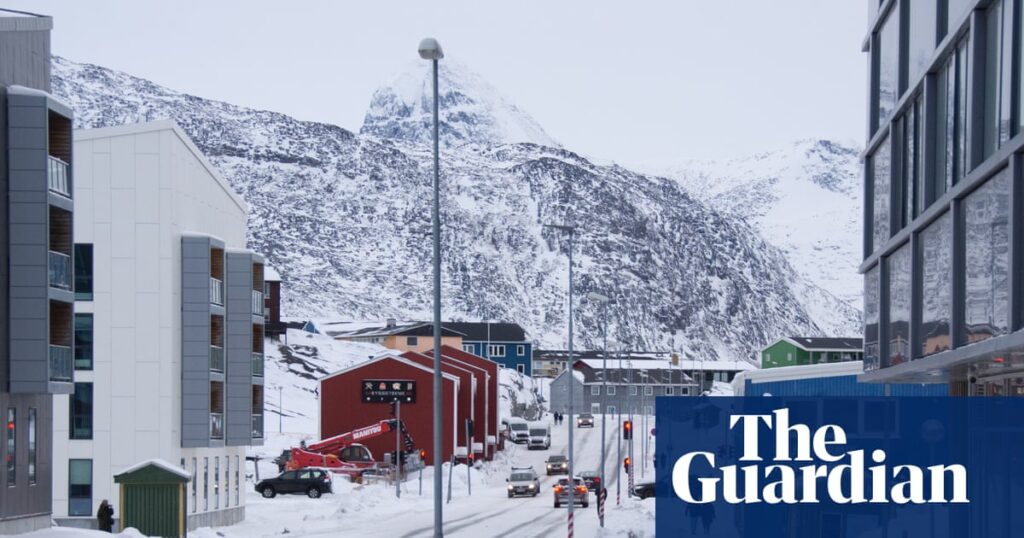
In October, Copenhagen announced an additional 27.4 billion Danish kroner for Arctic and North Atlantic security, including new Arctic vessels and greater maritime patrol aircraft capacity. But on the ground, there are few visual signs of increased security.
Aviâja Korneliussen, 19, part of a generation coming of age during this unprecedented time, says Trump’s threats are dividing society. “Before all of his claims, it was just an easy life. You had no worries, you were friends with everybody,” she says. Now, differing views on Greenland’s future create tension.
Calls for Independence and Strategic Alliances
As well as fear, there is a strong sense of wanting something positive for Greenland out of the situation. Pele Broberg, leader of Naleraq, Greenland’s most US-friendly political party, wants Greenland to discuss a free association deal with the US. However, Denmark insists on appearing united.
Greenland’s Prime Minister, Jens-Frederik Nielsen, recently stated, “If we have to choose between the US and Denmark here and now, we choose Denmark, Nato, and the EU.” This message, Aqqaluk Lynge says, is exactly what Greenlanders needed to hear.
Aka Hansen, an Inuit filmmaker and activist, desires Greenlandic independence but acknowledges the need for Denmark’s protection. “Which is weird for me to say as someone who fights for independence that I actually have to rely on Denmark right now,” Hansen admits. “But I think those are the facts: that we actually have to have hope that Denmark will make sure that we are secure.”
The situation in Greenland remains tense, with residents hoping for peaceful resolutions and clearer guidance on their future. As diplomatic talks continue, the world watches closely, aware of the broader geopolitical implications.