

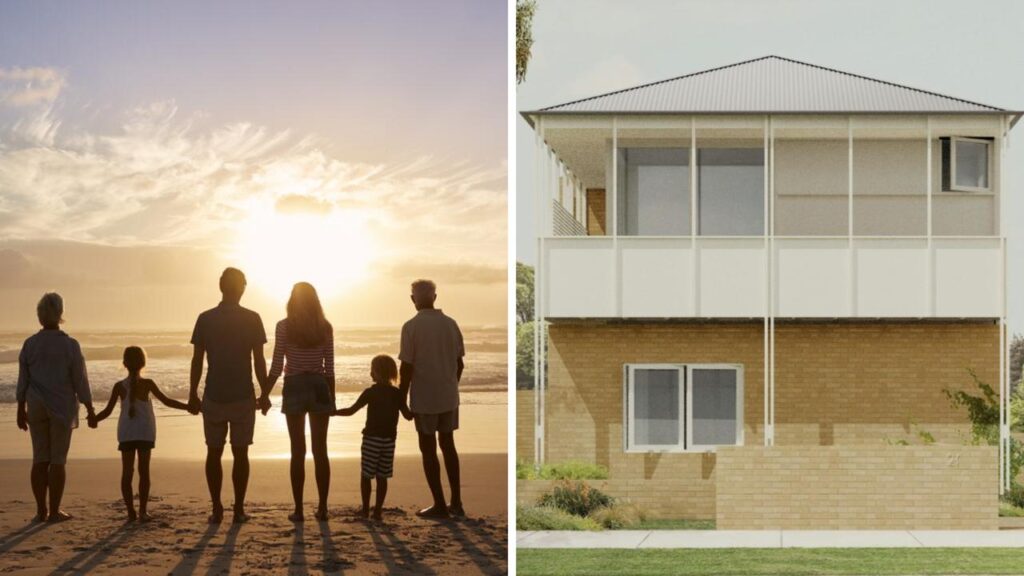
The housing crisis in Australia is prompting a significant shift in living arrangements, with many families opting for multigenerational living under one roof. This bold move is reshaping the traditional Australian household, as homes now often support up to three generations.
“More than half of our current projects involve some form of dual occupancy, multigenerational living, or a house deliberately designed to become that over time,” said Harry Catterns, an architect and co-founder of the design firm SAHA, in an interview with news.com.au. This trend allows several generations to cohabit, resulting in more Australians living with their parents and grandparents.
Changing Dynamics in Australian Households
The Household, Income and Labour Dynamics in Australia (HILDA) Report has highlighted a growing trend: children are staying longer with their parents than ever before. In 2024, 54 percent of men and 47 percent of women aged 18 to 29 were still living at home. This shift has sparked a lively debate among younger Australians about the right time to leave the family nest and enter the property market.
Social media platforms have become a battleground for these discussions. “I think the fact younger generations have been priced out of home ownership is an appalling indictment of the actions of the government,” one young Australian expressed. Another lamented, “I think it’s sad that housing in Australia has become so bad that plans like this even have to be considered now.”
Rising Demand for Dual Occupancy Homes
The average age of first-home buyers in Australia is steadily increasing, now at 34, with one in five first-home buyer loans going to those aged 40 and over. This trend underscores the challenges young Australians face in the housing market. Harry Catterns noted a “definite rise in interest” for dual occupancy homes, driven by these challenges.
According to Catterns, the key to a successful dual home is flexibility. “With people’s lives constantly changing, and more people under the roof, there needs to be ‘clear delineation of space,’ a clear understanding of what is shared and what is private,” he explained. The architecture must support autonomy while ensuring proximity and privacy.
Lessons from Other Cultures
While the concept of dual living is gaining traction in Australia, it has long been a staple in many Asian, Mediterranean, and Middle Eastern cultures. These communities have embraced multigenerational living as a means of providing security and mutual support during challenging times.
Catterns elaborated, “Affordability is part of the equation, but it’s rarely the only driver. We see families responding to a mix of pressures and values: housing costs, ageing parents, childcare logistics, and a desire to remain connected to established neighbourhoods rather than relocating further out.”
The Broader Implications of Housing Unaffordability
While dual homes foster close-knit families, the underlying issue of housing unaffordability continues to push Australians to consider leaving the country. A recent Home in Place research report revealed that over half of Australians aged 18 to 35 would contemplate moving overseas for more affordable housing options.
One young Australian shared online, “I’m about to be 25, still haven’t moved out and looking for any way I can to leave the country for somewhere more affordable because at this point I don’t want to pay a slumlord anything.”
The trend towards multigenerational living reflects a broader societal shift, driven by economic pressures and changing cultural values. As Australia grapples with its housing crisis, families are adapting in innovative ways, but the question remains: how long can this trend sustain itself in the face of ongoing affordability challenges?