



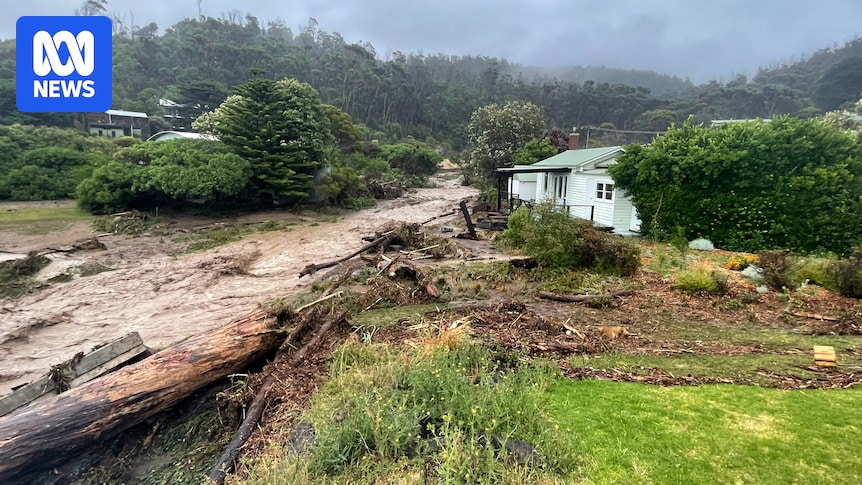
Communities along Victoria’s iconic Great Ocean Road are grappling with the aftermath of a historic deluge that unleashed “terrifying” flash floods, leaving a trail of destruction in its wake. On Thursday afternoon, torrential downpours around Wye River and Lorne in Victoria’s southwest swept cars into the sea and trapped residents as floodwaters surged through the coastal towns.
A local councillor described the rapid accumulation of water as “astounding.” The State Control Centre reported that emergency alerts were sent to 10,000 people along the Great Ocean Road, warning them of the impending danger. Approximately 200 locals and tourists were displaced from low-lying areas, including caravan parks. Although no injuries have been reported, State Emergency Service (SES) crews were deployed to assist those stranded in caravans.
Immediate Impact and Response
Warnings for Kennett River, Wye River, and Lorne have since been downgraded, but authorities caution that hazards such as floodwater, mud, debris, damaged roads, and fallen trees persist. There is also a risk of landslides in the area. At Mt Cowley, west of Lorne, a staggering 180 millimeters of rain fell within four hours, shattering previous daily rainfall records.
“Watching these storms develop, move through, and then dissipate, it was such a localized area hit by this intense rainfall yesterday morning and has been incredibly damaging for some of those holiday-makers and communities across that part of Victoria,” said Bureau of Meteorology senior meteorologist Miriam Bradbury.
Bradbury noted that an additional 6 to 15mm of rain was forecasted for the following day, which, despite being less than the previous downpour, could still pose issues due to saturated ground conditions.
Community Resilience and Challenges
Forest Fire Management Victoria’s Chris Hardman, stationed at the State Control Centre, described the flooding as extraordinary. “With such a dramatic and extreme event occurring over such a short period of time, for folks to be able to get out of the way of those floods and for there not to be any missing people or people injured even … everybody is just eternally grateful,” he remarked.
Hardman highlighted that the rain did not affect the other side of the hill, where bushfires threatened communities earlier in the week. SES chief operations officer Alistair Drayton stated that emergency services had not encountered such rainfall levels in the region before. “We’ve seen significant rainfall that’s created a deluge of water coming down those estuaries and we’ve seen some pretty extreme vision of vehicles that have been washed out,” he said.
Residents shared harrowing accounts of the flooding, describing it as the worst they had ever experienced. At Separation Creek, a flooded creek destroyed two bridges, with local Peter Jacobs narrowly escaping harm. “We missed being killed probably by about 10 seconds … we just ran for our lives basically,” he recounted.
Personal Stories of Survival
Katie White, a resident of Lorne, described the rapid onset of flooding: “The river level suddenly rose and became turbulent and fast-moving, bringing much debris with it.” She noted that the downpour occurred in the hinterland, surprising residents when floodwaters descended from the hills.
In Wye River, the caravan park was severely inundated, with mud reaching half a meter deep by Thursday evening. Meg Jay and Amy Pollett, who were in Lorne for lunch while their families were at the caravan park, shared their ordeal. Pollett’s caravan was swept away, and her children lost their new Christmas bikes. “Everyone here in Lorne has been amazing. They put us up in accommodation. We’ve got clothes from the op shop,” said Jay.
Broader Implications and Future Outlook
Victorian Premier Jacinta Allan expressed her concern for the affected communities, stating, “The footage coming out of Wye River is terrifying. I’m thinking of the community and campers along the Great Ocean Road tonight.” The flood-hit area lies at the eastern end of the Otways, not far from the out-of-control Carlisle River bushfire burning to the west.
The weather system responsible for the deluge is now moving towards Gippsland in Victoria’s east. Meteorologist Mr. Hynes explained that the rainfall was fueled by “extremely high moisture content in the atmosphere that’s unusual to see this far south,” with ex-Tropical Cyclone Koji in Queensland contributing to the weather patterns.
“We will see significant rainfall. It will be heavy rainfall,” warned Mr. Drayton, urging Victorians to remain vigilant and consider delaying travel plans in potential flash flood areas.
Recovery and Community Support
The Lorne Foreshore Caravan Park faces weeks of closure for cleanup and repairs, including electrical system replacements. Manager Harshit Sharma recounted the swift evacuation process as floodwaters rose. “People were definitely panicking, but people were very cooperative,” he noted.
Surf Coast Shire councillor Leon Walker emphasized the community’s resilience, saying, “Everyone who volunteers, emergency services, just everyone in the community jumped on, and now it’s the recovery stage, so the next steps are getting back on track.”
As the region begins its recovery, the community’s spirit and cooperation remain strong, with many offering shelter and support to those displaced by the floods. This event serves as a stark reminder of the unpredictable nature of weather and the resilience required to overcome such challenges.