




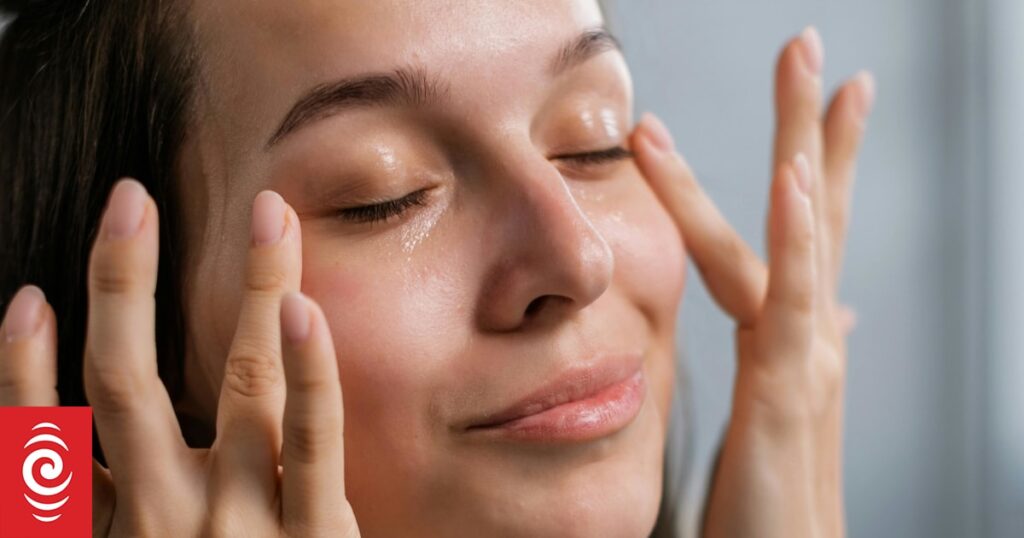
When it comes to beauty products, hyaluronic acid has become a household name. However, experts suggest that not all applications of this popular ingredient are effective, and its benefits may sometimes be limited to superficial hydration. This revelation challenges the widespread perception of hyaluronic acid as a miracle component in skincare.
Hyaluronic acid, far from being just a trendy beauty ingredient, is a naturally occurring molecule found throughout the human body, including in organs and tissues. It plays a crucial role in cellular function and has been the subject of research for clinical applications such as dentistry and cell transplantation.
Understanding Hyaluronic Acid
Hyaluronic acid is a polysaccharide, a type of molecule naturally present in human skin, joints, and connective tissue, according to Tracey Purnell, a GP specializing in cosmetic practice and head of the RACGP special interest group in dermatology.
“It’s found in human skin, joints, and connective tissue,” Purnell explained.
When added to water, hyaluronic acid forms honeycomb-like structures that trap water, allowing it to bind to an amount many times its weight. This property makes it an effective lubricant in the body, found in the gel inside our eyes and between our joints. Its natural occurrence in the body also means it rarely causes allergic reactions.
The Role of Hyaluronic Acid in Skincare
In the beauty industry, hyaluronic acid is primarily used in two forms: as a topical cream and as an injectable product. Purnell notes that while it can effectively hydrate the skin, it does not offer direct anti-aging or other miraculous effects.
“As a hydrator, it’s incredibly effective, but that’s pretty much where its effectiveness ends,” Purnell said. “There’s no additional things it can do apart from hydrate the skin and make it look smoother and plumper in the short-term.”
Topical creams often contain high molecular weight hyaluronic acid, which sits on the skin’s surface, providing hydration without deep penetration. Lower molecular weights can penetrate deeper but may trigger inflammation.
Injectable Applications
Hyaluronic acid is also used as a “dermal filler,” injected under the skin to plump areas such as lips and cheeks. This application can help restore volume and structure to aging skin.
“For skin that’s lost volume or lost its structure, injected hyaluronic acid can be used to try and give the skin something to drape over again,” Purnell said.
Despite its intended temporary nature, there is growing concern that some fillers do not break down as expected, even with the use of enzymes designed to dissolve them.
Future Clinical Applications
Beyond skincare, hyaluronic acid has been a staple in clinical medicine for decades. Fernanda Zamboni, a biomedical engineer from the University of Limerick, highlights its use in dentistry, joint lubrication, and managing chronic inflammatory diseases.
“It’s not really an antibiotic, [it doesn’t] kill bacteria, but it reduces the attachment and therefore, the proliferation of bacteria,” Zamboni said.
Zamboni’s research explores hyaluronic acid as an immune-suppressing, protective coating, particularly in diabetes treatment. Her work involves coating pancreatic beta cells to protect them from immune system attacks, a promising area for future transplantation research.
“There’s a lot of work being done into transplantation — not just for pancreatic beta cells, but other types of cells,” Zamboni added. “It’s something that in the future we’re going to be seeing more of.”
Implications and Future Directions
As research continues to uncover new applications for hyaluronic acid, its role in both beauty and medicine is likely to expand. While the molecule’s hydrating properties are well-documented, its potential in clinical settings offers exciting possibilities for future medical advancements.
Consumers should remain informed about the specific benefits and limitations of hyaluronic acid in skincare, recognizing that while it is a powerful hydrator, its effects may not extend beyond surface-level improvements.
As the science evolves, both the beauty and medical industries may see innovative uses for this versatile molecule, broadening its impact beyond current expectations.