




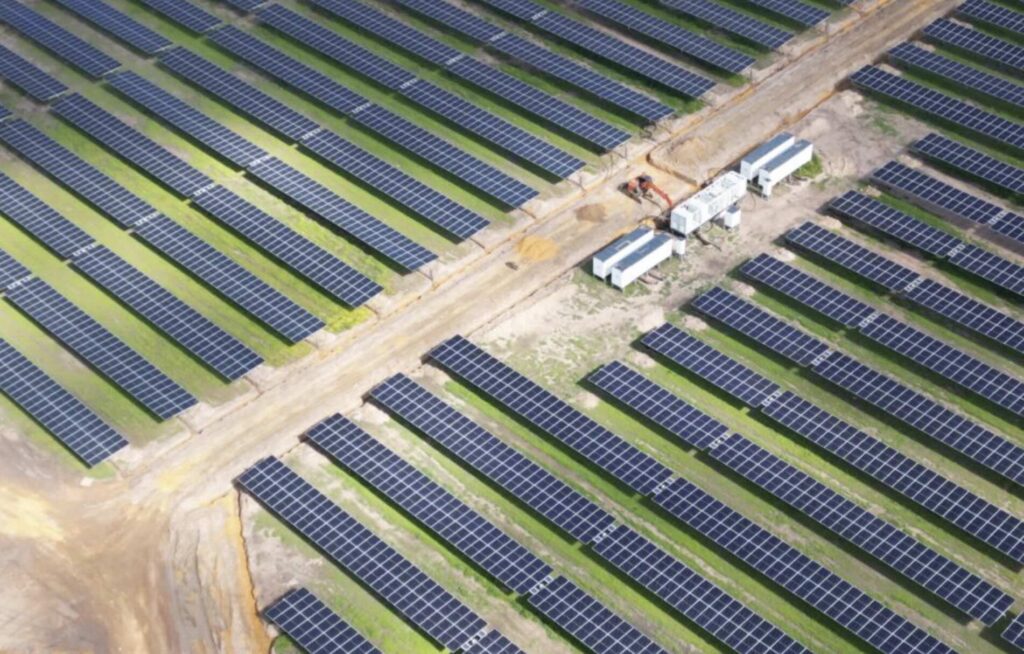
New South Wales (NSW) is increasingly relying on solar-battery hybrid projects to replace its ageing coal-fired power stations. As the state gears up for a series of major auctions this year, it aims to enhance support for these hybrids, which have become a preferred technology due to the declining costs of battery storage and solar energy.
The state’s strategy involves revising its Long Term Electricity Service Agreements (LTESAs) to better accommodate solar-battery hybrids. These systems, which integrate solar panels and batteries at a single connection point, are proving more efficient and cost-effective than large-scale wind farms. They offer the added advantages of easier site placement on existing infrastructure and fewer logistical hurdles in planning and equipment supply.
Transition to Renewable Energy
The move towards solar-battery hybrids is part of broader changes announced by ASL, the consumer trustee overseeing state and federal capacity auctions. These changes include encouraging projects outside renewable energy zones and providing higher compensation to projects affected by delayed infrastructure, ensuring they remain viable despite lower initial outputs.
NSW faces mounting pressure to replace its coal power stations, such as Eraring and Vales Point, which are nearing the end of their operational lives. The state has increased its target from 12 GW to 16 GW of new capacity by 2030 to meet rising demand from industry, households, and electric vehicles.
Upcoming Auctions and Investment Priorities
The state plans to award 5 GW of capacity through two auctions this year, with additional auctions scheduled for 2027. Nevenka Codevelle, CEO of ASL, highlighted the significance of 2026 for supporting the NSW Electricity Infrastructure Roadmap, with tenders for generation infrastructure and long-duration storage set to resume.
“Market conditions and technologies have evolved since the development of our Long-Term Energy Service Agreements,” Codevelle stated. “Solar-hybrid projects offer shorter times to market and are crucial for meeting our 2030 infrastructure goals.”
Advantages of Solar-Battery Hybrids
Solar-battery hybrids can avoid negative price events that typically force solar farms to shut down during midday. They store energy for use during peak demand periods, increasing its value. Australia currently has one large-scale operating solar-battery hybrid in Cunderdin, Western Australia, which supplies power during evening peaks and overnight.
The Quorn Park facility, near Parkes in NSW, is the first solar hybrid on Australia’s main grid, with additional projects like Maryvale and Goulburn River under construction. These developments follow successful underwriting tenders in 2023.
Impact on Energy Market Planning
The rise of solar-battery hybrids has influenced the Australian Energy Market Operator’s (AEMO) planning blueprint, the Integrated System Plan, which now includes more hybrid projects and less wind capacity. In the current Capacity Investment Scheme (CIS) tender, solar-hybrids are expected to perform well, with some developers exploring wind and battery hybrids.
ASL is considering how best to tailor LTESA products for solar-hybrids, with a consultation paper outlining potential designs. These include a fixed shape and volume model and a generation-following and price risk-sharing model. Indicative pricing suggests solar-only profiles might attract around $65/MWh, while solar-hybrids could secure higher fixed prices depending on the model.
Future Outlook
ASL aims to finalize these options before resuming NSW tenders in 2026, offering 2.5 GW of capacity, followed by another 2.5 GW later that year. Despite the focus on solar-hybrids, wind projects remain a priority and will continue to be supported through existing LTESA products.
“While these products are designed to support solar-hybrids, wind projects are still a key priority and can access these new products,” Codeville emphasized.
As NSW continues its transition to renewable energy, the state remains committed to balancing its energy mix, ensuring reliability, and meeting future demand.