


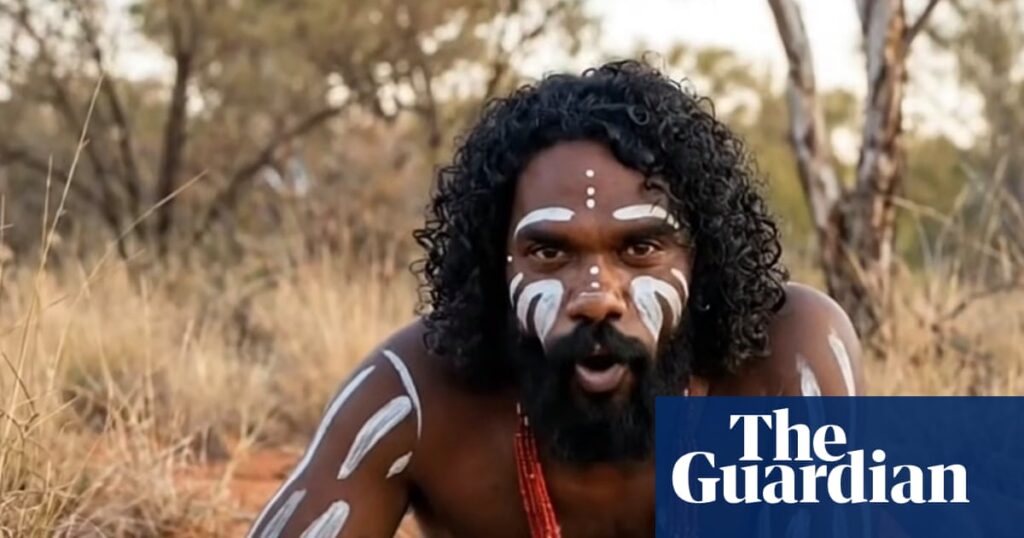
With a mop of dark curls and brown eyes, Jarren stands in the thick of the Australian outback, red dirt at his feet, a snake unfurling in front of him. Known online as the Bush Legend, this social media star captivates audiences with his adventures through dense forests and along deserted roads, hunting for wedge-tailed eagles. His videos, often set to pulsating percussion instruments and yidakis (didgeridoo), have amassed a significant following.
However, none of it is real. Both the wildlife and Jarren himself are creations of artificial intelligence. Created in October 2025, the account is based in New Zealand and initially shared AI-generated satirical news before pivoting to wildlife content. Despite its digital origins, the Bush Legend account boasts 90,000 followers on Instagram and 96,000 on Facebook, claiming to focus on raising awareness about Australian wildlife.
Ethical Concerns and Cultural Appropriation
The creation of an avatar resembling an Indigenous person has sparked ethical concerns. Dr. Terri Janke, an expert in Indigenous cultural and intellectual property, describes the images and content as “remarkable” in their realism. “You think it’s real,” she says, expressing her initial surprise at the video’s authenticity. However, she warns of the risks of “cultural flattening” and potential misrepresentation.
According to Janke, AI-generated content poses a significant risk to marginalized communities, potentially constituting theft of cultural and intellectual property. It also threatens to overshadow authentic Indigenous voices, such as those of Aboriginal rangers.
“It’s theft that is very insidious in that it also involves a cultural harm,” Janke says. “Because of the discrimination … the impacts of stereotypes and negative thinking, those impacts do hit harder.”
AI and Digital Blackface
Tamika Worrell, a senior lecturer in critical Indigenous studies at Macquarie University, argues that the AI avatar represents a form of cultural appropriation and “digital blackface.” She highlights the lack of legislative guardrails around AI tools, which allows cultural knowledge and imagery to be shared without appropriate consent.
“AI becomes this new platform that we have no control or no say in it,” Worrell explains, emphasizing the potential for harm when AI avatars fail to engage authentically with Indigenous communities.
“It’s AI blackface – people can just generate artworks, generate people, [but] they are not actually engaging with Indigenous people.”
The Broader Implications of AI in Media
Toby Walsh, a laureate fellow and professor of artificial intelligence at the University of New South Wales, warns that AI is trained on large-scale data sets with inherent biases. This means AI is not immune to reproducing racist or prejudicial content.
“They are going to carry the biases of that training data,” he says. “Certain groups may be stereotyped because the video data or the image data that exists in that group online is somewhat stereotypical. So we’re going to perpetuate that stereotype moving forwards.”
The Bush Legend account has addressed criticism through its avatar, stating that it does not seek to “represent any culture or group” and focuses solely on animal stories. However, the account has faced backlash for previous attempts to monetize its content.
Future of Digital Literacy and AI
Walsh emphasizes the importance of digital literacy in identifying AI-generated content, noting that the “tells” are becoming increasingly difficult to detect. “If not now, in the very near future, it’s going to be next to impossible to be able to identify for yourself whether this was real or fake,” he warns.
The advent of AI technology challenges our perceptions of reality, stretching the boundaries of what is true and false. As AI continues to evolve, the need for ethical guidelines and cultural sensitivity becomes ever more critical.
As the debate over AI-generated content and cultural appropriation continues, the Bush Legend saga serves as a reminder of the complex interplay between technology and cultural representation. The conversation around ethical AI use is far from over, and its implications will likely shape the future of digital media.