


The United States has withdrawn from 66 international organizations, conventions, and treaties, and has promoted an “America First” agenda in its National Security Strategy. This signals the potential collapse of a global system that has operated for the past 60 years. The old world order, driven by hyper-globalization and U.S. hegemonic power, appears to be in its death throes, yet a new era is yet to be born. At the heart of this transition is the World Trade Organization (WTO), a key battleground in the global “free trade” regime.
The U.S. has historically viewed the WTO as a tool to serve its strategic and corporate interests. However, with the economic rise of China and a domestic populist backlash against globalization, the WTO is now seen as a liability. This sentiment is not exclusive to the Trump administration; America has long resisted binding itself to the trade rules it demands other countries obey. Since joining the WTO in 1994, both Republican and Democrat administrations have undermined its operation by calling for an end to the Doha Round of negotiations, breaking the WTO dispute mechanism, and starving its budget.
The U.S. Push for WTO Reform
In December 2025, the newly-arrived U.S. Ambassador to the WTO warned its General Council that reform is necessary to prevent the organization from becoming irrelevant. The U.S. seeks to abandon the cornerstone most-favored-nation rule, which requires all WTO members to be treated equally, and reinterpret the WTO’s “security exceptions” to allow countries absolute sovereignty to decide when the exception applies.
Moreover, the U.S. wants the WTO to cease addressing issues such as “oversupply,” “overcapacity,” “economic security,” and “supply chain resilience,” which it believes have enabled China’s growing economic dominance. In this stripped-down WTO, decision-making by consensus would be abandoned, and multilateral negotiations replaced by deals driven by more powerful players on cherry-picked topics.
Implications of Unilateral Actions
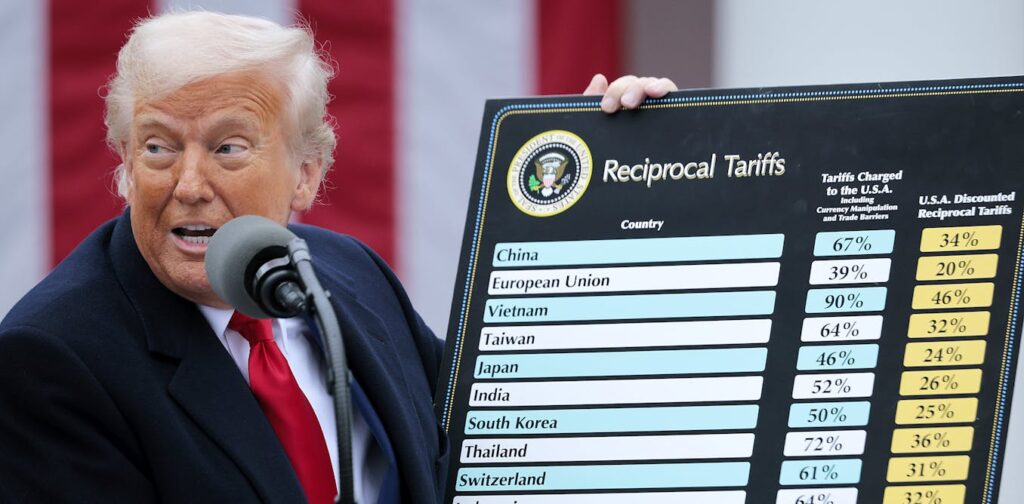
Unilateral action is not an idle threat. Former President Trump imposed arbitrary tariffs on more than 90 countries for various “national and economic security” reasons, demanding concessions for reducing them. These demands often extended beyond trade matters, impinging on countries’ sovereignty. President Biden maintained these tariffs, triggering unresolved WTO disputes.
“Trump’s embrace of raw coercive power strips away any chimera of commitment to multilateralism and the model that has prevailed since the 1980s.”
Some countries have bargained with Trump to reduce tariffs. China retaliated, leading to an uneasy truce. Brazil resisted politically-motivated tariffs at significant economic cost, while Australia made a side-deal on critical minerals. The European Union remains in a standoff over pharmaceutical patents and big tech regulation, while India has diversified to survive relatively unscathed, ironically forging closer ties with China.
Challenges for Less Powerful Nations
Less powerful countries face greater vulnerability. Recent “reciprocal trade agreements” with Malaysia and Cambodia require them to align with U.S. foreign policy, consult the U.S. before negotiating new free trade agreements, and involve the U.S. in regulating inward investment and development of critical minerals. These agreements risk creating economic, fiscal, social, and political chaos in targeted countries, disrupting supply chains, and forcing difficult choices between the U.S. and China.
“If implemented, these agreements risk creating economic, fiscal, social, and political chaos in targeted countries.”
In return, the 2025 tariffs will be reduced, not reversed, and the U.S. can terminate the deals at will. This poses an existential question for WTO members at the 14th ministerial conference in Cameroon: will they submit to U.S. demands to keep the WTO on life support, or explore alternatives to the hyper-globalization model?
The Future of the WTO
The WTO’s future remains uncertain as it grapples with these challenges. The organization’s ability to adapt and reform in response to U.S. demands will determine its relevance in the new global order. As the world transitions from an era of U.S.-dominated globalization, the WTO must navigate a complex landscape of shifting power dynamics and competing interests.
Experts suggest that the WTO could play a crucial role in fostering a more equitable global trade system, but only if it can overcome the current impasse. The upcoming ministerial conference will be a critical moment for the organization and its members to chart a path forward.
“The WTO must navigate a complex landscape of shifting power dynamics and competing interests.”
As the global community awaits the outcome of these deliberations, the future of international trade and the multilateral system hangs in the balance. The decisions made in the coming months will have far-reaching implications for the global economy and the international order.