



Extreme weather events, including searing heat, droughts, storms, and deadly floods, have tested resilience not only in Australia but across the globe. As 2026 begins, Australia finds itself grappling with intense heatwaves, bushfires, and a cyclone, marking a continuation of the alarming trend of frequent extreme weather events worldwide.
In 2025, the world experienced its third hottest year on record, closely following 2024 and 2023, as reported by the Copernicus Climate Change Service. Climate scientists are raising alarms, warning that the Paris Agreement’s target of limiting global warming to 1.5 degrees Celsius above pre-industrial levels could be breached by 2030, much sooner than previously anticipated.
Global Weather Extremes of 2025
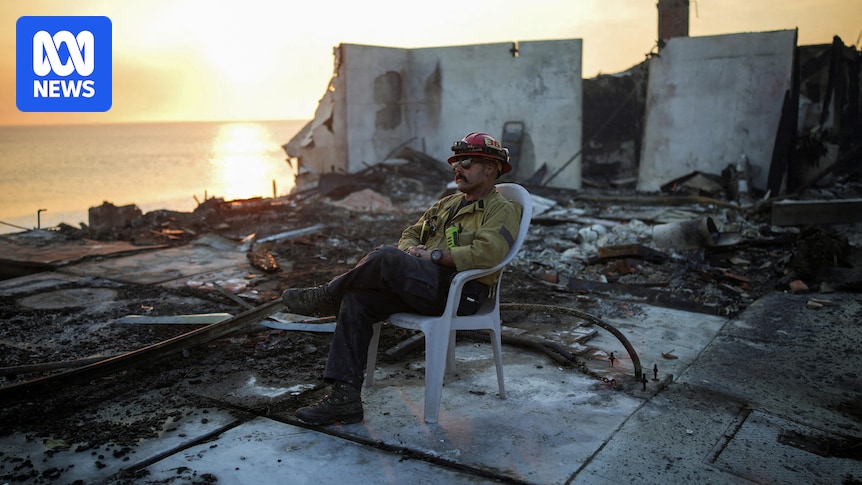
The year 2025 was marked by significant weather events across the globe. In the United States, Los Angeles witnessed some of the most devastating fires in its history, with blazes in Eaton and Pacific Palisades reaching the Malibu coast. Following the fires, Texas endured severe flash flooding, creating scenes of chaos and destruction.
Meanwhile, Europe faced extreme heat and wildfires during the summer, while the Middle East grappled with worsening droughts amid escalating water shortages. The year concluded with catastrophic floods in Southeast Asia, underscoring the global nature of climate challenges.
A Record-Breaking Heat Streak
Globally, 2025 ranked as the third warmest year, slightly behind 2024 and 2023, marking a trio of exceptionally hot years. In Australia, 2025 was recorded as the fourth warmest year. According to the Copernicus Climate Change Service, this trend is primarily driven by the accumulation of greenhouse gases from fossil fuel combustion and unusually warm sea surface temperatures, exacerbated by El Niño events in 2024 and 2023.
The running average for global temperatures over the past three years has now exceeded 1.5°C of warming since pre-industrial times, a significant milestone tied to the Paris Agreement’s goals.
Australia’s Climate Challenges
Australia’s experience of climate change is not just through long-term trends but through immediate, extreme weather events. Dr. Burgess, a climate scientist, noted, “It’s not through the trend in global temperatures, but through extreme weather events. And extreme events in 2025 had significant impacts on human health, ecosystems, and infrastructure.”
In 2025, half of the world experienced more days of strong heat stress, defined as a feels-like temperature of 32°C or above. The World Health Organization recognizes heat stress as the leading cause of global weather-related deaths. In Australia, the situation was particularly dire, with more extreme heat stress days than average, reaching feels-like temperatures over 46°C.
Global Hotspots
The poles also suffered from extreme heat in 2025. Antarctica experienced its hottest year on record, while the Arctic recorded its second warmest year. Other regions, including eastern and north-western Europe and central Asia, saw record-high annual temperatures. Across most continents and oceans, temperatures were overwhelmingly warm, with few areas cooler than normal.
Australia’s Weather in Pictures
Despite the hardships, Australia witnessed moments of beauty amid the extreme weather. Cyclone Alfred threatened Brisbane early in the year, while flooding inundated parts of Queensland and New South Wales. Surfers raised concerns about algae blooms off South Australia, and farmers adapted to prolonged droughts.
Queensland’s floodwaters traveled hundreds of kilometers to fill Lake Eyre, and the country enjoyed a bumper snow season. Queensland faced repeated giant hailstorms, and the aurora australis brought communities together.
Adapting to a New Climate Reality
As Australia and the world confront a new climate reality, adapting to these changes becomes crucial. “We can’t blame climate for either of those individual events. But the background climate makes those much more probable and a much higher risk of occurring,” noted Dr. Burgess.
Looking ahead, 2026 is expected to rank among the top five warmest years, continuing the trend of rising temperatures and extreme weather events. The global community faces the challenge of mitigating these impacts and striving to meet climate goals set by international agreements.