

Sharp partisan divisions emerged within Congress as Democrats accused the Trump administration of misleading the public following a closed-door briefing on US military action in Venezuela. The briefing, held on Monday, was meant to clarify the reasoning behind the operation that led to the capture of Venezuelan President Nicolás Maduro. However, it seems to have raised more questions than answers.
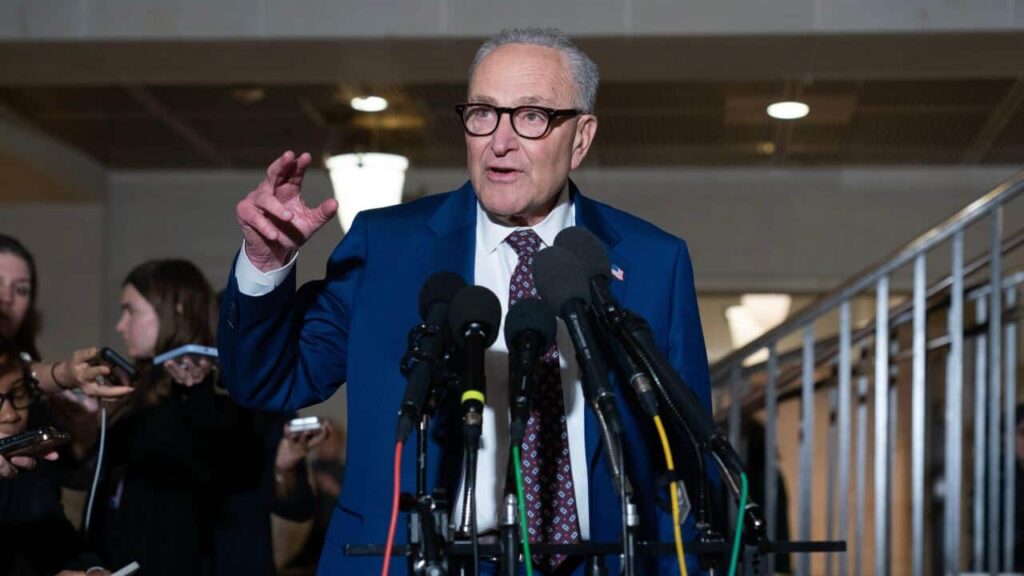
Senate Minority Leader Chuck Schumer expressed his concerns after the briefing, stating that he did not receive assurances that similar actions would not be taken against other countries in the future. “I did not receive any assurances that we would not try to do the same thing in other countries,” Schumer remarked, as reported by CNN. “And in conclusion, when the United States engages in this kind of regime change and so-called nation building, it always ends up hurting the United States,” he added, emphasizing his skepticism about the operation’s long-term implications.
Republican Defense of the Operation
While Democrats voiced strong opposition, senior Republicans defended President Trump’s decisions and the operation’s execution. Republican House Speaker Mike Johnson insisted that the US had no intentions of occupying Venezuela. “We do not have armed forces in Venezuela and we are not occupying that country,” Johnson stated, attempting to reassure the public and international community.
Brian Mast, Republican Chairman of the House Foreign Affairs Committee, also supported the administration’s stance, denying any plans for nation-building in Venezuela. “They are not the protracted war administration,” Mast assured, drawing a distinction between the current situation and past prolonged military engagements like the 20-year conflict in Afghanistan.
Criticism of Interim Leadership Choice
The choice of Delcy Rodríguez as Venezuela’s interim president has also sparked controversy. Democratic Senator Jeff Merkley criticized Trump’s support for Rodríguez, suggesting it might perpetuate a dictatorial regime. “What it looks like is he wants to keep the dictatorship in the palace, just with the vice president becoming head of government, rather than Maduro,” Merkley said, according to CNN. He further expressed concerns about the potential for Rodríguez to merely act as a puppet leader for US interests.
Constitutional Concerns and Future Implications
The operation’s legitimacy has been a point of contention, with the Republican-controlled Senate expected to vote on whether to block further military action in Venezuela without congressional approval. Republicans argue that the operation did not require such approval due to its brief and law enforcement nature. However, Democrats and some Republicans have accused Trump of attempting to bypass the Constitution’s requirement for congressional approval for military actions, except when they are brief and limited.
Republican Senate Majority Leader John Thune mentioned that more details about the US’s future involvement in Venezuela would be revealed in the coming days. This statement leaves many wondering about the long-term strategy and potential consequences of the recent actions.
“The operation over the weekend didn’t require congressional approval due to its short period and its role in law enforcement.” — Republican leaders
The announcement comes at a time when US foreign policy is under intense scrutiny, with the implications of the Venezuelan operation likely to influence future diplomatic and military strategies. As the situation unfolds, both domestic and international observers will be watching closely to see how the US navigates this complex geopolitical landscape.