




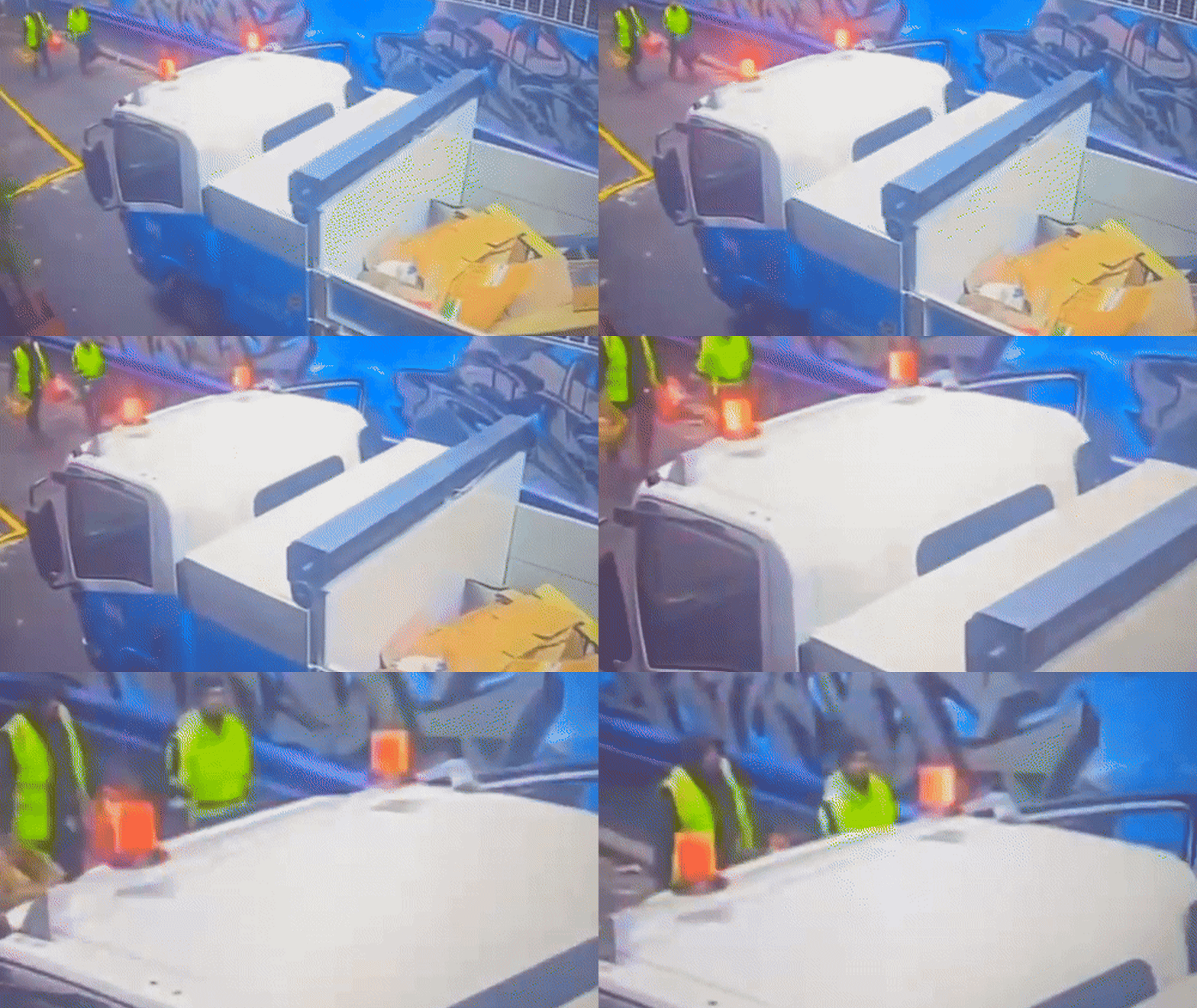
On January 10, 2026, a Melbourne nightclub owner expressed frustration after CCTV footage captured council workers allegedly removing bottles and cans eligible for a 10¢ refund from the venue’s bins. The incident, which took place behind the King Street nightclub Inflation, has sparked a broader conversation about the ethics and legality of bin fossicking in the city.
The footage, recorded last year, shows two men in high-visibility vests collecting items from skips in Geddes Lane and placing them in a City of Melbourne truck. Inflation owner Martha Tsamis stated that her business takes the time to separate recyclable containers to claim refunds, only to have them allegedly taken by council employees.
“We take time with staff to separate the bottles from rubbish, only to find that council workers are stealing from us, while being paid by the council and using a council vehicle,” Tsamis remarked. “It’s hard enough working in the hospitality industry at the moment, but this is just disgraceful.”
City of Melbourne’s Response
The City of Melbourne confirmed that the workers seen in the video were tasked with removing illegally dumped waste, not items from private bins. A council spokesperson stated, “Any allegation of misconduct by staff or contractors is taken seriously – and will be investigated.”
Since the introduction of Victoria’s container deposit scheme in 2023, the practice of collecting refundable bottles and cans has become a source of income for some residents. However, the legality of bin fossicking varies across local government areas, and it is not universally supported by authorities.
Bin Fossicking: A Lifeline for Some
For individuals like Sayo Leahy, a prolific can collector, bin fossicking has provided a vital income stream. Leahy, who has faced challenges maintaining employment due to mental health issues, explained how collecting containers from residential bins in Melbourne’s north has been a lifeline.
“At the end of the day, if you’re going through a bin you are probably struggling,” Leahy said. “And you’ve got to remember that.”
While Tsamis expressed no objection to individuals collecting recyclables, her concern lies with unauthorized council employees accessing her commercial skips, which are already sorted for another operator to collect and refund.
Regulatory Perspectives and Solutions
Marianne Doyle, the interim chief executive of VicReturn, emphasized that bin fossicking without permission is not encouraged. “The rules around bin fossicking vary between [local government areas], and it is not a practice we encourage,” Doyle noted. In some areas, removing recyclables placed out for collection may result in fines.
Doyle suggested that collectors establish arrangements with local businesses to collect eligible containers for refunds. “Many CDS [container deposit scheme] collectors have arrangements in place with venues, clubs or businesses to collect their eligible containers to return them for the 10¢ refund,” she said.
To address the issue, the container deposit scheme is collaborating with councils, including the City of Melbourne, to install new container baskets on public bins. “These are designed to give people a safe and appropriate way to leave empty eligible containers for others to collect, without the need to fossick through public bins,” Doyle explained.
Looking Ahead
The controversy surrounding the removal of recyclables from private bins highlights the ongoing challenges faced by businesses and individuals in navigating the container deposit scheme. As the City of Melbourne investigates the allegations, the incident underscores the need for clear guidelines and cooperative solutions to support both environmental goals and community livelihoods.
The situation serves as a reminder of the delicate balance between regulatory enforcement and the economic realities of those who rely on recycling for income. As the investigation unfolds, the focus remains on finding equitable solutions that respect both business operations and the needs of individual collectors.