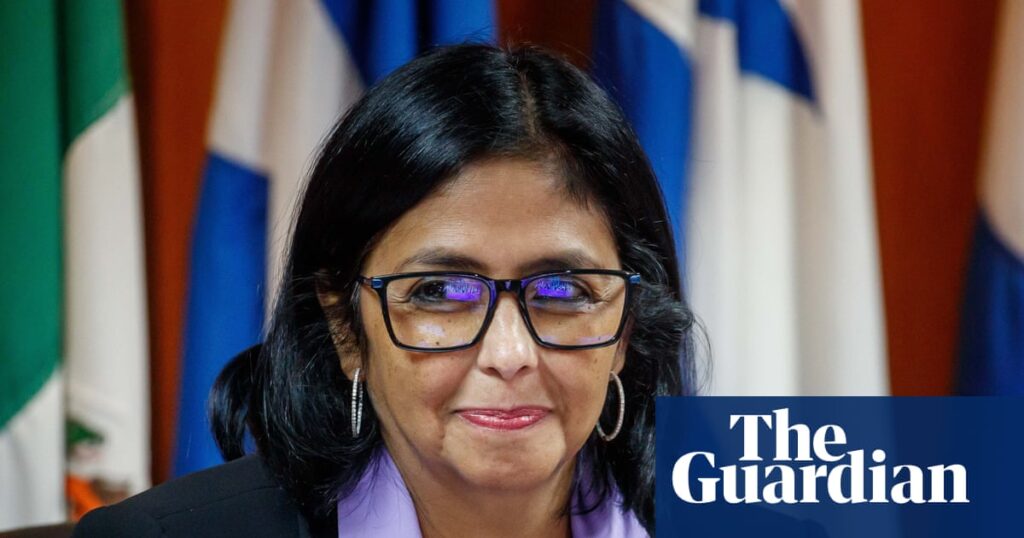
In a defiant inaugural speech as Venezuela’s interim leader, Delcy Rodríguez sharply criticized the United States and reaffirmed her allegiance to Nicolás Maduro. However, the Trump administration has calculated that she will ultimately align with Washington’s interests. Rodríguez, a seasoned political figure who served as Maduro’s vice-president and oil minister, has been a staunch defender of the regime against allegations of terrorism, drug trafficking, and electoral fraud. Yet, she currently stands as Donald Trump’s preferred choice to steer Venezuela.
President Trump, while not dismissing the possibility of deploying ground troops, appears inclined to “run” Venezuela through Rodríguez, who now leads a regime shaken by Maduro’s abduction but still clinging to power. The 56-year-old former labor lawyer struck a defiant tone in her televised address on Saturday night, condemning the abduction of Maduro and his wife, Cilia Flores, and demanding their return.
“What is being done to Venezuela is an atrocity that violates international law. History and justice will make the extremists who promoted this armed aggression pay,” she declared. “There is only one president in Venezuela and his name is Nicolás Maduro.”
Political Theater and Military Power
In a crisis that intertwines political theater, military might, and economic calculations, Rodríguez’s defiance may partly serve as a gesture to placate the Bolivarian revolution’s disgruntled loyalists, especially within the armed forces, while she consolidates her position. To maintain her hold on power—assuming that is her objective—Rodríguez must balance accommodating U.S. demands with preserving an authoritarian regime loathed by many Venezuelans. A single misstep could trigger an internal coup, a public uprising, or another wave of U.S. military intervention.
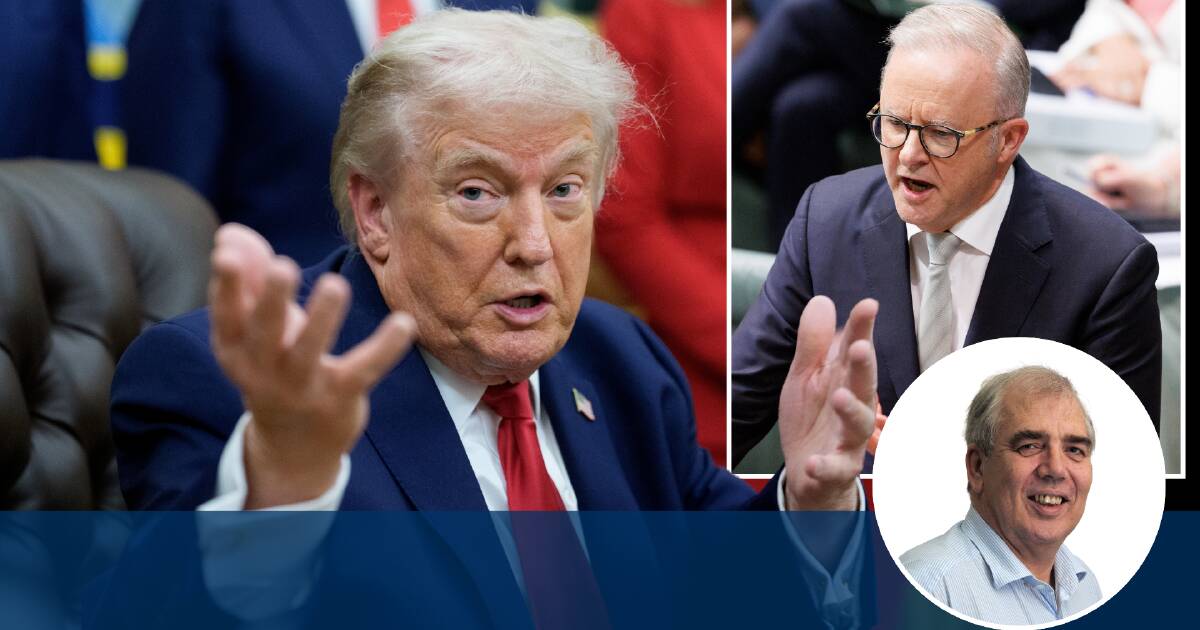
Pete Hegseth, the U.S. defense secretary, expanded on Trump’s assertion that the U.S. would oversee the South American nation. “It means we set the terms. President Trump sets the terms,” he stated. “It means the drugs stop flowing, it means the oil that was taken from us is returned, ultimately, and that criminals are not sent to the United States.”
Room to Maneuver
While this suggests a puppet ruler of a vassal state, Rodríguez retains some latitude. Where Venezuelan opposition figures perceive an apparatchik of Maduro’s dictatorship, the Trump administration sees a potential business partner. A senior official informed the New York Times, “I’m not claiming that she’s the permanent solution to the country’s problems, but she’s certainly someone we think we can work at a much more professional level than we were able to do with [Maduro].”
The English-speaking technocrat impressed Trump’s team with her management of Venezuela’s oil industry, and intermediaries convinced the administration that she would safeguard and advocate for future American energy investments in the country, the paper reported. For Trump, this was sufficient to abandon an alternative candidate to replace Maduro: María Corina Machado.
Machado’s Political Struggles
The opposition leader, who orchestrated Edmundo González’s victorious presidential campaign last year (a result ignored by Maduro), and who won the Nobel Peace Prize, dedicated the award to Trump as she courted the U.S. leader and backed the Pentagon’s military buildup in the Caribbean. However, on Saturday, Trump stated that she lacked support and that it would be “very tough” for her to lead Venezuela. Millions of Venezuelans revere Machado, but she remains unacceptable to the military hierarchy that sustains the regime, according to an informed source in Caracas.
The leadership of a revolution initiated by Hugo Chávez in 1999 and continued by Maduro in 2013 now rests with a softly spoken woman known for her pragmatic toughness. Rodríguez’s father, a Marxist activist, died during interrogation by Venezuelan authorities over his involvement in the kidnapping of a U.S. citizen—a historical irony given that U.S. forces later abducted her boss.
Rodríguez’s Path Forward
A student leader, Rodríguez studied law in Caracas and Paris before joining Chávez’s government in 2003, following the path of her brother, Jorge Rodríguez, a psychiatrist who served as vice-president and currently heads the national assembly. Under Maduro, she ascended to senior roles, including foreign minister, and became vice-president in 2018. Her vibrant attire stood out on podiums crowded with military uniforms, but her commitment was never in doubt, and her portfolio expanded to encompass the economy and oil.
Unlike many in Maduro’s inner circle, Rodríguez has not been indicted for drug trafficking or other charges in the U.S. Trump’s team hopes it has found a market-friendly technocrat capable of steering the regime while taking direction from Washington. For Rodríguez, a vertiginous tightrope awaits.
Venezuela’s opposition leaders, despite being sidelined by Trump, sense opportunity. “Today we are prepared to assert our mandate and seize power,” said Machado. Having tasted military success, Trump seems eager for further opportunities to exert force.