
“It’s cold as shit here, nobody told me!” exclaimed U.S. Vice-President JD Vance during his visit to Greenland in March last year. His reaction underscored a lack of preparation for the harsh Arctic climate. However, the chill of the environment was nothing compared to the frosty reception the Trump administration’s renewed interest in acquiring Greenland has received.
Greenland, a semi-autonomous territory of Denmark, has been the subject of U.S. acquisition attempts multiple times throughout history. The most notable instances include the 1867 attempt following the purchase of Alaska, the 1917 consideration during the acquisition of the U.S. Virgin Islands, and a 1946 offer by the Truman administration to buy the island for $100 million.
Trump’s Renewed Interest Sparks Tensions
The idea of acquiring Greenland was reignited by former U.S. President Donald Trump during his first term and resurfaced in the early days of his second. Recent geopolitical tensions, particularly the dramatic events in Venezuela, have intensified concerns about the seriousness of these ambitions. The White House has confirmed discussions about acquiring Greenland, with military intervention mentioned as a potential option.
According to an exclusive report in the Wall Street Journal, Secretary of State Marco Rubio suggested that the tough rhetoric might be a negotiating tactic. However, for Greenlanders, the prospect of military action is alarming, given their limited defenses and painful history of colonization.
Greenlanders’ Concerns and Historical Context
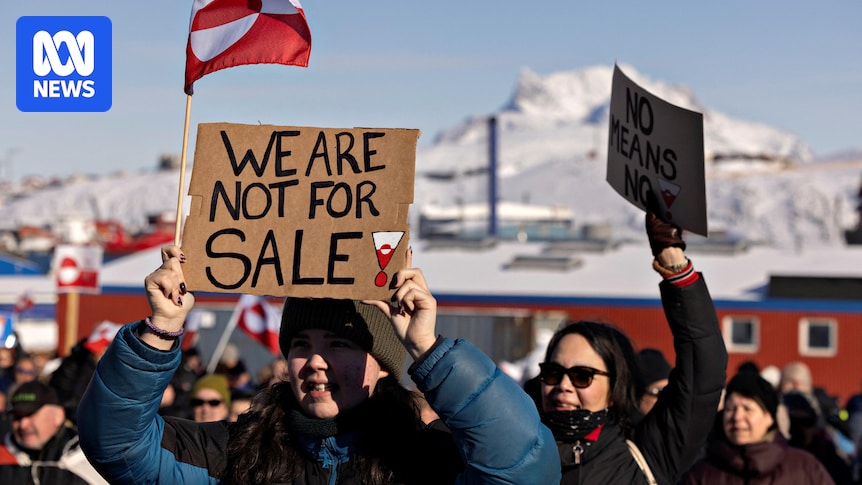
During a visit to Greenland’s capital, Nuuk, in 2025, local seal hunter Patrick Foldager expressed his unease. “I think for many here in Greenland and myself, we are scared about what has happened in Venezuela,” he told the ABC. “We are wondering what else he could do when he talks so much about wanting Greenland.”
The fear of annexation is compounded by Greenland’s status as a semi-autonomous territory under NATO’s protection. Danish Prime Minister Mette Frederiksen has warned that a U.S. takeover would threaten the NATO alliance, a cornerstone of transatlantic security for over 70 years.
Greenland’s history with Denmark is fraught with colonial injustices. Last September, Denmark’s Prime Minister apologized for past abuses, including the forced use of birth control on Indigenous Greenlanders. This apology was partly seen as a response to the international attention brought by Trump’s interest in Greenland.
Independence Movement and Future Prospects
Trump’s ambitions have inadvertently reignited Greenland’s push for independence. Jorgen Boassen, known as Donald Trump’s “Greenlandic son,” remains optimistic. Sporting a MAGA cap, he believes the White House’s threats are mere rhetoric and hopes for a “free association” agreement that could lead to independence while allowing the U.S. to oversee defense and foreign affairs.
“I’m not concerned,” Boassen told the ABC. “I’m just happy for new possibilities for Greenlanders, and when the time comes, we will be recognized as a people.”
Boassen, who campaigned for Trump in 2024, jokes about becoming president of Greenland if such a scenario unfolds. He believes that any military intervention would be defensive, aimed at countering potential threats from Russia or China.
Implications and Global Reactions
The renewed U.S. interest in Greenland has broader implications for Arctic geopolitics. The Arctic region is becoming increasingly strategic due to its untapped natural resources and new shipping routes emerging from melting ice. Control over Greenland could significantly enhance U.S. influence in the Arctic.
International reactions have been mixed, with some NATO allies expressing concern over the potential destabilization of the alliance. The situation underscores the delicate balance of power in the Arctic and the importance of diplomatic engagement to address territorial ambitions.
As Greenland navigates these complex dynamics, the island’s future remains uncertain. The possibility of independence, while appealing to many Greenlanders, poses challenges in terms of economic sustainability and governance. The coming years will be crucial in determining whether Greenland can achieve its aspirations while maintaining its cultural heritage and autonomy.