
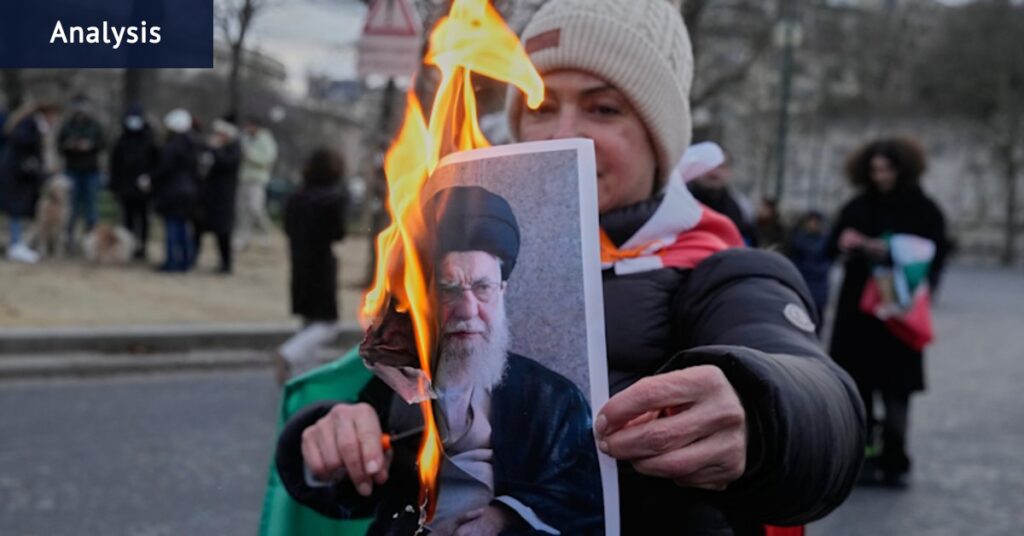
As night falls, the streets of Iran become a battleground for change, with protesters defying a brutal crackdown by authorities. The demonstrations, now entering their third week, have captured global attention, raising the specter of a potential overthrow of the Islamic Republic. Such an event could dramatically reshape global geopolitics and energy markets.
The regime of Supreme Leader Ayatollah Ali Khamenei has faced protests before, but the current wave is unprecedented in scale and intensity. Reports indicate hundreds of thousands are taking to the streets, from Tehran to smaller cities, despite threats from authorities. The unrest is fueled by economic collapse and corruption, with more than 500 protesters reportedly killed and over 10,000 arrested, according to the US-based Human Rights Activists News Agency.
International Reactions and Economic Implications
World leaders, including US President Donald Trump, are closely monitoring the situation. Trump’s administration, fresh from a geopolitical victory in Venezuela, has threatened military action against Iran. This stance has contributed to a surge in Brent crude prices, which rose over 5% last week, reflecting fears of supply disruptions from OPEC’s fourth-largest producer.
“This is the biggest moment in Iran since 1979,” said William Usher, a former CIA senior Middle East analyst. “The regime is in a very tough spot right now, and the primary driver is the economy.”
Meanwhile, Israel, having recently engaged in a US-assisted air campaign against Iran, is coordinating with European governments to assess the situation. The potential fall of the Iranian regime would also be a significant blow to Russian President Vladimir Putin, who has lost several allies in recent geopolitical shifts.
Historical Context and Expert Opinions
The protests echo the 1978 oil strikes that contributed to the fall of the Shah’s regime, a historical parallel not lost on observers. Reza Pahlavi, the exiled son of the former Shah, has called for petroleum workers to strike, which could further destabilize the economy.
Arne Lohmann Rasmussen, chief analyst at A/S Global Risk Management, noted, “The market’s focus has now shifted to Iran. There is growing concern that the US could exploit the chaos to attempt regime change, as seen in Venezuela.”
Despite the turmoil, some analysts believe a complete collapse of the regime is unlikely. Dina Esfandiary, a Middle East analyst with Bloomberg Economics, suggests the most probable outcome is a leadership reshuffle or a coup by the Islamic Revolutionary Guard Corps (IRGC), which might allow for more social freedoms but less political liberty.
Regional Implications and Future Prospects
The potential for a power vacuum in Iran is causing anxiety among Gulf Cooperation Council (GCC) nations, who have historically viewed Iran as an adversary but have sought improved relations to avoid conflict spillover. The specter of the Arab Spring, where regime changes led to chaos, looms large in their strategic calculations.
Ellie Geranmayeh of the European Council on Foreign Relations commented, “With the GCC’s recent reconciliation with Tehran, there’s a sense of ‘better the devil you know’ rather than facing complete chaos or an unknown power structure.”
However, the Iranian government remains defiant. President Masoud Pezeshkian, a moderate figure, has called for dialogue, but his conciliatory tone is unlikely to sway many protesters. The supreme leader and security forces continue to threaten severe reprisals, including the death penalty for dissenters.
“I don’t think a collapse of the regime would be pretty,” Usher warned. “Short-term, I could imagine some fracturing of the country as ethnic minority groups and some provinces pursue autonomy from Tehran.”
As the situation unfolds, the world watches with bated breath, aware that the outcome could redefine the Middle East’s political landscape. The coming weeks will be crucial in determining whether the Islamic Republic can withstand this unprecedented challenge or if a new chapter in Iranian history is about to begin.