



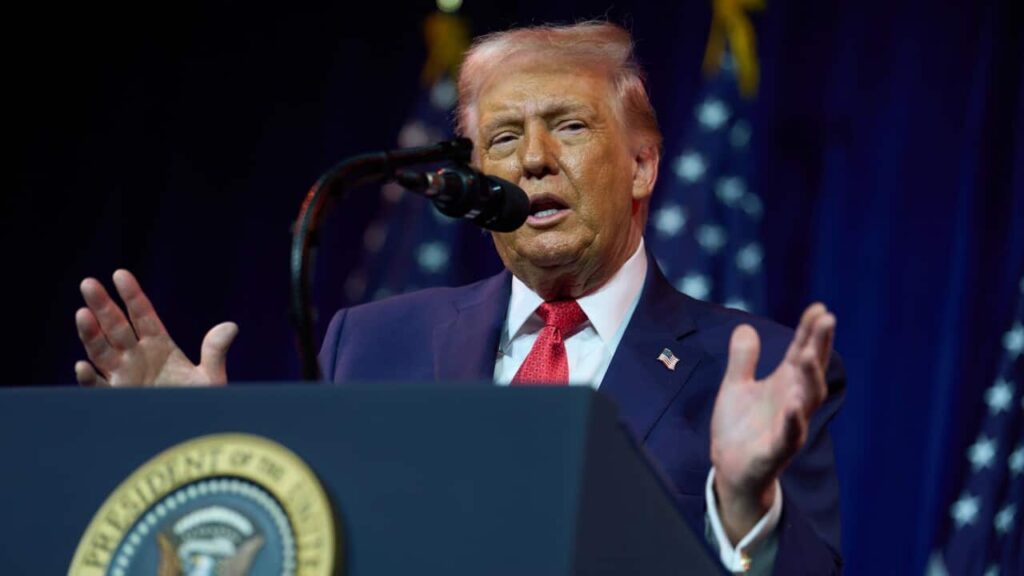
United States President Donald Trump is orchestrating a significant withdrawal from the international stage, as the US exits 66 global organizations, including the foundational treaty for climate agreements and the UN’s climate science body. This decision, announced by the White House on Wednesday, underscores Trump’s long-standing skepticism of climate science and multilateral cooperation.
The move to withdraw from these international entities is detailed in a White House memorandum, which cites concerns over US national interests, security, economic prosperity, and sovereignty. Among the most notable exits is the United Nations Framework Convention on Climate Change (UNFCCC), a treaty adopted in 1992 to combat global warming.
Historical Context and Legal Ambiguities
The UNFCCC, ratified by the US Senate during George HW Bush’s presidency, serves as the cornerstone for international climate agreements. Trump’s decision to withdraw from this treaty follows his previous exits from the Paris climate accord, a move reversed by former President Joe Biden. The US Constitution allows for treaty ratification with a two-thirds Senate majority but remains silent on withdrawal procedures, potentially inviting legal challenges.
Trump’s disdain for the United Nations was evident in his speech to the General Assembly, where he criticized the organization’s effectiveness and questioned its purpose. The US also skipped the annual UN international climate summit last year, marking a departure from three decades of participation.
Reactions and Implications
The withdrawal has sparked significant backlash from environmental groups and political figures. Rachel Cleetus of the Union of Concerned Scientists condemned the move as a “new low,” emphasizing its potential to destabilize global cooperation. Jean Su, a senior attorney at the Center for Biological Diversity, argued that unilateral withdrawal from a Senate-ratified treaty could be illegal, hinting at possible legal actions.
“Pulling out of the UNFCCC is a whole order of magnitude different from pulling out of the Paris Agreement,” said Jean Su.
Manish Bapna, president and CEO of the Natural Resources Defense Council, highlighted the unprecedented nature of the US withdrawal, noting that every other nation remains a member. He stressed the importance of participating in negotiations that shape global economic policy.
California Governor Gavin Newsom criticized Trump’s decision, suggesting it weakens America’s global leadership and cedes influence to countries like China.
Broader Impact on International Relations
The memorandum also directs the US to withdraw from the Intergovernmental Panel on Climate Change and other climate-related organizations, such as the International Renewable Energy Agency. This follows Trump’s earlier withdrawal from UNESCO and the World Health Organization, alongside significant cuts to foreign aid and UN agency funding.
Other organizations targeted include the UN Population Fund and the UN Conference on Trade and Development. The White House memorandum argues that these entities advance globalist agendas over US priorities, advocating for reallocating taxpayer dollars elsewhere.
“These withdrawals will end American taxpayer funding and involvement in entities that advance globalist agendas,” the White House stated.
US Secretary of State Marco Rubio supported the decision, claiming these organizations promote progressive ideologies that constrain American sovereignty.
Looking Ahead
The withdrawal from these international bodies represents a significant shift in US foreign policy, with potential long-term implications for global cooperation on issues like climate change, health, and development. As the US steps back from multilateral engagement, other nations may fill the leadership void, reshaping international dynamics.
As the world watches these developments, the future of US participation in global governance remains uncertain, with potential legal battles and political debates on the horizon.