


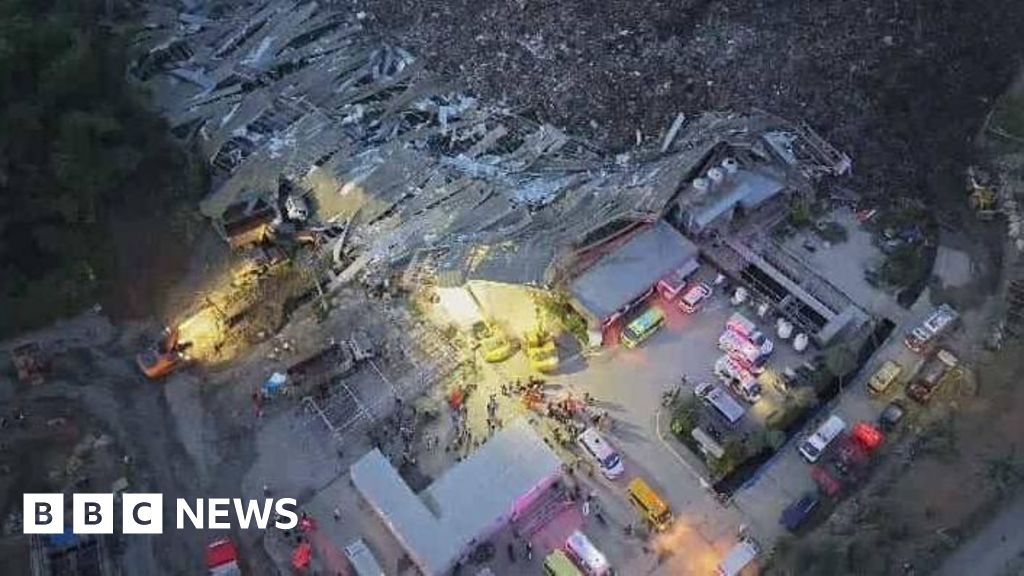
A catastrophic collapse at the Binaliw Landfill in Cebu City, Philippines, has resulted in the death of a 22-year-old woman and left 38 others missing. The incident occurred on Thursday, prompting a large-scale rescue operation involving hundreds of personnel from various government agencies and civilian groups.
Rescue teams managed to extract 12 injured sanitation workers from the debris, who were subsequently hospitalized. The victims are believed to be predominantly workers at the landfill, which is privately owned. The exact cause of the collapse remains under investigation.
Rescue Efforts and Immediate Response
In the wake of the disaster, approximately 300 people have been mobilized to aid in the search and rescue efforts. The site is currently bustling with activity as excavators, ambulances, and fire trucks work tirelessly to locate and assist any remaining survivors. Cebu Mayor Nestor Archival emphasized the commitment of the response teams in a social media post, stating, “All response teams remain fully engaged in search and retrieval efforts to locate the remaining missing persons.”
Cebu City Councillor Joel Garganera highlighted potential issues with waste management practices at the landfill, suggesting that the incident may have been precipitated by longstanding operational deficiencies. “Operators had been cutting into the mountain, mining the soil, and then piling garbage to form another mountain of waste,” Garganera explained to The Freeman, a local newspaper. He further criticized the site, describing it as “not a sanitary landfill” but rather “an open dumpsite.”
The Broader Context of Waste Management in the Philippines
Landfills are a common sight in major Philippine cities, including Cebu, which serves as a central trading hub and transportation gateway for the Visayas, the archipelago’s central islands. The Binaliw Landfill spans approximately 10 hectares (25 acres), and its collapse has reignited discussions about waste management practices in the country.
According to environmental experts, the Philippines faces significant challenges in managing waste due to rapid urbanization and population growth. The lack of adequate infrastructure and regulatory enforcement often leads to the proliferation of unsanitary landfills, posing environmental and safety risks.
“It’s not just about the immediate tragedy; it’s a wake-up call for better waste management policies and practices,” said Dr. Maria Santos, an environmental scientist specializing in waste management.
Historical Parallels and Future Implications
This incident is reminiscent of the 2000 Payatas landfill tragedy in Manila, where a massive garbage slide killed over 200 people. The Payatas disaster led to increased scrutiny and calls for reform in the country’s waste management systems. However, more than two decades later, the recent collapse in Cebu suggests that significant challenges remain.
Experts argue that comprehensive reforms are needed to prevent future tragedies. These reforms include stricter regulations on landfill operations, improved waste segregation, and investment in sustainable waste management technologies. The government has been urged to prioritize these measures to ensure the safety and well-being of communities living near such sites.
As the rescue operations continue, the focus remains on finding the missing individuals and providing support to the affected families. The tragedy at the Binaliw Landfill serves as a stark reminder of the urgent need for systemic changes in the way waste is managed across the Philippines.
Looking ahead, the incident has the potential to catalyze policy changes and increase public awareness about the critical importance of sustainable waste management practices. The coming weeks will likely see intensified discussions among policymakers, environmental groups, and the public to address these pressing issues.