




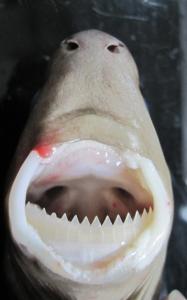
A groundbreaking study conducted in Hawaii has revealed that cookiecutter sharks are more likely to bite humans during periods of low light, particularly aligning with lunar cycles. This research, led by Dr. Steven Minaglia, highlights the increased activity of these sharks during darker, low-illumination periods, presenting crucial insights for swimmers and researchers alike.
The study, which focused on the feeding habits of cookiecutter sharks in channel waters, found a significant correlation between shark activity and the lunar cycle. These sharks are known for their unique feeding method, leaving distinct cookie-cutter-shaped wounds. Typically residing in deep tropical and subtropical waters, their behavior poses a unique challenge for swimmers in these regions.
Understanding the Cookiecutter Shark
Cookiecutter sharks, scientifically known as Isistius brasiliensis, are small but notorious for their feeding technique, which involves taking circular bites out of larger marine animals and, occasionally, humans. Despite their small size, their impact is significant, especially in regions like Hawaii where they are more prevalent.
Dr. Minaglia, an associate professor at the University of Hawaii at Manoa, has a personal connection to this research. An avid channel swimmer himself, his interest in the study was sparked by a desire to identify safer swimming conditions between the islands of Molokai and Oahu. His findings underscore the importance of environmental factors in increasing the likelihood of shark bites.
By the Numbers: Shark Bite Incidents
Of the seven reported cookiecutter shark bites on humans worldwide, six occurred in Hawaii, and five of those involved channel swimmers.
The study analyzed data spanning from 1961 to 2023, encompassing 129 successful solo channel swims and five shark-related injuries. A clear link was established between these incidents and environmental conditions, particularly during moonless nights. The risk of shark bites was found to significantly increase during complete darkness compared to times when the moon or sun was visible.
Environmental Factors and Swimming Safety
Beyond lunar cycles, other factors such as swim start times and the time of year were also found to correlate with the likelihood of an incident. Dr. Minaglia’s personal experience swimming the challenging Kaʻiwi Channel in 22 hours during a full moon in October 2020 provided additional insights. He noted that while the strong currents during full moons made the swim difficult, they also contributed to its success.
Dr. Minaglia expressed hope that his research will offer valuable guidance for the global swimming community, enabling safer swimming practices. His work not only sheds light on the behavior of cookiecutter sharks but also emphasizes the need for awareness about environmental conditions that can influence marine life interactions.
Implications for Future Research and Safety
This study represents a significant step forward in understanding the complex relationship between marine life behavior and environmental factors. It opens the door for further research into how other species may be similarly affected by lunar cycles and low-light conditions. For swimmers and ocean enthusiasts, these findings are a reminder of the importance of respecting the natural rhythms of the ocean.
As researchers continue to explore these dynamics, the hope is that such studies will lead to improved safety measures and protocols for those venturing into shark-inhabited waters. Dr. Minaglia’s work stands as a testament to the power of combining scientific inquiry with personal passion, ultimately contributing to a safer coexistence with the ocean’s many inhabitants.