


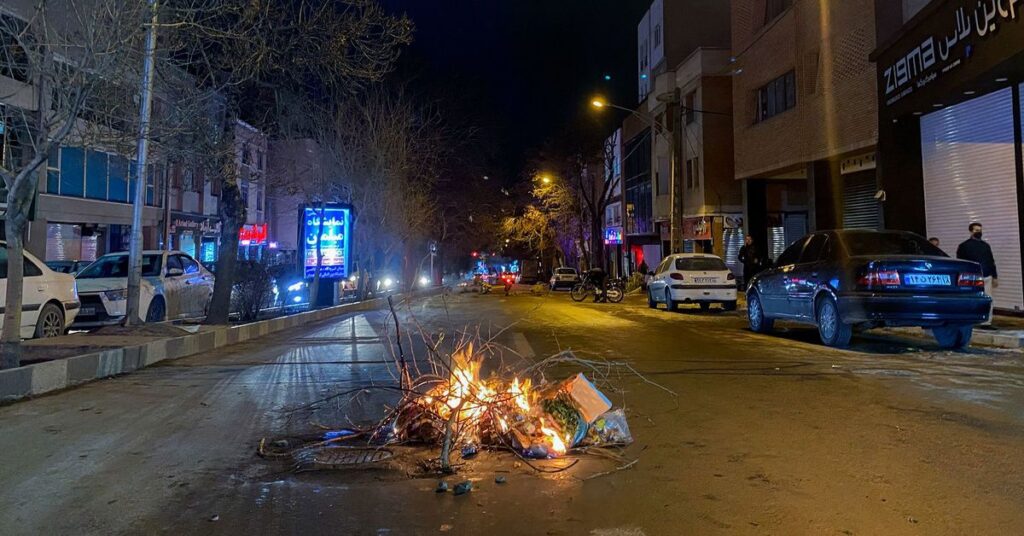
Anti-government protests have erupted in Tehran, as thousands of Iranians, frustrated by a deteriorating economy and stringent crackdowns by security forces, took to the streets of the capital. Demonstrators voiced their discontent with the ruling theocratic regime, chanting slogans that echoed throughout the city.
In an immediate response to the unrest, authorities cut internet access and telephone lines across Iran. An internet watchdog organization described the blackout as a potential precursor to a violent crackdown, although it did not prevent videos of the protests from surfacing online. Many protesters appeared to be responding to a call from exiled Crown Prince Reza Pahlavi, who urged citizens to mobilize.
Nationwide Unrest and International Reactions
Footage verified by international news outlets showed mass protests in cities across Iran, with demonstrators blocking roads and setting fires. The unrest has prompted U.S. President Donald Trump to reiterate his warning of potential military action if Iranian security forces resort to violence against protesters.
“I have let them know that if they start killing people, which they tend to do during their riots … we’re going to hit them very hard,” Trump stated in an interview.
The protests, fueled by crippling economic conditions, have swept across Iran’s provinces. Millions of Iranians are grappling with rampant inflation and a plummeting currency, leading to widespread demonstrations that have occasionally turned violent. The movement, initially sparked by organized protests in Tehran’s bazaars and universities, has now spread nationwide.
Economic Struggles and Political Discontent
Experts suggest that the leaderless and uncoordinated nature of the protests has contributed to their escalation. Economic grievances have intertwined with political demands, creating a volatile mix. A Tehran resident, speaking anonymously, highlighted the severity of the situation:
“This feels different because it’s about the people’s buying power, and people really can’t afford anything,” the resident said. “Prices keep going up almost hour-by-hour at this point, but how it ends no one really knows … Everyone feels worried.”
Iranian journalist and activist Masih Alinejad emphasized that the protests have expanded beyond economic issues. “This is very clear that they’re saying that this regime can no longer be reformed. So they’re saying we want an end to the Islamic Republic,” Alinejad told CNN.
Origins of the Protests
The protests began when shopkeepers in Tehran’s Grand Bazaar demonstrated against the government’s economic policies. The central bank’s decision to end a program allowing some importers access to cheaper U.S. dollars exacerbated the situation, leading to price hikes for basic goods and prompting the bazaaris to close shop—a significant move for a group traditionally supportive of the regime.
In response, the government attempted to ease tensions by offering direct cash handouts, although these measures were deemed insufficient to address the underlying economic crisis. President Masoud Pezeshkian acknowledged the limitations of the government’s efforts in a televised speech.
Protests Spread Across Provinces
Protests have now reached Iranian provinces as far west as Ilam and Lorestan, fueled by ethnic divisions and poverty. Demonstrators have set fires and chanted slogans directly challenging Supreme Leader Ayatollah Ali Khamenei. Videos from various regions, including Mazandaran and Golestan provinces, depict large crowds calling for Khamenei’s removal.
“This is the year of blood,” protesters chanted, “Seyyed Ali (Khamenei) is going to fall.”
In Mashhad, demonstrators tore apart an Iranian flag, and in Ilam, security forces reportedly raided a hospital treating wounded protesters, sparking condemnation from human rights groups. The unrest has resulted in numerous injuries and arrests, with reports of security personnel casualties as well.
Government Response and Future Implications
The Iranian government faces mounting challenges in addressing the protests. Despite attempts to suppress dissent through internet blackouts and force, the demonstrations persist. Experts argue that without a viable alternative to the current ruling system, the protests are unlikely to lead to regime change, but they underscore the profound crises confronting Iran’s leadership.
“None of Iran’s political leaders have a blueprint to get Iran out of the crises,” said Arang Keshavarzian, an associate professor of Middle Eastern and Islamic studies at New York University. “The only tool that the Islamic Republic truly has left is coercion and force.”
As the protests continue, the Iranian government must navigate a complex landscape of economic hardship, political discontent, and international pressure. The coming weeks will be crucial in determining the trajectory of this widespread unrest and its impact on the future of Iran’s regime.