



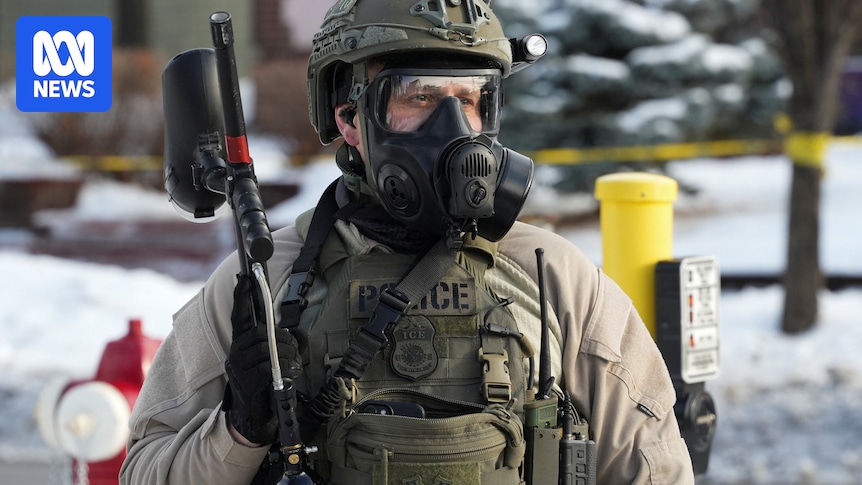
The city of Minneapolis is reeling after a legal observer was fatally shot by an Immigration and Customs Enforcement (ICE) agent. The incident occurred amid heightened tensions as federal agents intensified their presence in the city, part of a nationwide operation targeting Democratic strongholds. The victim, identified as 37-year-old Renee Nicole Good, was a volunteer involved in monitoring ICE activities.
Operation Metro Surge, initiated in December, saw an escalation in recent days with an influx of federal agents into Minneapolis neighborhoods. Local activists and citizens have formed networks to resist ICE operations, patrolling streets, and offering support to targeted individuals. According to local council member Jason Chavez, Ms. Good was participating in these efforts out of “care and love” for her immigrant neighbors.
Minneapolis, a sanctuary city, has been a focal point of resistance against federal immigration enforcement. Local authorities typically refrain from enforcing federal immigration laws, a stance shared by other major cities like Los Angeles, New York, and Chicago. The shooting has intensified scrutiny of ICE’s actions and the federal government’s immigration policies.
Community Mobilization and Resistance
For nearly a year, activists in the Twin Cities, comprising Minneapolis and St. Paul, have been preparing for potential immigration enforcement surges. These networks, operating from places of worship to caravan parks, have developed sophisticated systems to track and respond to ICE activities. Volunteers scan license plates for federal vehicles, distribute whistles for warnings, and use chat groups and radios for coordination.
In blue cities, the presence of federal agents, particularly under the Trump administration, has often been met with organized civilian resistance. In Washington D.C., similar networks have been documented, with volunteers like Anna dedicating their time to monitor and document law enforcement activities.
“We are trying to get there as quickly as possible to see exactly what happened,” said Anna, a volunteer in Washington D.C. “It’s a community effort to piece together the big puzzle for the public.”
Conflicting Accounts and Political Reactions
The circumstances surrounding Ms. Good’s death remain contentious. Federal authorities allege that the victim was a “violent rioter” and posed a threat to ICE agents. However, multiple videos from the scene suggest otherwise, prompting calls for transparency and accountability.
Minneapolis Mayor Jacob Frey condemned the shooting, stating, “They’re already trying to spin this as an action of self-defense… having seen the video myself, I want to tell everybody directly — that is bullshit.” The incident occurred near the site of George Floyd’s murder in 2020, adding to the city’s fraught history with law enforcement.
Local council member Chavez has been vocal on social media, asserting that observing federal actions is not a crime. He emphasized the importance of community observers in documenting government activities and providing mutual aid.
“Observing the federal government’s actions is not a crime, and even if it were, it would not be punishable by death,” Chavez stated.
Implications and Future Considerations
The shooting has sparked outrage among local and national leaders. Democratic congressional representative Ilhan Omar criticized ICE’s actions as “unconscionable and reprehensible,” calling for accountability and reform. The White House, however, praised the operation’s efforts in making Minneapolis “safer.”
This incident highlights the ongoing tensions between federal immigration enforcement and local resistance efforts. As the investigation unfolds, community leaders and activists continue to demand justice for Renee Nicole Good and a reevaluation of federal immigration policies.
The tragic event underscores the complexities of immigration enforcement in sanctuary cities and the role of civilian networks in advocating for immigrant rights. As Minneapolis and other cities navigate these challenges, the debate over immigration policy and enforcement practices remains a critical issue.