




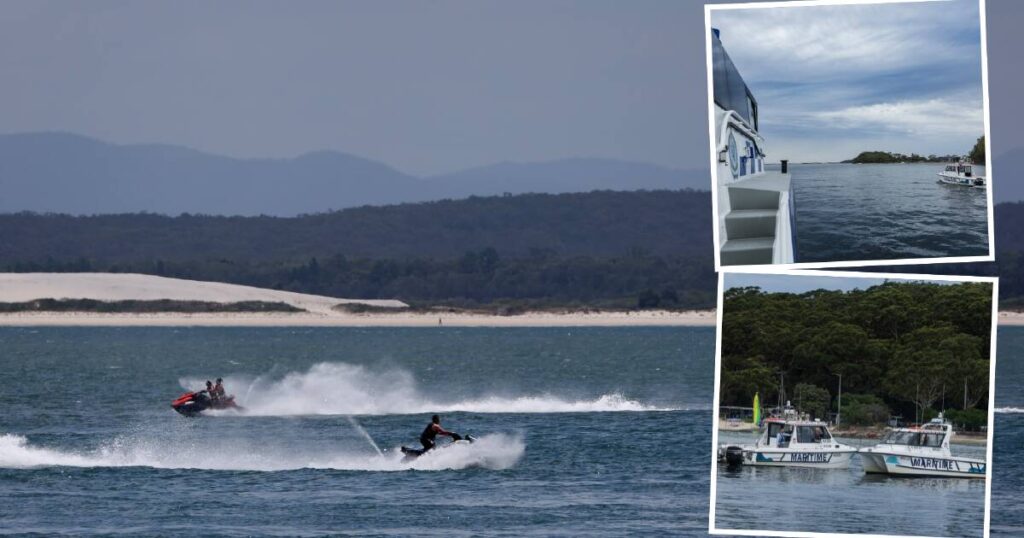
In a concerted effort to enhance safety on New South Wales waterways, a recent crackdown on jet ski offenses at Lake Macquarie and Port Stephens has resulted in a significant number of fines and warnings. Over the weekend, NSW Maritime boating safety officers and water police conducted a safety blitz under the operation dubbed “Cool Your Jets,” targeting popular locations such as Lake Macquarie, Port Stephens, Botany Bay, Lake Illawarra, Jervis Bay, and the Murray River.
During this operation, Lake Macquarie emerged as a hotspot, accounting for over 20 percent of all jet ski offenses detected. The area saw the highest number of penalty notices and official warnings issued across New South Wales, representing 16 percent of official actions for all types of vessels and 21 percent specifically for jet skis.
Operation Cool Your Jets: A Closer Look
The operation, which took place over the course of a week, was designed to ensure compliance with safety regulations and promote community engagement. According to Sonia McKay, NSW Maritime’s principal manager north, the initiative focused on educating water users about safe practices to ensure everyone could enjoy the summer holidays safely. “It’s only ever a small minority of operators that are doing the wrong thing,” McKay noted, emphasizing the importance of positive interactions between officers and the public.
Key issues identified during the operation included life jackets, licensing, registration offenses, speeding, and safety equipment for all vessels. For jet skis, specific problems such as licensing and registration, speeding, irregular riding, and distance offenses were prevalent.
Statistics and Compliance Rates
By Sunday afternoon, January 4, a total of 373 vessel safety checks had been conducted in the Hunter region, resulting in eight penalty notices and 52 official cautions. Of these, 134 checks were specifically for personal watercraft, leading to four penalty notices and 19 official cautions. Across the state, 1,921 vessel checks were performed, including 627 jet ski safety checks, which resulted in 60 penalty notices and 181 official cautions, achieving a compliance rate of nearly 89 percent.
In 2025, Lake Macquarie was ranked ninth in the state for jet ski offenses, with Port Stephens following closely at tenth.
Rising Popularity and Safety Measures
The popularity of jet skis has surged in recent years, with over 92,000 riders now licensed in NSW, marking a 23 percent increase over five years. This growing interest has prompted authorities to implement temporary exclusion zones at Port Stephens, barring jet ski riders and power vessel skippers from entering certain areas between December 24 and January 26. These zones cover approximately 800 meters of shoreline, a quarter of the 3.2 kilometers of coast at Port Stephens, and require powered vessels to maintain a distance of at least 30 meters from the shoreline.
There are no restrictions for swimmers and beach-goers in these exclusion zones, ensuring that all water users can enjoy the area safely. The main rules reiterated for jet ski riders include maintaining a 30-meter distance from other vessels, objects, or the shore when traveling at six knots or more, keeping 60 meters away from people or dive flags where possible, and ensuring that all passengers and riders wear life jackets.
Looking Ahead
The enforcement of these regulations and the establishment of exclusion zones are part of a broader strategy to manage the increasing popularity of jet skis and ensure the safety of all water users. As authorities continue to monitor compliance and educate the public, the hope is that these measures will lead to a safer and more enjoyable experience for everyone on New South Wales waterways.
With the operation concluded, NSW Maritime and local authorities will assess the effectiveness of these initiatives and consider further actions to maintain safety and compliance in the future. The ongoing dialogue between officers and the community remains a crucial component in achieving these goals.