




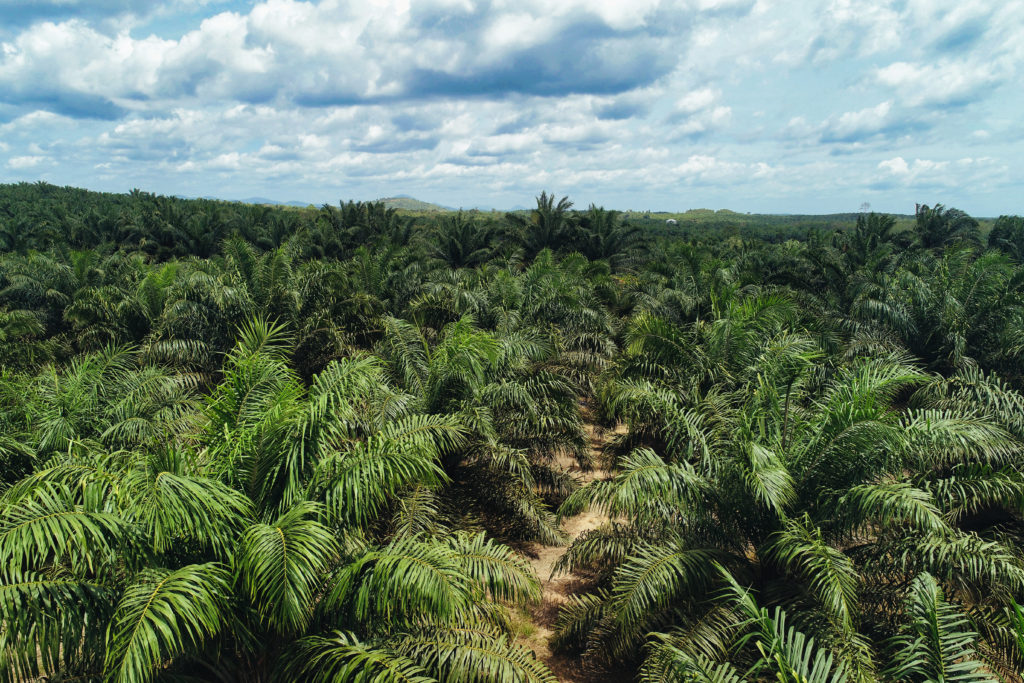
In a sweeping move that began in March, Indonesia has seized a vast area of palm-oil estates from a tycoon embroiled in corruption allegations. Nine months later, under the watchful eye of Indonesia’s defense minister, the government has brought an area equivalent to the size of Switzerland under state control. This ambitious campaign, ostensibly aimed at improving governance, is also a demonstration of power by President Prabowo Subianto, an ex-general known for his vocal criticism of both domestic elites and foreign interests profiting from Indonesia’s rich resources at the nation’s expense.
Already, the central government has reclaimed over 4 million hectares (approximately 10 million acres) of plantations, mining concessions, and processing facilities. Much of this land has been transferred to a state-owned company newly tasked with managing these seized estates. “This is just the beginning,” Prabowo declared at an event last month. “We are on the right and noble path of defending the interests of millions of Indonesians.”
Global Implications of Domestic Policy
The ramifications of Indonesia’s internal upheaval are poised to extend beyond its borders. As the world’s leading exporter of coal and palm oil, the largest producer of nickel, and a significant source of copper and tin, Indonesia’s actions could impact global food and energy supplies, as well as industries reliant on future-facing technologies.
Bhima Yudhistira Adhinegara, executive director at the Jakarta-based Center of Economic and Law Studies, noted, “This increasingly shows the character of a Prabowo-style command economy. Methods like this reduce interest from investors, both in the plantation sector and in conservation.”
Strategic Moves and Controversial Tactics
Prabowo established the Forest Area Enforcement Task Force last January, placing Defense Minister Sjafrie Sjamsoeddin, a longtime ally, at its helm. This task force issues fines and reallocates land, often to Agrinas Palma Nusantara, a state-owned giant central to this effort. In a short span, this repurposed company, led largely by retired military officers, has become the world’s largest palm oil player by area held.
Official statements about these confiscations have emphasized improved land management, a critical issue for Indonesia, which has lost millions of hectares of forest in recent years due to palm-oil and mining expansions. The role of deforestation in exacerbating floods and landslides, which claimed over 1,000 lives in Sumatra last month, has added urgency to Jakarta’s campaign.
Local Resistance and Economic Impact
However, growers targeted by the government argue they are cultivating land acquired legally, sometimes through government programs promoting internal migration. Achmad Sukarsono from consultancy Control Risks stated, “Prabowo claims that the state has reclaimed 4 million hectares because these plots were located within forest zones. But how did it come to this? Such a vast amount of land couldn’t have been taken illegally by palm oil companies without approval from local governments and military officials.”
For generations, families like Rubahan Hasibuan’s in northern Sumatra have cultivated the same land, now one of the country’s main palm-growing regions. In March, officials, some in military and prosecutor’s office uniforms, arrived in his village to declare the land under government control. Hasibuan and his neighbors have since resisted offers to stay on their land in exchange for a share of the profits, opting instead to maintain their independence.
Investor Concerns and Future Outlook
The campaign, which gained momentum with the handover of 221,000 hectares from Duta Palma Group, has affected plantations and mining operations across the archipelago. The Indonesian attorney general’s office reports that about four dozen palm companies have been ordered to pay around $560 million, while 22 miners face over $1.7 billion in penalties.
These developments have already sent ripples through international markets. Singapore-based Wilmar International Ltd. anticipates impacts on a few thousand hectares of its plantation area and is in discussions with authorities. Meanwhile, Malaysian-listed IOI Corporation Bhd. plans to conduct more risk assessments before investing further in Indonesia.
Changing regulations and unclear permits are longstanding issues in Indonesia’s commodities sector. Overlapping land allocations are common, particularly in palm oil, where some areas permitted for cultivation are still classified as forest areas, according to Tungkot Sipayung, executive director of the Palm Oil Agribusiness Strategic Policy Institute.
Historical Parallels and Investor Confidence
The breadth of this campaign echoes the nationalizations and property reorganizations under Indonesia’s first president after the colonial era, noted Eve Warburton of Australian National University. However, the current clean-up is led by a task force with significant discretion, raising concerns about potential politicization and its impact on investor confidence.
For commodity companies, the emergence of new state players has already caused anxiety. Agrinas, now holding 1.7 million hectares of plantations, aims to supply a third of Indonesia’s cooking oil and begin biodiesel production by 2029. Yet, much of its land bank remains unproductive, requiring substantial investment in land restoration and productivity enhancements.
The situation is similarly tense in the mining sector. On Halmahera island, allegations of forestry permit violations at the world’s largest nickel mine led to a brief spike in global prices. The government is reportedly demanding a hefty penalty from PT Weda Bay Nickel, whose largest shareholder is China’s Tsingshan Holding Group Co.
As Prabowo’s campaign progresses, the challenges of enforcement and long-term management loom large, particularly in a country as vast as Indonesia. While palm oil futures remain stable, indicating minimal immediate concern over production, the long-term consequences of these seizures and fines are a topic of intense discussion among industry stakeholders.
At a major palm industry gathering in Bali, the potential for significant penalties, which could exceed the value of the land itself, was a major concern. For nickel miners, the financial burden of compliance could prove debilitating, particularly for smaller companies.
“The risk that production will suffer more than we dare to say now is probably bigger than vice versa,” remarked Thomas Mielke, executive director of Oil World, highlighting the precarious nature of the current situation.
As Indonesia continues to assert control over its resources, the global community watches closely, aware that the outcomes of this bold strategy could reshape not only Indonesia’s economy but also the global commodities landscape.