




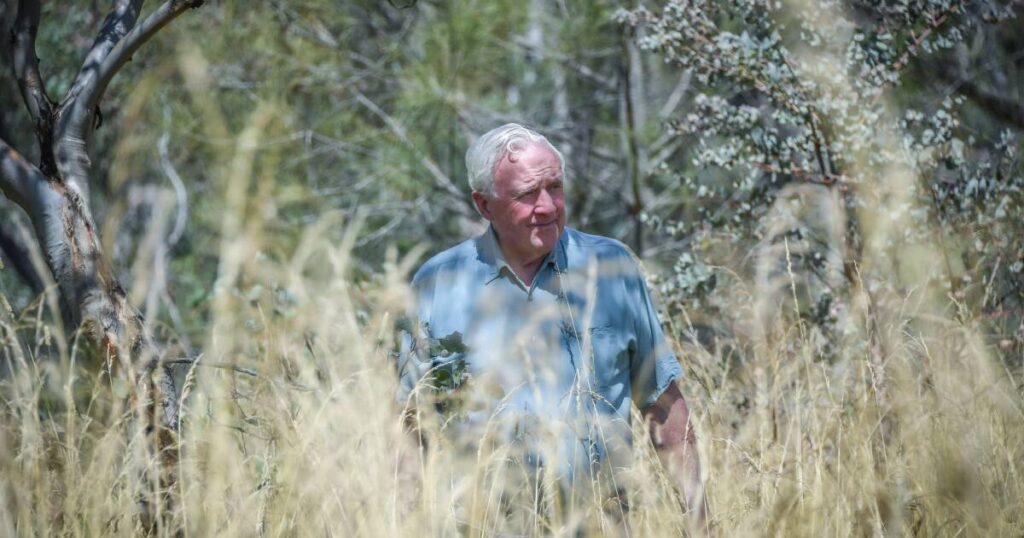
A veteran volunteer firefighter has raised alarms about the potentially catastrophic bushfire risk posed by high fuel loads surrounding North Canberra Hospital. This includes an infestation of African lovegrass, a highly combustible plant capable of shooting flames up to 30 meters high if ignited.
The warning comes as the ACT government acknowledges the need for urgent action. An assessment conducted in late 2025 highlighted the necessity to reduce these fuel loads.
Government Response and Planned Actions
An ACT government spokesperson stated that activities outlined in the bushfire operations plan for 2025-26 would address the issue. “Activities to be completed around the North Canberra Hospital campus include physically removing fuels behind Calvary Private and the multi-storey car park, and to the north of Hyson Green,” the spokesperson said.
Don Tarlinton, a seasoned firefighter, emphasized the urgency of the situation. He noted that the lovegrass infestation extends along Belconnen Way at Bruce, across Haydon Drive, and into the hospital campus, creating a significant fire hazard.
Community Concerns and Historical Context
Community concern over the bushfire risk is not new. In February 2025, O’Connor resident Geoff Evans highlighted the danger in a letter to the editor of The Canberra Times, describing the area as a “sitting duck” due to its dry grass, tree litter, and low vegetation.
Evans suggested, “The least that should be done is to clean it up and mow it. Better still, perhaps it should be bulldozed and planted with more fire-resilient non-natives.”
Despite these warnings, Tarlinton’s recent inspection revealed that conditions remain unchanged. He expressed concern about the proximity of smokers to the overgrown bushland, noting the potential for a discarded cigarette to ignite a large, fast-moving fire.
Expert Opinions and Risk Analysis
According to Tarlinton, the African lovegrass is a dangerous weed, increasingly prevalent in Canberra. Its presence near Jaegar Circuit in Bruce, close to the Gossan Hill Nature Reserve and a large retirement home, exacerbates the risk.
“African lovegrass burns intensely and can cause a fire to spread quickly, even in low temperatures and little wind,” Tarlinton explained.
He described the fuel levels around the hospital as “frightening,” particularly concerning the multi-storey car park, which has only one exit and is adjacent to a high voltage transformer.
In response, the government has included several mitigation strategies in the Bushfire Operations Plan (BOP) for 2025-26. These include chemical treatment of regrowth and annual slashing of grass along management trails.
Lessons from the Past and Future Implications
The situation has drawn comparisons to the 2003 firestorm, with Tarlinton criticizing authorities for failing to learn from past disasters. “They haven’t learnt any lessons at all,” he remarked, urging for more proactive measures.
The ACT government’s statement noted that while some areas around the hospital do not require prescribed burning, other mitigation treatments have been prioritized. The statement also emphasized the area’s proximity to emergency services and fire stations, which could aid in a rapid response.
“Whilst the Asset Protection Zones were in a reasonable condition, some areas were identified to have mitigation treatments applied,” the statement read.
Looking Ahead: Community and Government Actions
As the community braces for the summer fire season, the focus remains on implementing the outlined mitigation strategies swiftly. Tarlinton advocates for creating safer smoking areas and clearing the dangerous vegetation surrounding the hospital.
The ongoing risk serves as a stark reminder of the need for vigilance and proactive management of bushfire hazards, particularly in high-risk areas like North Canberra Hospital. The coming months will be crucial in determining whether the planned actions can effectively mitigate the threat posed by the combustible landscape.
As the anniversary of the 2003 firestorm approaches, the community and authorities alike are reminded of the devastating potential of bushfires and the critical importance of preparedness and prevention.