



As a child confined to his bedroom due to illness, Ory Yoshifuji longed for a second body to attend school and socialize with friends. For three and a half years, his world was limited to the four walls of his room, and the isolation became unbearable. “All I could do was stare at the ceiling day after day. The stress of loneliness at that time became so unbearable,” he recalls. “I might have been able to attend school with the other body.”
Years later, Ory transformed his childhood dream into a reality by launching the Dawn Avatar Robot Cafe in Tokyo. Here, charming robot avatars not only greet and entertain guests but also serve food and drinks. However, unlike other robotic ventures, these robots are not powered by artificial intelligence. Instead, they are operated by individuals who are housebound and disabled, much like Ory once was. “We’ve managed to create a situation where people, even if they can’t physically move around much, can still participate as members of society and as productive members of the workforce,” Ory explains.
A New Role in Society
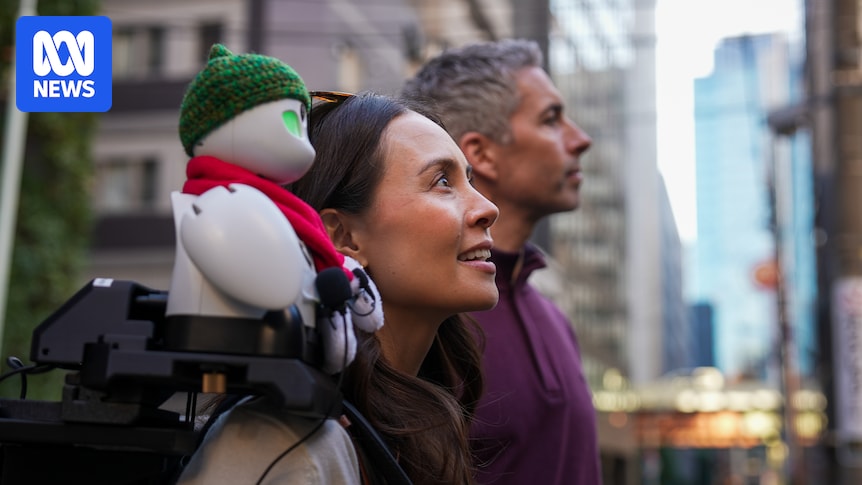
The robot cafe has been a resounding success, expanding from 10 to 100 robot operators, known as pilots. Each pilot controls their robot using a specialized program on their home computer, allowing them to see and interact with guests. The project has recently embarked on a new venture, capitalizing on Tokyo’s tourism boom. In addition to serving guests at the cafe, customers can now take a robot on their back for a personalized tour of the local area.
Ory shares that the idea emerged after many robot pilots humorously expressed their desire to escape the cafe. “[The robots] approach the automatic doors, head outside, and the wi-fi signal would cut out,” he says. “They’d often play around like that as a joke. But, of course, they actually wanted to go outside too.”
Empowering Individuals
One such pilot is Machun, who suffers from multiple sclerosis. She lost her job at a banking think tank when her condition worsened after contracting COVID-19. “I couldn’t stay awake,” she recounts. “I used to be able to walk, but [then] I couldn’t do that either.” For Machun, working as a robot pilot has provided her with a renewed sense of purpose. Her mental health has significantly improved, she notes. “Someone who could barely sit for an hour can now work six or seven hours a day with breaks,” she says. “I now feel like I have a role in society. I really feel that.”
The benefits extend beyond the pilots to the tourists as well. “What I loved about having our tour guide right on our shoulder is I feel like it was really flexible,” says Canadian tourist Andrea Wheaton. Her husband, Dave Schultz, appreciated the human connection. “You can hear the warmth through their voice and some giggles on their end,” he remarks.
Working While Teleporting
The rise of artificial intelligence and robotics often sparks debates about job displacement and reduced human interaction. However, Ory takes pride in the fact that his technology is fostering the opposite. “This also means we are creating a society where no-one is needed,” he states. Ory envisions expanding the robot tour guides to cover more areas of Tokyo. Nevertheless, one of the significant challenges is the patchy internet in crowded hotspots, which can disrupt the robot’s connection to the pilot.
“I hope we can create this way of working in other locations, or even beyond Japan,” Ory says. “It enables working while teleporting.” He believes this innovation will contribute to creating a “society without loneliness.”
Future Prospects and Challenges
The Dawn Avatar Robot Cafe represents a significant step towards inclusivity and empowerment for those who are physically limited. By allowing individuals to participate in society and the workforce, it challenges the traditional notions of work and social interaction. As the project looks to expand, it faces challenges such as ensuring reliable internet connectivity and adapting to different cultural contexts outside Japan.
Experts suggest that such initiatives could pave the way for more inclusive technologies in various sectors. By leveraging robotics and remote operation, businesses can tap into a wider pool of talent and offer opportunities to those who may otherwise be marginalized. As Ory’s vision continues to evolve, it holds the promise of transforming not only the lives of the pilots but also the broader societal landscape.
In the coming years, the success of the Dawn Avatar Robot Cafe could inspire similar ventures worldwide, promoting a more inclusive and connected society. As technology continues to advance, the potential for innovation in this field is vast, offering hope for a future where physical limitations are no longer barriers to participation and fulfillment.