



One of Australia’s most senior Catholic leaders has emphasized the need for a thorough investigation into the spread of antisemitism across the nation, urging the government to avoid politicizing the issue. The call for an inquiry comes amidst growing concerns about the rise of this ancient hatred in Australian society.
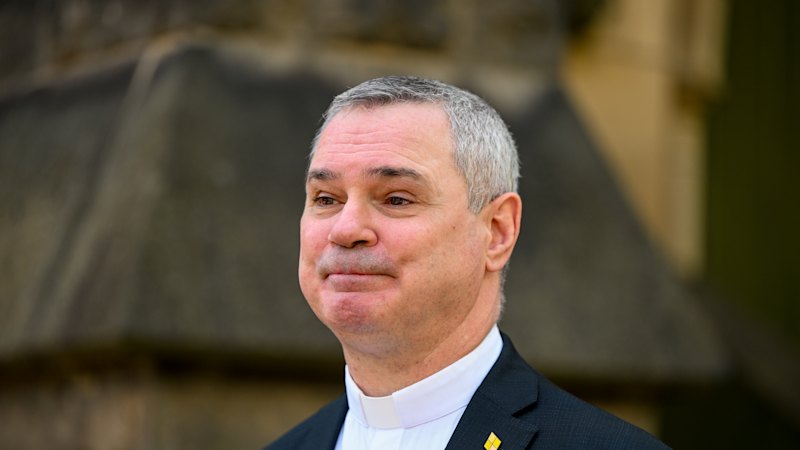
The Australian Catholic Bishops Conference has refrained from explicitly supporting a royal commission, a demand now backed by the Business Council of Australia, over 100 industry leaders, more than 200 judges and barristers, the Coalition, and two of Prime Minister Anthony Albanese’s backbenchers. Melbourne Archbishop Peter Comensoli stated on Friday that while the bishops are not prescribing the form of the inquiry, there is a pressing need to understand how antisemitism has become entrenched in parts of the community.
“Many voices now are calling for some serious inquiry, and I think that the government might be able to hear that and respond in a positive way. I think [that] would be a significant move,” Comensoli said. He stressed the importance of approaching the issue without political bias, emphasizing the need for a comprehensive examination and strategies to address antisemitism.
The Surge of Antisemitism Post-October 2023
Archbishop Comensoli noted that antisemitism had “exploded” following the Hamas attack on Israel on October 7, 2023, although it has been a longstanding issue within Australian society. The call for an inquiry has gained momentum, with the Business Council of Australia (BCA) joining the chorus for a royal commission. The BCA argues that such a commission is crucial for fostering inclusive workplaces and demonstrating Australia’s commitment to combating antisemitism.
“Without sustainably safe and cohesive workplaces and communities, we cannot deliver prosperity for all Australians, which is the ultimate objective underpinning the advocacy and efforts of our organisations,”
the BCA stated. The statement was made on behalf of several top industry bodies, including the Australian Banking Association and the Australian Retailers Association, among others.
Political and Business Support for a Royal Commission
Despite the broad support, the Australian Chamber of Commerce and Industry did not endorse the joint statement. Chief Executive Andrew McKellar stated that their focus has been on collaborating directly with the government for a comprehensive response. “We have strongly urged that no stone be left unturned in addressing the causes and consequences of this tragedy,” he said.
Former Victorian Liberal premiers Ted Baillieu, Denis Napthine, and Jeff Kennett have also backed the call for a royal commission. Opposition Leader Sussan Ley highlighted the widespread support for such an inquiry, noting the unity among Australians in seeking a Commonwealth royal commission.
“The prime minister called for unity in the early days after the Bondi massacre. Today, we have unity. We have unity of purpose, and we have unity in a request for this Commonwealth royal commission,” Ley said.
Government’s Response and Future Steps
The government’s response to the Bondi attack has included adopting recommendations from antisemitism envoy Jillian Segal, supporting a state-based royal commission, and launching a federal agency inquiry led by former intelligence chief Dennis Richardson. However, these measures have been criticized as inadequate by many.
Prime Minister Anthony Albanese has defended the government’s actions, stating that a Commonwealth inquiry could amplify hateful voices and would be too time-consuming. Meanwhile, Archbishop of Perth Timothy Costelloe, president of the Australian Catholic Bishops Conference, welcomed the inquiry into security agencies but insisted on the necessity for broader action.
“It is only by shining a light into the dark corners of our society – including its political, business, academic, media, religious, and cultural institutions – that we can hope to unmask the antisemitism which might otherwise go unseen, unacknowledged and unaddressed,”
Costelloe remarked.
As discussions continue, neither the Australian National Imams Council nor the Australian Federation of Islamic Councils has publicly stated a position on a national inquiry. Both organizations have condemned the Bondi attack, with AFIC indicating that its support for a royal commission would depend on its scope.
The evolving situation highlights the complex interplay between societal issues and political responses. As Australia grapples with these challenges, the call for a deeper understanding and strategic action against antisemitism remains a critical topic for the nation.