




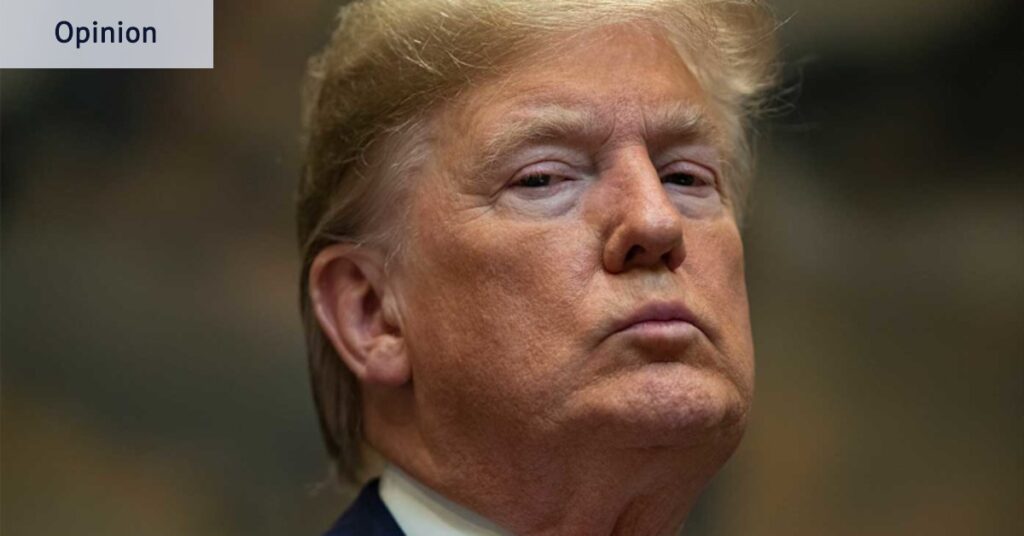
In a striking development that reshapes the global energy landscape, former President Donald Trump has effectively established an oil empire spanning the Western Hemisphere. This new geopolitical reality, often referred to as the “Donroe Doctrine,” places nearly 40 percent of the world’s oil output under the influence of Washington. The implications of this shift are profound, affecting international relations and economic strategies worldwide.
The announcement comes as the United States, under Trump’s influence, has secured significant control over oil production in the Americas, including major players like Canada, Venezuela, and Brazil. This control provides the U.S. with unprecedented leverage in the global energy market, a position not held since the era of Franklin D. Roosevelt in the 1940s.
Geopolitical Implications of America’s Oil Dominance
The implications of this newfound control are far-reaching. With access to Venezuela’s vast oil reserves, the U.S. can exert significant influence over global oil prices. As Oleg Deripaska, a Russian oligarch under U.S. sanctions, noted, Washington now has the means to stabilize oil prices around $50 per barrel, countering any attempts by other nations to manipulate the market through supply restrictions.
The geopolitical landscape is further altered by the U.S.’s ability to operate without the constraints of energy dependency. This newfound freedom has already manifested in bold foreign policy moves, such as military actions in the Middle East and strategic interventions in Eastern Europe, showcasing the power of this energy independence.
Historical Context and the “Donroe Doctrine”
The move represents a modern iteration of the Monroe Doctrine, which originally declared Latin America as a sphere of influence for the United States. Trump’s “Donroe Doctrine” updates this policy for the 21st century, focusing on the strategic importance of natural resources. This shift underscores the significant role that energy plays in modern geopolitics.
Historically, the U.S. has sought to secure energy resources as a means of maintaining global influence. The current administration’s actions echo past strategies but with a contemporary twist, leveraging technological advancements and geopolitical shifts to cement its position as a dominant energy power.
Economic and Environmental Considerations
While the economic benefits of this oil empire are clear, with potential boosts to American oil companies and the broader economy, there are also significant environmental considerations. The expansion of oil production raises questions about the environmental impact and the long-term sustainability of relying heavily on fossil fuels.
Experts warn that while the immediate economic gains are tempting, the environmental costs could be substantial. The focus on oil extraction and production must be balanced with efforts to transition to renewable energy sources to ensure a sustainable future.
Future Prospects and Challenges
Looking ahead, the U.S.’s control over such a vast oil empire presents both opportunities and challenges. The potential for increased geopolitical influence is significant, but so are the risks associated with managing such a complex and expansive resource base.
As the world shifts towards renewable energy, the U.S. must navigate the transition carefully, balancing its current oil dominance with the need to invest in sustainable energy solutions. The coming years will be crucial in determining how this new oil empire will shape global energy dynamics and the broader geopolitical landscape.
In conclusion, Trump’s oil empire marks a new era of American energy dominance, with significant implications for global politics and economics. As the U.S. navigates this new reality, the world watches closely, aware of the potential for both opportunity and upheaval in the years to come.