




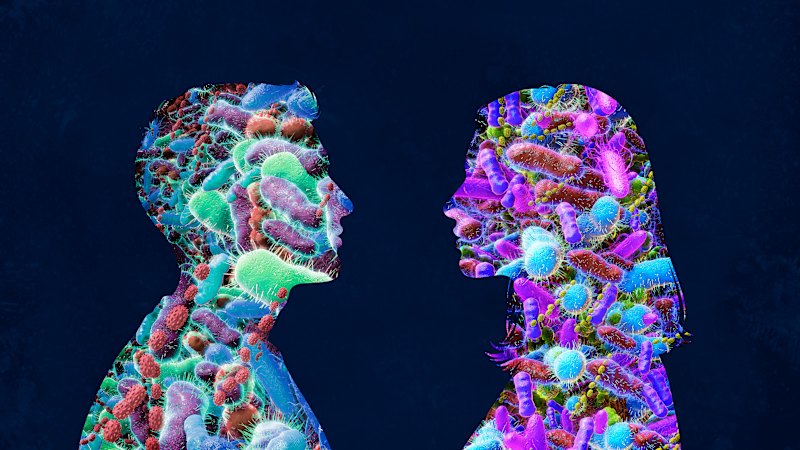
It is a defining paradox of our modern times: despite having more avenues to communicate and connect, many of us feel lonelier than ever. This perplexing phenomenon is at the heart of a new book by researchers Jeffrey Hall and Andy Merolla, titled The Social Biome: How Everyday Communication Connects and Shapes Us. Hall, a professor at The University of Kansas, and Merolla, from the University of California, Santa Barbara, propose a novel approach to understanding and alleviating loneliness by examining our social interactions as a complex ecosystem.
Using the metaphor of a “social biome,” the authors explore how repeated interactions, both small and large, can lead to more fulfilling social lives. This concept mirrors the gut microbiome, an ecosystem of bacteria, fungi, and viruses that thrive through diet and exercise. Similarly, varied forms of communication are essential for nurturing our social biome.
Understanding the Social Biome
According to Merolla, much of the existing research on social interaction overlooks the everyday minutiae—those seemingly mundane interactions like small talk that remind us of our significance. “We started thinking [the gut microbiome] was a lot like the ideas we have about social interaction, where these small moments don’t seem significant, but in combination they can really amount to something important about our social health,” he explains.
While loneliness is often perceived as a personal issue, Hall and Merolla argue it is influenced by a myriad of factors, including socioeconomic status and the environments we inhabit. Michelle Lim, a clinical psychologist and CEO of Ending Loneliness Together, notes, “Increasingly, we are being faced with more barriers to connection, like the cost of living crisis.”
Barriers and Solutions
Hall emphasizes that relationships are inherently complex and interdependent, often constrained by systemic issues like racism or generational trauma. “The social biome as a metaphor works really well because we’re also interdependent within our structural systems,” he says.
Despite these challenges, Hall insists that communication, much like good nutrition or exercise, requires practice. “Communication has always been hard,” he admits. “But what we have to remind ourselves is that like good nutrition or exercise, these take work and practice, and in doing them more, they become easier to do.”
In a society increasingly reliant on technology, where interactions are often mediated by screens, Hall and Merolla advocate for embracing the awkwardness of social interaction. “We want to normalise that communication and connection are difficult,” Hall stresses. Lim echoes this sentiment, encouraging people to acknowledge their loneliness and seek connection as naturally as they would satisfy hunger.
Practical Steps for Connection
Lim suggests incorporating small moments of connection into daily routines, such as chatting with a neighbor or scheduling regular calls with friends. “It’s not about changing our behaviours so much because we know this takes a lot, but really thinking about ways of doing things that are already potentially in our routine,” she advises.
Hall adds that recognizing social opportunities is crucial. “You have to begin to see social opportunities in your world,” he says. “If there’s a possibility of talking to a stranger, you have to see that your friendliness or openness in your neighbourhood makes a difference.”
Merolla recommends leveraging existing connections, even those that have lapsed. “Reconnecting with old friends doesn’t take much more sometimes than a text to let them know you were thinking of them,” he suggests.
The Ladder of Communication
In The Social Biome, Hall and Merolla introduce a “ladder of communication” to illustrate the value of different forms of interaction. At the top is face-to-face communication, followed by video chats, phone calls, and texting. Group chats and social media interactions rank lower, but Hall emphasizes that any interaction is better than none.
“The idea is to honour the idea that anywhere you’re at on the ladder is better than nothing,” Hall states.
Lim concurs, advocating for starting small. “For some people, it might just mean saying ‘hi’,” she says. “We can get very easily de-socialised. So I often say to people, ‘if we don’t take those steps, we then just get used to not talking, and then talking to people becomes a chore’.”
Ultimately, The Social Biome offers a fresh perspective on combating loneliness by fostering everyday communication. As we continue to navigate a world full of technological advancements and societal challenges, Hall and Merolla’s insights remind us of the fundamental human need for connection.