

In a dramatic turn of events, Venezuelan President Nicolás Maduro has been captured and is currently held in a New York prison. This audacious operation by the United States has sparked a whirlwind of political, legal, and diplomatic debates, raising questions about the Trump administration’s next steps and the broader implications for international law and global politics.
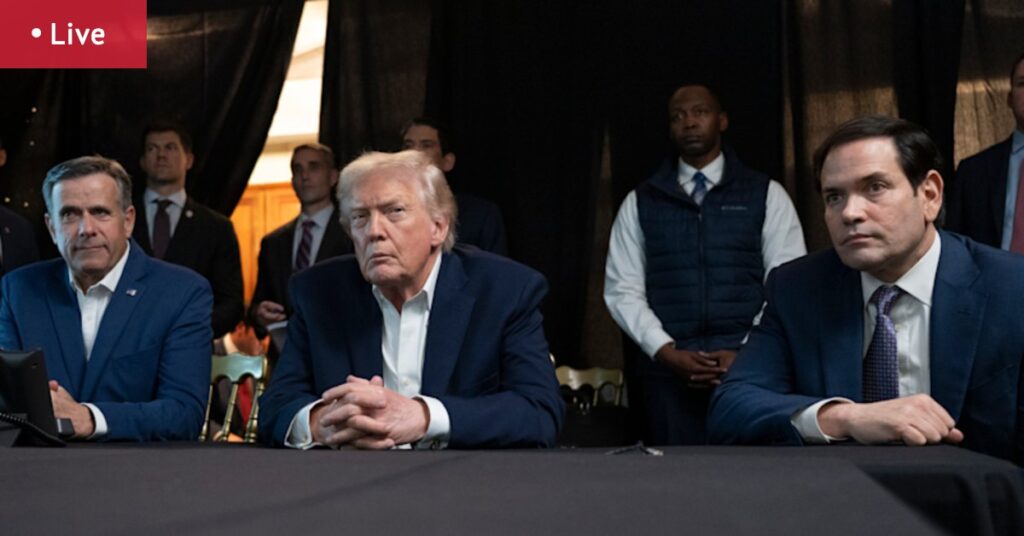
Maduro, who spent his first night in a Brooklyn prison cell, is set to appear in a Manhattan federal court for arraignment on charges including narco-terrorism and conspiracy to import cocaine. This development has intensified scrutiny on the Trump administration’s plans for Venezuela, especially after President Trump declared intentions to “run” the nation and reclaim American oil interests, a statement later tempered by Secretary of State Marco Rubio.
Legal and Diplomatic Repercussions
The US Attorney-General Pam Bondi emphasized that “every lawful option” was pursued in the operation, which she described as a “complex law-enforcement mission.” The operation has been met with criticism from international players, including Russia and China, who are major backers of Venezuela. The UN Security Council is set to convene to discuss the US strike on Caracas, with Secretary-General António Guterres warning of the dangerous precedent it sets.
Meanwhile, the European Union, with the exception of Hungary, has called for a peaceful resolution to the crisis. Australian Minister for Industry and Innovation Tim Ayres stated that it is up to the US to justify the legality and necessity of the attack, while Australia remains vigilant through its diplomatic channels in Latin America.
Reactions and Celebrations
Venezuelans worldwide have reacted with mixed emotions. In Sydney and Melbourne, expatriates celebrated the capture, viewing it as a potential end to dictatorship and a return to prosperity. Jackeline Giovannucci, who fled Venezuela, expressed hope for democracy, stating, “This is a triumph.”
In the US, particularly in Doral, Florida, a hub for Venezuelan immigrants, celebrations erupted with national pride. Similar scenes unfolded in Texas and Spain, reflecting the diaspora’s hope for positive change in their homeland.
On the Ground in Venezuela
Back in Venezuela, the atmosphere is tense. The streets of Caracas are eerily quiet as residents grapple with uncertainty. Many have lined up at grocery stores and petrol stations, fearing shortages, while others remain indoors, apprehensive about what the future holds.
Geoffrey Robertson KC, an Australian human rights barrister, has criticized the US actions, equating them to Russia’s aggression in Ukraine. He argues that the invasion lacks legitimate defense, highlighting the UN Charter’s prohibition against such acts except in self-defense.
Implications for US Foreign Policy
President Trump has defended the operation, suggesting it could be a precursor to other interventions. He hinted at strategic interests in Greenland and underscored the importance of maintaining leverage over Venezuela. Rubio echoed this sentiment, emphasizing that the US is not at war with Venezuela but is targeting drug trafficking organizations.
The capture of Maduro and the subsequent US actions have opened a Pandora’s box of geopolitical tensions and legal questions. As the world watches, the Trump administration’s next moves will be crucial in shaping the future of US-Venezuela relations and the broader international order.
As events unfold, the global community remains on edge, anticipating the potential ripple effects of this unprecedented operation.