




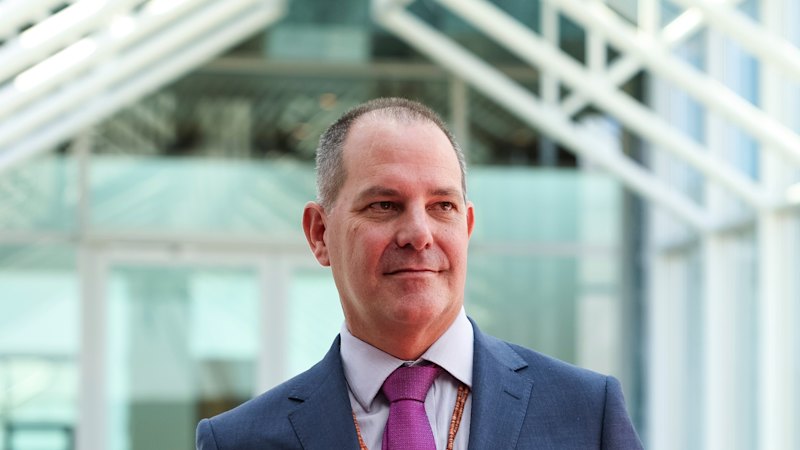
The Bureau of Meteorology’s recent website overhaul has come under intense scrutiny after it was revealed that the total cost amounted to a staggering $96 million, far exceeding initial reports. This revelation comes from the bureau’s new chief, Dr. Stuart Minchin, who has vowed to embrace transparency following the public backlash over the website’s redesign.
In his first interview since assuming his new role two weeks ago, Dr. Minchin acknowledged the agency’s missteps, particularly as the website changes coincided with severe storms in southeast Australia last month. Media reports had previously indicated that the redesign was riddled with issues, notably a confusing navigation system and radar map alterations that rendered place names difficult to read.
Uncovering the True Cost
Initial reports suggested that the website’s redesign cost $4.1 million. However, this figure omitted a substantial $78 million contract with Accenture Australia for website design. Dr. Minchin clarified that when factoring in security testing and other associated expenses, the total cost reached $96 million.
“I’ve looked into it. The total cost, when you add the Accenture work, the security testing and everything else, it’s about $96 million,” Dr. Minchin stated.
Following the website’s launch, then-acting bureau chief Dr. Peter Stone issued a statement acknowledging the challenges users faced but stopped short of admitting a mistake. This led to a swift return to the previous radar version after Environment Minister Murray Watt demanded accountability from the bureau’s leadership.
A New Approach to Leadership
Dr. Minchin, who succeeded Dr. Andrew Johnson, expressed his commitment to a leadership style marked by openness and honesty. He emphasized the importance of acknowledging errors and learning from them, contrasting his approach with that of his predecessor.
“I’m really coming in trying to be open and transparent about how we approach things, being open to saying when we’ve got things wrong,” Dr. Minchin explained. “When you’re criticised and bashed regularly, it’s easy to get defensive, but I don’t think that’s helpful.”
The bureau has faced criticism in the past, including a false tsunami warning last year that caused panic across New South Wales, Victoria, and Queensland. The agency was forced to apologize after the message, intended as a test, was mistakenly sent out during a software transition.
Learning from Past Mistakes
Dr. Minchin also addressed a previous controversy when the bureau requested the public to refer to it as “the Bureau” instead of the colloquial “the BoM.” This move was met with criticism, including from then-environment minister Tanya Plibersek, who argued that the bureau should focus on weather forecasting rather than branding.
Despite these challenges, Dr. Minchin expressed his enthusiasm for leading the agency, highlighting the significant impact of its work on public safety and daily life. His career has spanned various roles, including leading the environmental division of Geoscience Australia and directing the Pacific Community.
Facing Future Challenges
Looking ahead, Dr. Minchin emphasized the need for the bureau to adapt to the challenges posed by climate change, which is leading to more extreme weather patterns. He underscored the potential role of artificial intelligence in improving weather forecasting, while cautioning against over-reliance on past patterns in a changing climate.
“The climate science says that when there’s a change in the average climate, you get more extremes,” Dr. Minchin noted. “We’re going to have to make use of new technologies and new innovations. AI [artificial intelligence], for example, is going to play a huge role in weather forecasting in the future.”
As the bureau works to regain public trust, Dr. Minchin is prioritizing clear communication about the agency’s forecasting capabilities and track record. His leadership marks a new chapter for the Bureau of Meteorology, one that aims to balance technological advancement with transparency and accountability.