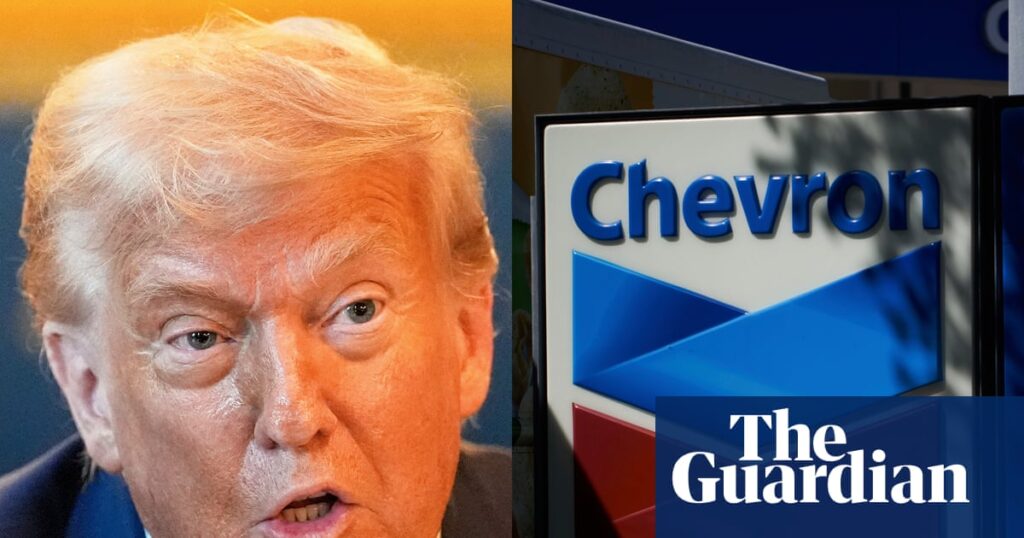
US oil giants have yet to respond to former President Donald Trump’s assertion that they are poised to invest “billions and billions of dollars” into revitalizing Venezuela’s oil industry following the potential removal of President Nicolás Maduro. The statement was made during Trump’s interviews and a press conference at his Mar-a-Lago estate, where he outlined plans for American energy multinationals to play a central role in the country’s economic recovery.
Chevron, the only US oil company still operating in Venezuela, has committed to adhering to “relevant laws and regulations” in response to Trump’s comments. Meanwhile, other major players such as ExxonMobil and ConocoPhillips have remained largely silent. ConocoPhillips noted that it is monitoring the situation but stated, “It would be premature to speculate on any future business activities or investments.”
Venezuela’s Oil Industry: A Historical Context
Venezuela, home to the world’s largest oil reserves, nationalized its oil industry approximately 50 years ago. In 2007, the government seized control of operations previously run under private arrangements. While Chevron agreed to continue its operations under the new terms, companies like ExxonMobil and ConocoPhillips exited the country, leading to prolonged legal battles. These companies were eventually awarded billions by the World Bank’s International Center for Settlement of Investment Disputes, though Venezuela has yet to fulfill these financial obligations due to its struggling economy.
Currently, a US embargo on Venezuelan oil remains in effect. The Trump administration has repeatedly accused the Venezuelan government of expropriating American assets, framing the potential return of US companies as a reclamation of stolen wealth.
Expert Opinions and Industry Reactions
Analysts suggest that Trump’s announcement implies prior consultation with US oil executives. Jorge León, head of geopolitical analysis at Rystad Energy, speculated, “If President Trump said this publicly, probably there was already an agreement with the US companies.” Tina Fordham, a geopolitical strategist, echoed this sentiment, suggesting that oil majors have likely been part of the conversation.
“Companies, before rushing back into the country, will want to see the country is stable enough. The fact this industry was nationalized by [Hugo] Chávez a few years ago, that remains in the back of their minds,” León noted.
Despite the potential opportunities, experts caution that significant investment will be required to restore Venezuela’s oil output to previous levels. According to Rystad, achieving a production rate of 2 million barrels per day by the early 2030s would necessitate an estimated $110 billion investment.
The Global Oil Market and Future Prospects
The global oil market is currently experiencing a period of oversupply, which is driving prices down. León highlighted that in such an environment, oil companies will be “very, very selective of where they invest.” He suggested that firms may prefer to invest in regions they are already familiar with, rather than venturing into the complex landscape of Venezuela.
“There will be immense competition between them for the best opportunities,” Fordham predicted, emphasizing the potential for Venezuela to become a major focus for oil majors.
As the situation develops, the potential involvement of US oil companies in Venezuela will be scrutinized, particularly in light of historical parallels with other post-authoritarian transitions in countries like Afghanistan, Iraq, and Libya. These past experiences have shown that the path to stability and economic recovery can be fraught with challenges.
In the meantime, the world watches closely to see how this geopolitical drama unfolds and whether US oil giants will indeed make a significant return to the Venezuelan oil industry.