



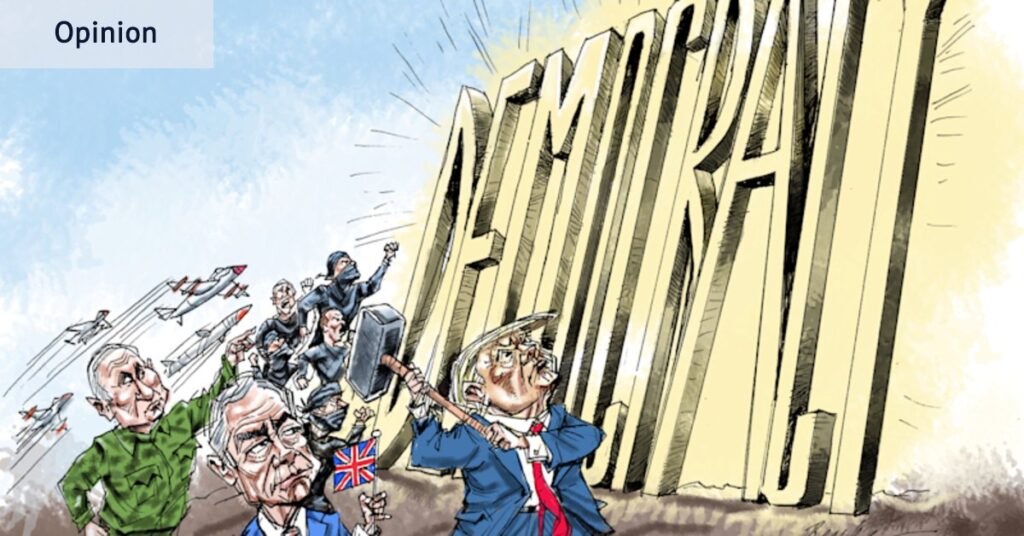
On September 1, 1939, as World War II erupted, poet W.H. Auden famously described the preceding decade as a “low dishonest decade.” Fast forward to today, and one might argue that the past year deserves a similar epithet. As we stand on the brink of 2026, the world is grappling with a barrage of lies and unfulfilled democratic hopes, leaving many to wonder if this New Year’s Day is one of unprecedented foreboding. Despite the gravity of the situation, a sense of normalcy persists among the masses. Yet, this is no ordinary time, and 2026 must be the year we awaken to avert potential disaster.
Reflecting on the events of 2025, it is clear that extraordinary developments have become the norm, numbing our sense of urgency. The year was marked by a major land war in Europe entering its fourth year, a conflict that has become a constant backdrop in our news feeds. However, the reality is anything but mundane. The BBC estimates that Russian deaths in Ukraine range from 243,000 to 352,000, with Ukrainian casualties at approximately 140,000. When injuries and prisoners of war are considered, total casualties soar to between 1.5 million and 2 million. The war has now outlasted Hitler’s invasion of the Soviet Union, yet a pervasive sense of foreboding remains elusive.
Resurgence of Far-Right Politics
Meanwhile, across Europe, far-right parties are gaining momentum, championing ideas like “remigration,” a concept that suggests non-white individuals are conspiring to undermine European civilization. This notion, once confined to neo-Nazi sects, is now openly endorsed by parties like Germany’s Alternative For Deutschland (AfD). In Hungary, antisemitism is being officially encouraged, often targeting Jewish businessmen such as George Soros.
The United States has not been immune to this trend. A recent tweet from the US Department of Homeland Security stated, “All America wants for Christmas is remigration,” echoing President Donald Trump’s National Security Strategy, which warned of “civilisational erasure” due to non-European immigration. This marks a stark departure from the American role in defeating Nazism during World War II, as current diplomacy seems to support its resurgence.
Political Shifts and Challenges
In Britain, the anti-immigration Reform Party, led by Nigel Farage, has been leading in the polls since Easter, overshadowing the Starmer Labour government. Similarly, in France, President Emmanuel Macron is struggling to keep far-right parties from gaining power. Across Europe, populist far-right parties are consolidating their vote share, some even governing.
Concurrently, the concept of truth is being rapidly undermined as extremist governments and parties manufacture narratives to suit their agendas. This manipulation of reality raises the question: could such extremism take root elsewhere? In Australia, the reappearance of Nazis on the streets signals a potential threat. These are not neo-Nazi skinheads but individuals who openly worship Adolf Hitler and march in disciplined ranks.
Australia’s Political Landscape
In May, Australian voters re-elected Prime Minister Anthony Albanese’s Labor Party with a record majority, rejecting a Liberal-National Coalition that had drifted from the political center. However, Pauline Hanson’s One Nation Party has since climbed in the polls, reaching 16 percent in the latest Resolve Political Monitor. The fear is that “illiberal-democracy” is gaining a foothold in Australia, potentially leading to a more divided and extreme political climate.
As history has shown, complacency is not an option. We must recognize the extraordinary nature of our times and pay closer attention to the dangerous ideas gaining traction. The crucial step is to accept that we are living in a pre-war world, where major conflict is possible within five years. Leaders must articulate what this means for domestic and foreign policy, emphasizing the necessity of national unity.
The Global Stage and Future Outlook
Ending the Ukraine War is paramount. If it continues into May, it will have lasted longer than World War I, potentially destabilizing the global order and encouraging further aggression from Russia or even China. Europe and the United States must pressure Russia to accept terms that ensure Ukraine’s survival, preventing a wider disaster.
Looking ahead, the upcoming midterm congressional elections in the United States may curtail Trump’s influence. The emergence of contenders for the Democratic presidential nomination will be closely watched, with the hope that a leader capable of winning and ending this lamentable era will emerge.
Let 2026 be the year we confront the extraordinary peril facing our world with decisiveness and clarity. The sound of gunfire at Bondi should serve as a wake-up call, urging us to take action and protect the liberal democracy that was hard-won 80 years ago and is now under threat once more.