




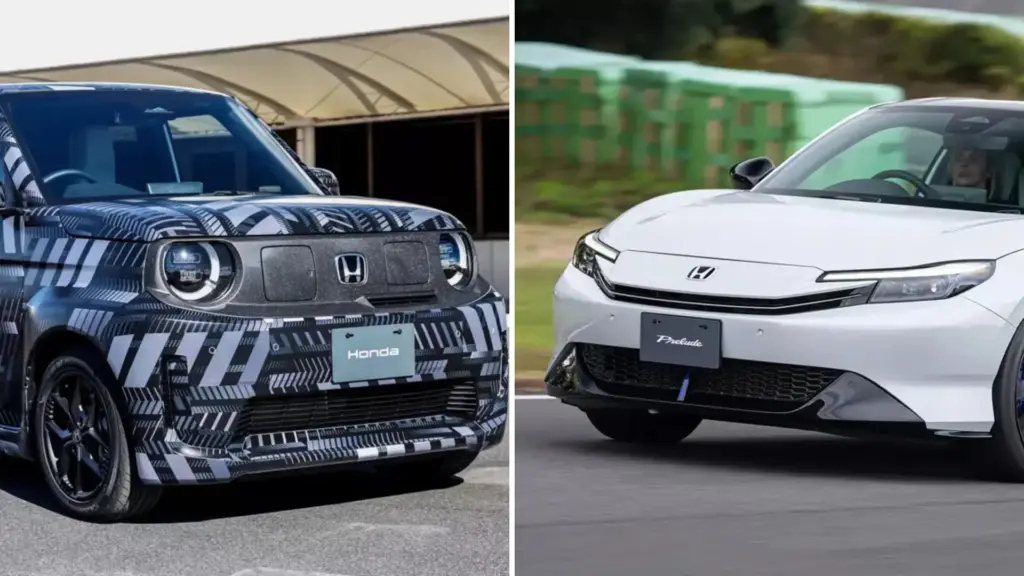
Honda is set to reignite its legacy as a brand for car enthusiasts by 2026, with plans to reintroduce models that emphasize driving pleasure. This strategic shift aims to attract a niche audience, even if immediate sales gains are not the primary focus. The introduction of new models, including the revived Honda Prelude, signals a return to the brand’s roots.
The Honda Prelude, a nameplate that first graced showrooms in 1978, is making a comeback as a two-door hybrid coupe. This marks its return after a two-decade hiatus since the fifth generation ended in 2001. The new Prelude will join other resurrected models like the Integra, available overseas, as part of Honda’s evolving lineup.
Reviving the Prelude: A Blend of Tradition and Innovation
Historically, the Prelude was known for its sharp handling and technical innovations, though it never boasted high power figures. The sixth-generation Prelude will continue this tradition with a 2.0-litre hybrid drivetrain delivering a modest 150kW. While this power output may seem tame, the real innovation lies in the Honda S+ Shift technology.
The new Prelude will feature an automatic transmission with the S+ Shift e-CVT, designed to mimic the sensation of manual gear shifting. This technology is expected to enhance the driving experience across Honda’s hybrid lineup, potentially benefiting models like the HR-V, CR-V, and Accord in future iterations.
Positioned as a hero product in markets like Australia, the Prelude aims to leverage its sporty appeal to draw attention to Honda’s broader range. Despite the typically modest sales in the sports car segment, the Prelude’s marketing potential is significant.
The Honda Super-One: A New Era of Electric Vehicles
In a bold move towards electrification, Honda is preparing to launch the Super-One, its first electric vehicle in Australia. Although Honda has introduced EVs in other markets, the Super-One represents a unique entry into the Australian market.
Based on the Honda N-One, a compact kei car from Japan, the Super-One has been modified for export with a wider body, exceeding kei class restrictions. While official power outputs remain undisclosed, they are expected to surpass the 47kW limit typical of kei cars.
The Super-One is not designed to compete with top-selling EVs from brands like BYD or Tesla. Instead, it serves as a soft launch of Honda’s electric ambitions, focusing on performance and handling with features like Boost Mode and S+ Shift.
Series Zero: The Future of Honda’s Electric Lineup
Behind the scenes, Honda is developing its Series Zero range, a lineup of dedicated electric vehicles poised to join the Australian market. These vehicles promise controversial styling and a bold new direction, with the Super-One acting as an introductory model for loyal Honda customers.
Broader Implications for Honda’s Mainstream Models
While Honda’s focus on sporty and electric vehicles is clear, the company is not neglecting its mainstream offerings. Updates are planned for models like the CR-V and ZR-V, including the introduction of all-wheel-drive hybrid variants and enhanced safety features to improve their current four-star ANCAP ratings.
These updates, expected in early 2026, will also bring new connected infotainment systems, making hybrid technology more accessible across a range of price points. This strategic move aims to broaden the appeal of Honda’s hybrid models beyond just flagship versions.
As Honda prepares for this transformative phase, the company is positioning itself to balance innovation with tradition, appealing to both enthusiasts and mainstream consumers. The coming years will reveal how these strategies unfold and impact Honda’s market presence globally.
