




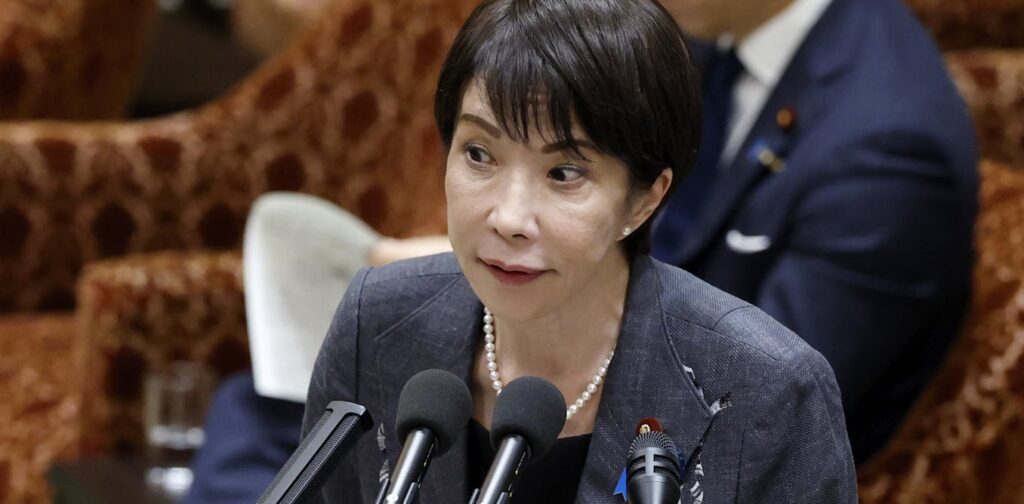
Though China and Japan have a history of navigating diplomatic crises, relations between the two neighboring nations have reached a new low. The current conflict, sparked by remarks from Japanese Prime Minister Sanae Takaichi, may not be easily resolved.
Prime Minister Takaichi’s comments in the Diet on November 7 suggested that any move by Beijing to use military force against Taiwan would trigger a Japanese military intervention. She described it as a “worst-case scenario,” indicating that such an attempt by China would pose a “survival-threatening situation” for Japan, thus justifying its right to collective self-defense alongside its US ally to restore peace and stability across the Taiwan Strait.
Diplomatic Crisis Unfolds
Taiwan, once a Japanese colony from 1895 to 1945, later became a refuge for Chiang Kai-shek’s Nationalists after their defeat by Mao Zedong’s communist forces in 1949. Today, Beijing considers Taiwan a province of China, despite it never being under Communist rule. Any statements suggesting otherwise are seen as interference in China’s domestic affairs, crossing a red line for Beijing.
In response to Takaichi’s remarks, Beijing demanded a swift retraction and apology, launching a verbal assault through its “wolf warrior diplomats.” With the Japanese Prime Minister standing firm, China retaliated with a combination of political, economic, and military pressure.
China’s Communist leadership warned its citizens against traveling to Japan and advised students to reconsider their plans to study there, citing safety concerns. Imports of Japanese seafood were reduced or put on hold, while events featuring Japanese artists were canceled. Additionally, Chinese Coast Guard and Navy vessels maneuvered through the waters of the Senkaku islands, a territory administered by Japan but claimed by China as the Diaoyu islands.
Amid these tensions, an international campaign to blame Japan for the crisis was initiated, aiming to isolate Tokyo. A formal protest was issued to the UN, and global leaders were pressured to align with China’s stance against Japan.
Tension Spills into Trade
China and Japan are significant trading partners, with a fifth of Japan’s inbound tourism originating from China this year. Beijing’s tightening of economic measures against Japan is expected to have a substantial impact, with some estimates suggesting the economic fallout could reach ¥2.2 trillion (A$14.2 billion).
Despite the current tensions, Beijing’s measures are less severe than past conflicts. In the early 2000s, Japanese prime ministers’ visits to the Yasukuni war shrine and revisions of history textbooks led to massive anti-Japanese protests in China. In 2010, Beijing halted rare earth mineral exports to Japan after a maritime incident involving a Chinese captain.
Japan’s “nationalization” of the disputed Senkaku islands in 2012, purchasing them from a private owner, resulted in increased Chinese military presence in the East China Sea. Despite these historical disputes, both nations have maintained a path that prevents tensions from severely impacting trade and business.
Japanese investments and economic aid have been crucial in China’s industrial modernization, fostering close trade relations between the two countries.
No Off-Ramp in Sight
This time, however, de-escalation and a return to the status quo may not be as easily achieved. Prime Minister Takaichi has positioned herself as an arch-conservative, inheriting her mentor Shinzo Abe’s policy agenda. She has pledged to strengthen Japan’s defense capabilities and further solidify the alliance with the United States.
The current dispute aligns with Takaichi’s established stance as a China hawk. She has visited Taiwan multiple times and called for a “quasi-security alliance” with Taipei, reflecting Tokyo’s concerns about the security of Taiwan being directly linked to that of Japan.
Following Russia’s invasion of Ukraine in 2022, then-Prime Minister Kishida Fumio warned that “Ukraine may be the East Asia of tomorrow,” explicitly placing Taiwan at the core of international security discussions.
Already, Takaichi has announced plans to increase Japan’s defense budget to 2% of its GDP by March 2026, two years ahead of schedule. To secure the necessary financial resources, tax hikes are being considered. A nation on alert against foreign threats may help temper opposition.
Supported by Taiwan’s leadership and significant portions of its public, Takaichi has used the standoff with Beijing to present herself as a decisive leader, redirecting public focus from her party’s past scandals to the current security crisis.
A quick resolution to the crisis seems unlikely. Xi Jinping’s China is more powerful than a decade ago, providing it with numerous options to escalate tensions further. Trade weaponization and increased military exercises are tools Beijing is likely to employ.
Japan, however, has learned from past crises. Its supply chains have become more resilient, and strategies to de-risk investments away from China are in place. Takaichi’s current governing coalition excludes the Komeito party, known for its ties to Beijing. Within the Liberal Democratic Party, figures skeptical of China’s rise, such as Taro Aso, remain influential.
With diplomatic channels limited and domestic political agendas taking precedence, finding an off-ramp for the current dispute remains elusive.