




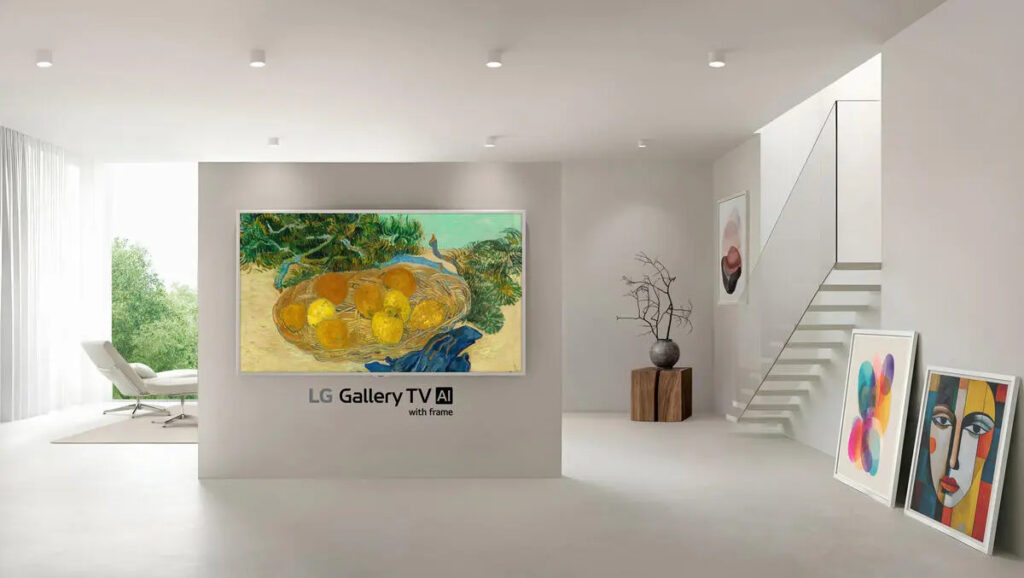
LG Electronics is set to introduce its latest innovation, the LG Gallery TV, at the Consumer Electronics Show (CES) 2026. This new product expands LG’s lifestyle screen portfolio, aiming to blend art with home cinema. The Gallery TV functions as both a television and a digital art canvas, offering a unique approach to home entertainment and interior design.
The Gallery TV connects with LG’s Gallery+ service, providing access to over 4,500 pieces of visual content that refresh monthly. This development marks a significant step in LG’s strategy to cater to consumers who prioritize aesthetic cohesion in their living spaces.
Art-Style Display Features
Available in 55-inch and 65-inch sizes, the LG Gallery TV features a slim profile and a flush-mount design, allowing it to sit close to the wall. Customizable magnetic frames surround the screen, offering users a choice of appearances to complement their home décor. While one frame type ships with the television, another is available separately, with options varying by market.
During its development, LG collaborated with museum curators to create a ‘Gallery Mode’ that optimizes color and brightness for artwork display. This mode aims to reproduce the visual texture of original pieces, providing an authentic art-viewing experience. The screen’s specialized panel reduces glare and limits reflections, ensuring art-like viewing conditions in various lighting environments.
The Gallery TV also features adaptive picture settings, adjusting based on ambient light in the room. This capability allows the television to monitor brightness changes throughout the day and modify the image accordingly. Additionally, the model includes internal storage, enabling users to load and store personal images locally.
Advanced Entertainment Features
Beyond its artistic capabilities, the Gallery TV serves as a 4K television for films, shows, and games. It incorporates LG’s MiniLED backlight technology and the α (Alpha) 7 AI Processor, which enhances image and audio processing functions. The television also includes AI Sound Pro, offering Virtual 9.1.2 channel audio for immersive sound without the need for external speakers.
Integration with Gallery+ Service
The Gallery TV seamlessly connects with LG Gallery+, described by the company as an “interior platform.” This service transforms television screens into decorative elements by providing a vast library of visual works. With over 4,500 pieces of content, including fine art, cinematic imagery, game visuals, and animations, the Gallery+ service updates its catalogue monthly.
While a light version of Gallery+ is free on LG TVs, the full service is available as a subscription through webOS Pay, depending on the region. Users can also upload personal photographs to display on the Gallery TV, either replacing or complementing the preset content in the library.
“Our goal is to enrich customers’ lives by providing the freedom to design every aspect of their personal space,” said Park Hyoung-sei, president of the LG Media Entertainment Solution Company.
Gallery+ includes generative AI functions, allowing customers to create original images using AI-based tools. These images can then be used as screen visuals. The service also incorporates audio, with users able to select built-in background music tracks or stream playlists via Bluetooth devices.
Strategic Expansion in Lifestyle TVs
The introduction of the Gallery TV underscores LG’s commitment to expanding its lifestyle-focused television lineup, a segment where competitors also offer models resembling framed artworks or decorative panels. This approach targets consumers who view televisions as integral to interior architecture rather than standalone electronics.
Park Hyoung-sei emphasized LG’s ongoing strategy, stating, “We will continue to lead the market by expanding our lifestyle TV lineup, transforming the screen into a companion that fluidly adapts to our customers’ preferences.”
As LG prepares to showcase the Gallery TV at CES 2026, the company aims to demonstrate how its lifestyle screens function as both design-oriented fixtures and conventional entertainment devices. This dual functionality reflects a broader trend in the consumer electronics industry, where design and technology increasingly intersect to meet diverse consumer needs.