




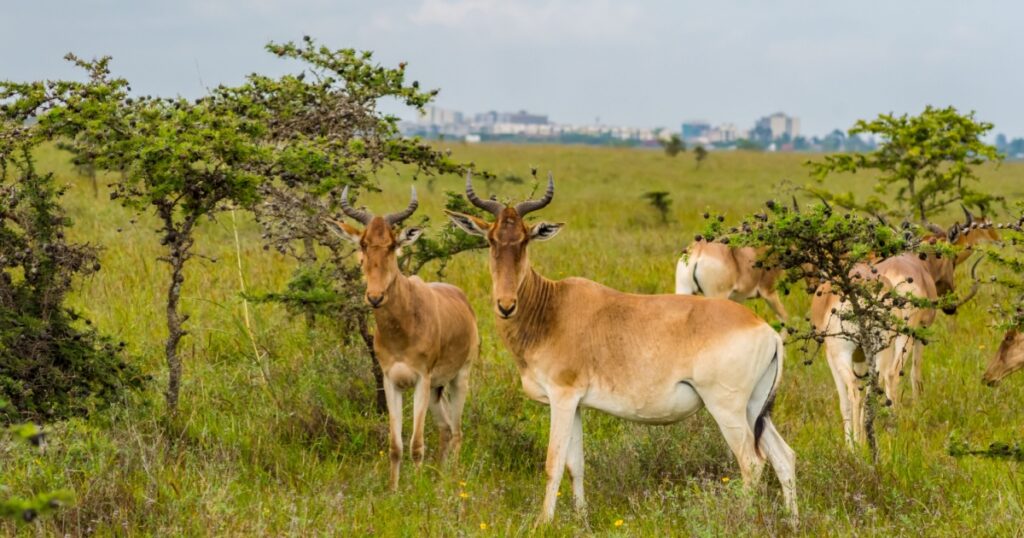
In the arid landscapes near the Kenya-Somalia border, a unique species of antelope known as the hirola, or the “four-eyed antelope,” teeters on the brink of extinction. With fewer than 500 individuals remaining, this critically endangered species faces an uncertain future.
The hirola is named for its distinctive facial markings, which resemble a second set of eyes from a distance. These “eyes” are actually preorbital glands used for marking territory. The name hirola is derived from the Somali word “Arawla,” referring to the animal’s tawny coat.
Historical Challenges and Population Decline
Once thriving in the thousands, the hirola population has dramatically declined over the past century. The most significant blow came in the 1980s with an outbreak of rinderpest, a highly contagious viral disease also known as cattle plague. This disease affects various mammals, including antelope and cattle, causing fever, nasal and ocular discharge, diarrhea, dehydration, mouth lesions, and often death.
According to the Hirola Conservation Program (HCP), the rinderpest outbreak in the 1980s decimated 85 to 90% of the hirola population.
The eradication of rinderpest, achieved through concerted global efforts, marked a historic victory as it became only the second viral disease to be completely eradicated, following smallpox. However, the hirola’s struggles did not end with the disease’s eradication. Predation, competition with livestock, and habitat loss have continued to impede their recovery.
Conservation Efforts and Community Involvement
In response to these challenges, the Hirola Conservation Program has initiated several projects aimed at preserving and restoring the hirola population. A key component of these efforts involves engaging local communities and governments to set aside over one million acres of habitat for the hirola.
Restoration of grasslands, crucial to the hirola’s survival, is another focus area. By rehabilitating these ecosystems, conservationists hope to provide a sustainable environment where the hirola can thrive once more.
Expert Opinions and Future Prospects
Experts in wildlife conservation emphasize the importance of a multi-faceted approach in saving the hirola. Dr. Jane Smith, a leading ecologist, notes, “Conservation is not just about protecting a single species. It’s about restoring the balance of entire ecosystems.”
“With community involvement and targeted conservation strategies, there is hope for the hirola’s recovery,” says Dr. John Doe, a renowned wildlife biologist.
The Hirola Conservation Program’s initiatives are supported by international conservation organizations, which provide funding and technical expertise. These collaborations are crucial in addressing the complex challenges faced by the hirola.
Looking Ahead: The Path to Recovery
While the road to recovery is fraught with challenges, the concerted efforts of conservationists, local communities, and international partners offer a glimmer of hope. The preservation of the hirola is not just about saving a species; it is a testament to the resilience and commitment of those dedicated to protecting our planet’s biodiversity.
As these efforts continue, the world watches with anticipation, hoping that the “four-eyed” antelope will once again roam the grasslands of East Africa in greater numbers. The success of this mission could serve as a model for other conservation endeavors worldwide.