




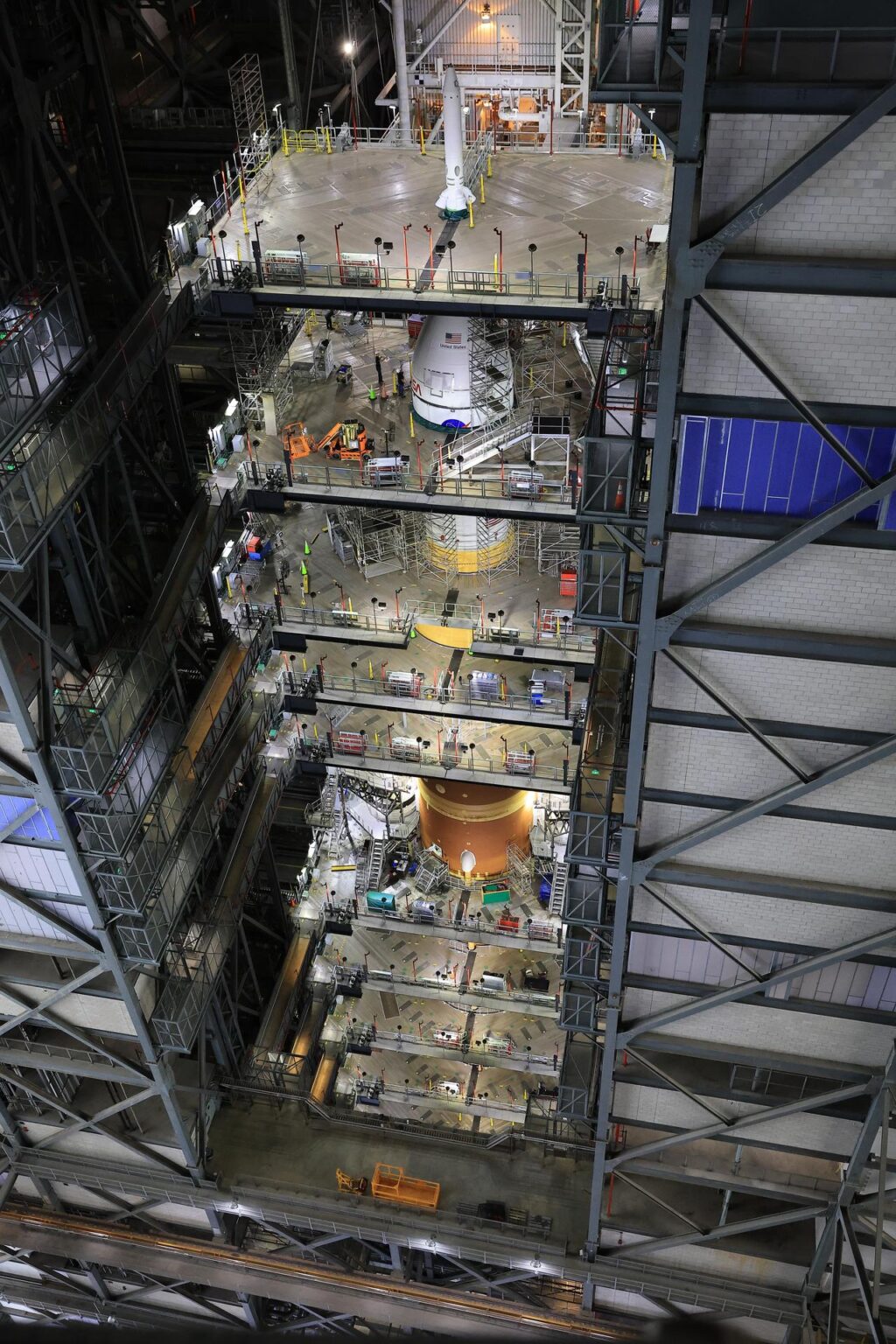
In 2025, NASA’s Kennedy Space Center in Florida was a hub of activity, as teams prepared for the launch of the Artemis II mission, which aims to send four astronauts around the Moon in early 2026. The year was marked by significant achievements, from scientific experiments aboard the International Space Station to advancements in solar and Martian exploration.
The announcement comes as NASA continues to push the boundaries of space exploration, with a focus on sustainable lunar missions and eventual human exploration of Mars. The Kennedy Space Center played a pivotal role in these efforts, celebrating numerous milestones throughout the year.
January: New Beginnings for Florida’s Space Industry
The year kicked off with a landmark agreement between Kennedy Space Center Director Janet Petro and the Florida University Space Research Consortium. This memorandum of understanding aimed to bolster research and development, contributing to NASA’s Moon to Mars exploration strategy.
Meanwhile, Firefly Aerospace launched its Blue Ghost Mission One lunar lander on January 15 from Launch Complex 39A. The mission, which included a suite of NASA scientific instruments, successfully landed on the Moon on March 2, marking a significant step in lunar exploration.
February to March: Lunar and ISS Missions
February saw the launch of Intuitive Machines’ IM-2 Nova C lunar lander, which carried NASA science and technology demonstrations to the Moon’s Mons Mouton region. The lander reached the lunar surface on March 6, furthering NASA’s lunar exploration goals.
In March, NASA’s SpaceX Crew-10 mission launched from Launch Complex 39A, sending astronauts from NASA, JAXA, and Roscosmos to the International Space Station for a five-month science mission. This was closely followed by the launch of NASA’s SPHEREx and PUNCH missions on March 11, which aim to explore the universe’s history and the Sun’s outer atmosphere, respectively.
“The successful return of NASA’s SpaceX Crew-9 on March 18, greeted by dolphins off the coast of Tallahassee, highlighted the seamless integration of commercial partnerships in space exploration,” said a NASA spokesperson.
Additionally, the opening of the NASA Causeway Bridge on March 19 improved connectivity between NASA Kennedy and Cape Canaveral Space Force Station, symbolizing infrastructure advancements supporting space missions.
April to August: Resupply and Preparations
April witnessed the launch of NASA’s SpaceX 32nd Commercial Resupply Mission, delivering nearly 6,700 pounds of supplies to the ISS. This development follows the ongoing collaboration between NASA and SpaceX to ensure the continuous supply of essential resources to the space station.
In July, preparations for the Artemis III mission began, with the SLS engine section and boat-tail being transported to the Vehicle Assembly Building for integration and testing. This move represents NASA’s efforts to streamline operations and enhance efficiency in its lunar mission preparations.
August was marked by the launch of NASA’s SpaceX Crew-11 mission, which sent astronauts from NASA, JAXA, and Roscosmos to the ISS for a long-duration mission. The month also saw the return of Crew-10, who became the first commercial crew to splash down in the Pacific Ocean, completing their nearly five-month mission.
“The integration of the Orion spacecraft with its launch abort system in August is a critical step towards ensuring astronaut safety for the upcoming Artemis II mission,” noted a NASA engineer.
September: Advancing Solar System Understanding
September concluded with the launch of NASA’s IMAP mission, designed to study the heliosphere’s boundary and enhance our understanding of the solar system’s protective bubble. This mission underscores NASA’s commitment to exploring the fundamental aspects of space that impact Earth.
The move represents a continued focus on scientific discovery and technological innovation, as NASA prepares for the next phase of human space exploration.
As 2026 approaches, NASA Kennedy’s achievements in 2025 set the stage for exciting developments in space exploration, with the Artemis II mission poised to be a significant milestone in humanity’s journey to the Moon and beyond.