


When Warner Bros celebrated its centennial in 2023, the studio released a four-part docuseries exploring its rich history and creative legacy. A poignant moment featured Warner Bros Discovery CEO David Zaslav proudly displaying a prized possession: the iconic bird statue from the 1941 film noir classic, The Maltese Falcon. “It has special meaning to me,” Zaslav remarked, touching the statue with a smile. “At the end of the movie, they ask Humphrey Bogart what this is, and he says, ‘It’s the stuff dreams are made of.’ That’s what we get to do every day, the stuff that dreams are made of.”
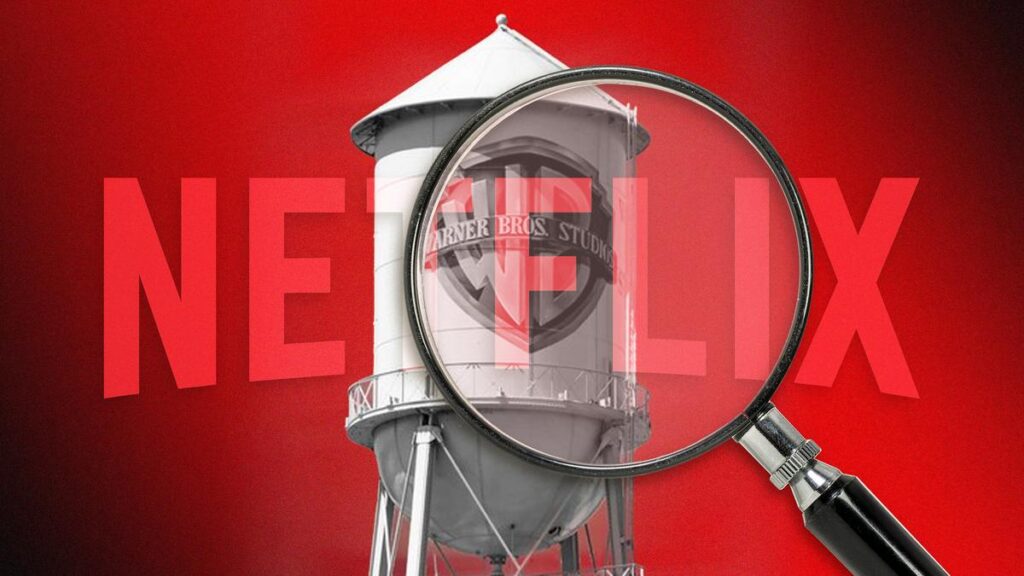
However, the dream factory of Hollywood is currently facing a seismic shift. Warner Bros has decided to sell the legendary studio to Netflix, a Silicon Valley giant, in a deal valued at $82.7 billion. This transaction, pending regulatory approval in both the US and potentially the EU, has sent shockwaves through the industry. The cinema owners lobby, writers’ guild, directors’ guild, and numerous top producers are expressing concerns, fearing this move could spell disaster for the traditional movie-going experience.
The Impact on Theatrical Releases
The theatrical box office has struggled to recover to pre-pandemic levels, as lockdowns accelerated the shift to streaming. Netflix co-CEO Ted Sarandos, whose background lies in VHS and DVD distribution, has openly criticized the cinema experience as “outmoded.” Netflix’s reluctance to adhere to traditional theatrical release windows has been a point of contention, with the company typically offering limited cinema runs for its award contenders.
The acquisition raises questions about the future of Warner Bros’ release model. While Netflix has committed to maintaining Warner Bros’ current strategy, it has hinted at future “evolution.” The potential impact on movie-going habits could be significant, with concerns that Netflix’s approach may further erode the traditional cinema experience.
What About HBO?
Another pressing question is the fate of HBO, Warner Bros’ crown jewel in the realm of prestige television. Sarandos has long admired HBO, a brand synonymous with high-quality programming. Fifteen years ago, HBO refused to license its library to Netflix, prompting Sarandos and his team to create original content, foreseeing a streaming war where exclusive content would be key.
Netflix’s early forays into original programming, such as House of Cards and Orange is the New Black, aimed for prestige. However, by 2020, the company shifted towards mass appeal. Despite this, Sarandos has assured investors that HBO’s model is “working and beloved by consumers,” promising to continue investing in the brand.
HBO’s Storied Legacy
HBO’s history dates back to when it was known as Home Box Office, primarily a cable add-on for movies and sports. Its first original programming came in 1983 with Not Necessarily the News. The 1990s saw HBO gain recognition with shows like The Larry Sanders Show and Oz. The tagline “It’s not TV. It’s HBO” became synonymous with its elevated content.
From Sex and the City to The Sopranos, HBO has consistently delivered groundbreaking series that have defined television for decades. Its reputation for quality has remained intact, even as it navigated industry shifts and mergers, such as the 2022 Warner Bros-Discovery merger under Zaslav’s leadership.
Consolidation and Consumer Impact
Netflix’s acquisition of Warner Bros raises concerns about industry consolidation. Historically, such mergers have led to fewer consumer choices and higher costs. Netflix’s global email to subscribers over the weekend highlighted its excitement about merging Warner Bros’ vast archive with its own library, but details remain scarce.
The question remains whether Netflix will maintain HBO Max as a separate service or integrate it into its platform. Disney’s model of offering sub-brands like ESPN and Marvel as tiles provides a potential template, but Netflix has traditionally consolidated content without sub-brands.
HBO’s prestigious brand, with its track record of Emmy wins, stands in contrast to Netflix’s broader, less distinguished offerings. The best-case scenario would see Netflix preserving HBO’s ethos and development team, while enhancing its technology and audience reach.
The worst-case scenario, the stuff nightmares are made of, is Netflix will steamroll over the legacy of HBO as it has the rest of the entertainment industry with its ruthless, Silicon Valley-imported culture, at the altar of the one thing it cares about, the Netflix brand.
As the industry watches this merger unfold, the future of Warner Bros and HBO hangs in the balance. Will Netflix honor the legacy of these storied brands, or will it prioritize its own brand above all else? The entertainment world waits with bated breath.