


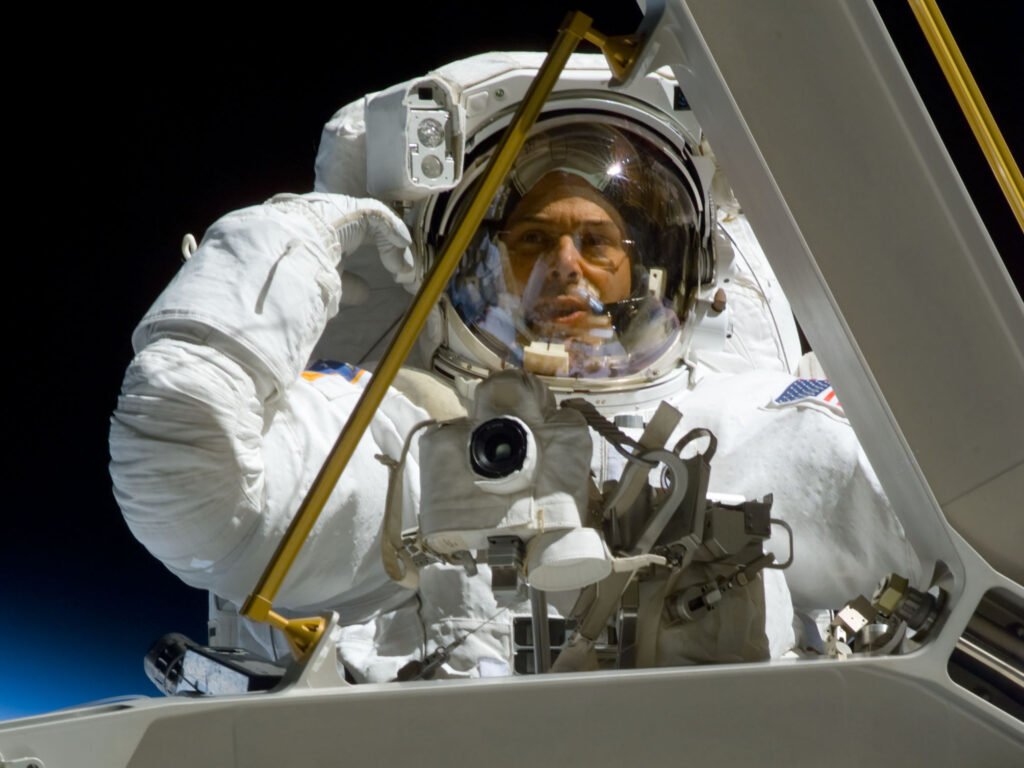
NASA astronaut and retired United States Navy Captain Lee Morin has concluded a remarkable 30-year career with the agency. Known for his pivotal role as a mission specialist on STS-110, Morin’s contributions extended beyond the confines of space missions to influence the Rapid Prototyping Laboratory, technology development for the International Space Station, NASA’s Commercial Crew Program, and the Artemis campaign.
“Lee’s contributions throughout his career are immense and immeasurable,” stated Vanessa Wyche, director of NASA’s Johnson Space Center in Houston. “His expertise and enthusiasm followed him whether he was working with the agency’s most seasoned engineers, or an intern just starting out. We’ll feel the impact of his innovations for decades to come, and I cannot thank him enough for his service.”
A Pioneering Spaceflight Career
The New Hampshire native and physician embarked on his space journey aboard space shuttle Atlantis during the STS-110 mission in 2002. This mission was crucial as it delivered the cornerstone truss to the International Space Station. It also marked significant firsts: the use of the station’s robotic arm to assist spacewalkers and the first spacewalks conducted from the station’s Quest airlock.
During the mission, Morin performed two spacewalks, spending a total of 14 hours and 9 minutes working outside the station. His cumulative space experience includes 10 days and 19 hours in orbit. Chief Astronaut Scott Tingle remarked, “Lee’s footprint on human spaceflight can be felt by every astronaut in our corps. He set the new standard for the way spacecraft cockpits are designed and built, resulting in more efficient astronaut training and safer spaceflight overall. I have long admired his drive to always try something new. I’m proud to call him my lifelong friend and wish him nothing but the best.”
Innovations in Spacecraft Design
Following his time in space, Morin channeled his experience into improving astronaut interactions with spacecraft systems. He was instrumental in designing software displays used during missions aboard the space station and the Orion spacecraft. As the lead astronaut on a team that developed a standardized graphical interface for space station crews, Morin ensured that early missions benefitted from clear, consistent displays and procedures.
His work effectively bridged the gap between engineering and usability, earning recognition from the U.S. Patent and Trademark Office for innovations that continue to make spaceflight safer and more efficient. “Working with the brilliant teams here at NASA has been the honor of a lifetime,” Morin reflected. “Throughout my career I’ve had the honor of seeing some of the greatest achievements in human spaceflight, and I couldn’t have done it without the support of the countless mentors, collaborators, and friends I’ve met along the way.”
Educational and Professional Background
Morin’s journey to NASA began with an impressive academic background. Selected as an astronaut in 1996, he holds multiple degrees, including master’s degrees in biochemistry, public health, and physics, alongside a medical degree from New York University. Before joining NASA, he served as a Naval flight surgeon, diving medical officer, and held key roles in aerospace medicine.
His diverse expertise and commitment to advancing human spaceflight have left an indelible mark on the field. As Morin steps away from his formal role at NASA, he remains an avid follower of the agency’s future endeavors. “While I’m departing the agency, I will remain an avid follower to see where human spaceflight goes next, and I am humbled and proud to say that I got to be a part of where it all began,” Morin concluded.
Morin’s retirement marks the end of an era for NASA, yet his legacy will undoubtedly inspire future generations of astronauts and engineers as they continue to push the boundaries of human exploration.