


England celebrated a landmark victory in Australia, securing their first Test win on Australian soil in nearly 15 years. The triumph came as they chased down 175 runs for a four-wicket victory, all within the span of just two days. However, this rapid conclusion has sparked significant controversy and financial implications for Cricket Australia (CA) and the Melbourne Cricket Club (MCC).
About 15 minutes before lunch on the second day of the Boxing Day Test, Usman Khawaja was dismissed for a duck, leaving Australia at a precarious 5-83. Cricket Australia chief executive Todd Greenberg, observing the unfolding scenario, realized the looming financial disaster of a two-day finish for what is typically the most lucrative Test match of the year.
Financial and Logistical Challenges
Greenberg, stationed in CA’s hospitality suite, quickly reached out to MCC chief executive Stuart Fox. The conversation, though not heated, was direct. Fox acknowledged CA’s disappointment and the financial repercussions, which could result in a loss of at least $10 million in revenue.
“They’re disappointed it’s gone two days,” Fox stated. “That’s the feedback. We’re not the first Test to go two days this year. Those two Tests, there’s an implication.”
Both executives began working on contingency plans, including notifying hospitality staff of shift changes and contacting charities about repurposing food prepared for days three and four. Meanwhile, discussions arose about potentially playing a T20 game on one of the remaining scheduled days, but logistical challenges made this unfeasible.
Pitch Preparation Under Scrutiny
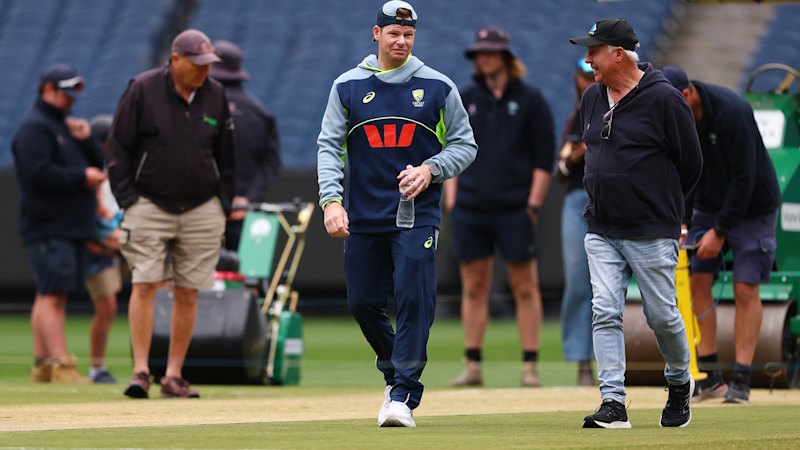
The condition of the pitch at the Melbourne Cricket Ground (MCG) has come under intense scrutiny. Les Burdett, Australia’s renowned pitch preparation expert, voiced his concerns about the grass coverage on the pitch. Watching from Adelaide, Burdett noted the excessive grass and its potential impact on the game.
“When you look at the curator’s role, we are able to do whatever we like until half an hour before the start of the game, and once the coin is tossed, the running of the game is in the hands of the umpires,” Burdett explained.
As the Test unfolded at a breakneck pace, with 20 wickets falling on the first day alone, the curator, Matt Page, found himself in a state of shock. Burdett sympathized, acknowledging that while Page had the best intentions, the pitch conditions led to an unforeseen outcome.
Expert Opinions and Historical Context
Burdett highlighted a trend towards grassier pitches, which has introduced more unpredictability into the game. He noted that while players have become more proactive, pitch preparation must evolve to match the modern style of play.
“Players now are far more urgent about what they do,” Burdett remarked. “Cricketers are entertainers and it is right that they do try to move the game.”
Greenberg echoed this sentiment, questioning whether pitch preparation is keeping pace with the evolving game. He emphasized the need for a balance between commercial interests and performance.
“This is not an exact science,” Greenberg stated. “I feel sometimes talking to the people who prepare wickets that it’s all about the secret herbs and spices that go into it.”
Implications and Future Considerations
The fallout from the two-day Test has prompted CA to reconsider its approach to pitch preparation. Greenberg plans to initiate conversations at the end of the series to ensure that future pitches align with the modern game’s demands.
Meanwhile, Page received a supportive message from Burdett, who has long advised curators to balance the competing demands of commerce, team performance, and the integrity of the game. Burdett’s message underscored the loneliness and pressure curators face when things go awry.
“Nobody is hurting more at the moment than Matty Page,” Burdett said. “I sent him a quiet message this morning to say, ‘I hope you’re ok mate, if you want to chat, give me a call.’”
As the cricket community reflects on the events at the MCG, the focus will now be on ensuring that such rapid finishes are avoided in the future, preserving the integrity and commercial viability of Test cricket.