



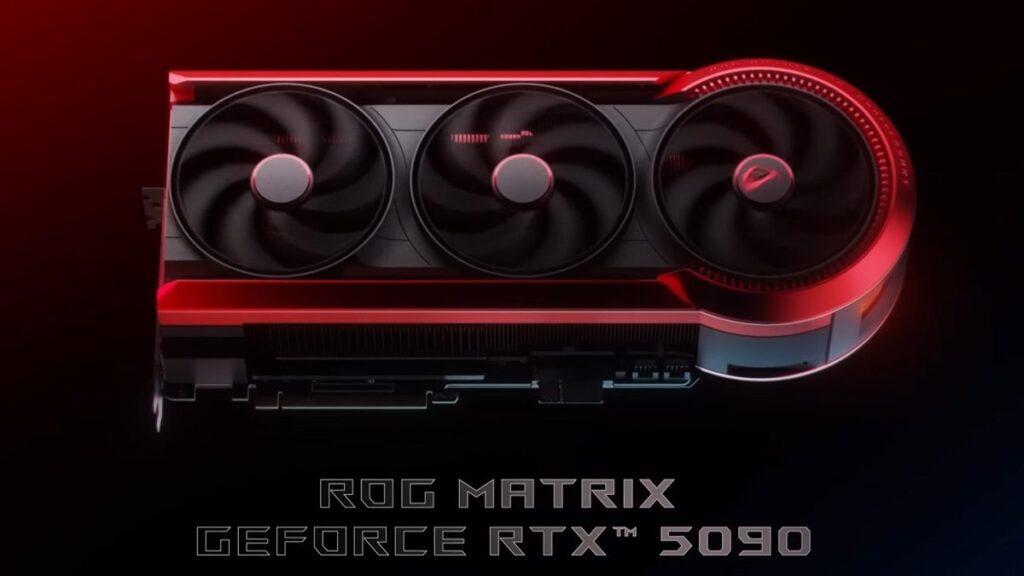
A “quality issue” with Asus’s 30th Anniversary Edition RTX 5090 has led the tech giant to pause deliveries of its highly anticipated $4,000 graphics card. The halt affects shipments from several retailers, including Sweden-based Inet, which informed customers via email that Asus is working on a replacement version. However, a timeline for the new release remains uncertain.
Asus launched the ROG Matrix Platinum in mid-November, pricing it at €4,000. Promoted as the fastest commercial GPU available for gamers, the card boasts a substantial overclock, advanced cooling systems, anti-sag gyroscopic technology, and a unique BTF 3.0 power adapter. Despite its impressive specifications, the GPU is currently listed as out of stock on Asus and ROG websites, with only 1,000 units reportedly being produced.
Retailer and Customer Reactions
Inet, one of the affected retailers, expressed its understanding of the situation in an email to customers, stating, “We fully understand that this is an unfortunate situation, but unfortunately, it is completely beyond our control.” The situation is indeed costly for consumers, with at least one individual on the ROG forums reporting that their preorder was “terminated.”
Asus has yet to disclose specific details about the nature of the “quality issue.” This isn’t the first time Asus has faced product challenges. In 2023, an Asus motherboard celebrating the anime Neon Genesis Evangelion was released with a misspelling, reading “Evangenlion” next to the I/O cover screen. Asus later rectified this mistake by sending out corrected versions.
Industry and Expert Insights
According to industry analysts, the pause in shipments could impact Asus’s reputation among high-end gaming enthusiasts. “For a product priced at $4,000, customers expect flawless execution,” said tech analyst Jordan Lee. “Any delay or defect can significantly affect brand loyalty, particularly in such a competitive market.”
The graphics card market is fiercely competitive, with brands like Nvidia and AMD continually pushing the envelope in terms of performance and innovation. Asus’s decision to pause deliveries underscores the high stakes involved in maintaining quality standards in this sector.
Historical Context and Comparisons
Historically, the tech industry has seen similar issues with flagship products. In 2016, Samsung faced a major setback with its Galaxy Note 7, which was recalled due to battery explosions. The incident cost Samsung billions and damaged its reputation, though the company eventually recovered through rigorous quality improvements and customer engagement strategies.
Asus’s current situation, while not as severe, highlights the importance of quality control, especially for premium products. The company’s response in the coming weeks will be critical in determining its ability to maintain consumer trust and market position.
Looking Ahead
The pause in shipments represents a significant challenge for Asus, but it also offers an opportunity to reinforce its commitment to quality and customer satisfaction. As the company works on a replacement version of the GPU, the tech community will be watching closely for updates.
Consumers who have preordered the card are advised to stay in contact with their retailers for the latest information. Meanwhile, the industry waits to see how Asus will navigate this setback and what lessons it will apply to future product launches.
As developments unfold, Asus’s handling of this “quality issue” will likely serve as a case study in crisis management within the tech sector.