


Australian Prime Minister Anthony Albanese is under mounting pressure following his response to the December 14 terrorist attack at Bondi Beach, which claimed the lives of 15 individuals during a Jewish festival. The incident has abruptly halted his previously soaring political dominance, as criticism mounts over his handling of rising anti-Semitism in the country.
Since the attack, Mr. Albanese has been scrutinized for not acting on intelligence warnings and recommendations from Jewish leaders about potential threats to the community. Despite receiving a report from his appointed anti-Semitism envoy, Ms. Jillian Segal, in July, the Prime Minister delayed implementing its recommendations until after the tragedy occurred.
Calls for a Royal Commission
In the wake of the attack, Mr. Albanese has rejected widespread calls to establish a royal commission to investigate the incident, which is the worst terrorist attack on Australian soil. Critics argue that such a commission would have the authority to compel witnesses and thoroughly examine the causes, including the rise in anti-Semitism.
Associate Professor Zareh Ghazarian from Monash University commented on the Prime Minister’s cautious approach, noting, “It is almost as though the government is playing catch-up. We can see from the broader community that there is a demand for the government to be more proactive and engaged.”
“We all need to know not just how this happened – but what we can do to root out extremism, whatever form it comes in.” – Labor MP Ed Husic
Support for a royal commission is growing, with backing from prominent figures such as former High Court chief justice Robert French and former Defence Force chief Peter Cosgrove. A survey published in The Sydney Morning Herald on December 26 found that 48% of respondents support a royal commission, while 17% oppose it.
Public and Political Reactions
The public’s perception of Mr. Albanese’s leadership has taken a hit. A Resolve Political Monitor survey indicated that 46% of people viewed the government’s response to the attack as weak. Additionally, Mr. Albanese’s approval ratings have dropped, with only 40% of respondents believing he is doing a good job, down from 48% before the attack.
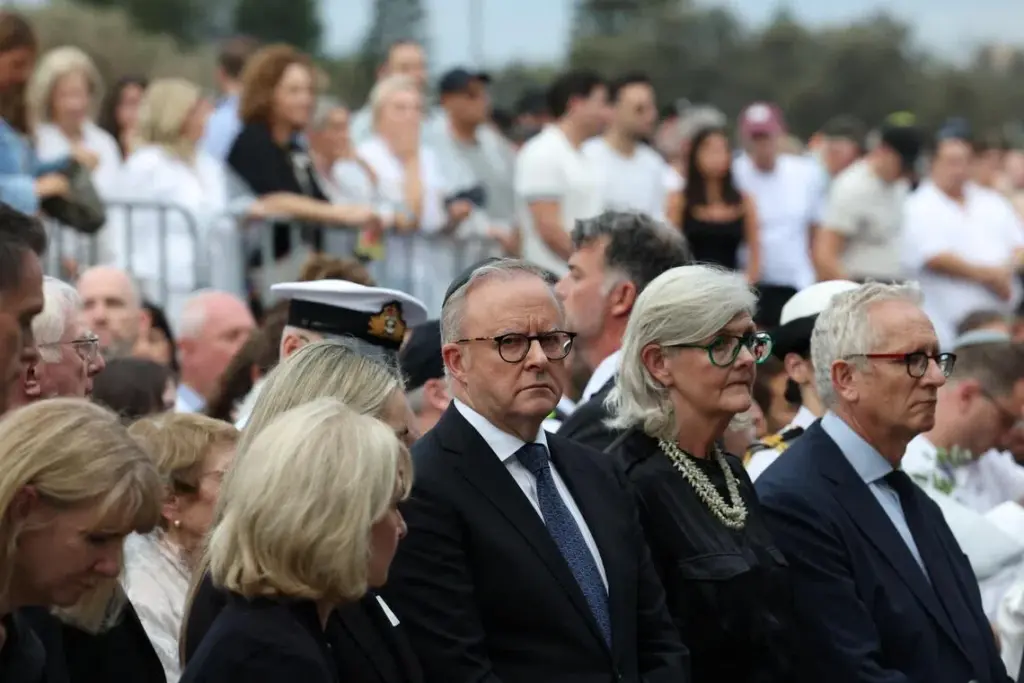
Unlike former New Zealand Prime Minister Jacinda Ardern, who was praised for her empathetic response to the Christchurch mosque shootings in 2019, Mr. Albanese has struggled to fulfill the role of “mourner-in-chief.” His attendance at a memorial service was met with boos, and he has been absent from victims’ funerals due to a lack of invitations from the families.
Government’s Next Steps
Despite the criticism, Mr. Albanese has initiated measures to curb hate speech and vilification, and has begun implementing the anti-Semitism envoy’s recommendations. However, opposition leader Sussan Ley has labeled these efforts as “too little, too late,” emphasizing the need to confront hard truths to honor the deceased.
As the New Year approaches, Mr. Albanese faces the challenge of resetting his agenda and demonstrating a firm plan to prevent future attacks. Political analyst Prof. Ghazarian suggests that while there is time to repair the political damage before the next election in 2028, the government must shift from a reactive to a proactive stance.
The Bondi attack will undoubtedly dominate Mr. Albanese’s agenda well into the future. However, the holiday period may provide an opportunity for reflection and strategic planning to ensure a more robust response to national security threats.