



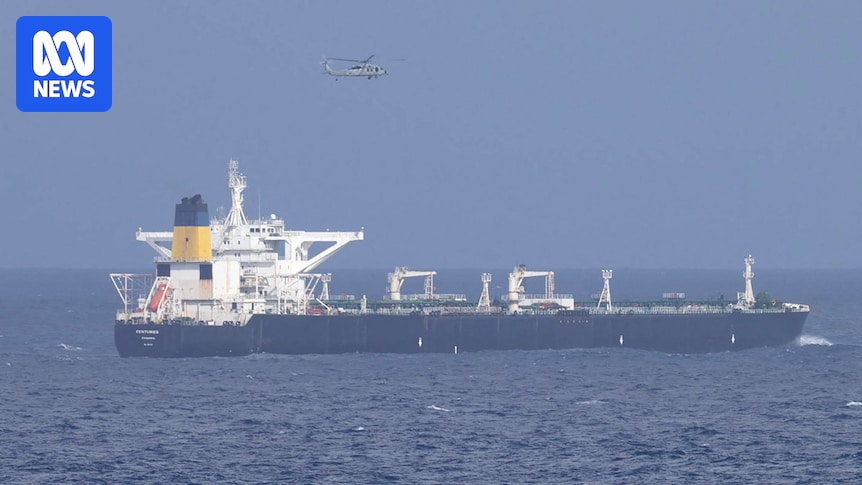
The United States Coast Guard is actively pursuing an oil tanker in international waters near Venezuela, marking the third such interception attempt in under two weeks. According to US officials, the tanker is part of Venezuela’s “dark fleet” involved in illegal sanctions evasion.
“The United States Guard is in active pursuit of a sanctioned dark fleet vessel that is part of Venezuela’s illegal sanctions evasion,” a US official told Reuters. “It is flying a false flag and under a judicial seizure order.”
While the tanker has yet to be boarded, officials indicated that interceptions could take various forms, such as sailing or flying close to vessels of interest. The operation’s exact location and the vessel’s name remain undisclosed.
Background on US-Venezuela Tensions
The White House has not commented on the latest pursuit, which aligns with President Donald Trump’s recent announcement of a “blockade” on oil tankers under sanctions entering and leaving Venezuela. This move is part of a broader pressure campaign against Venezuelan President Nicolas Maduro, including an increased military presence in the region and over two dozen military strikes on vessels in the Pacific Ocean and Caribbean Sea.
These actions have resulted in at least 100 fatalities, heightening tensions between the two nations. The first two oil tankers seized were reportedly operating on the black market, supplying oil to countries under sanctions, according to Kevin Hassett, director of the White House’s National Economic Council.
“And so I don’t think that people need to be worried here in the US that the prices are going to go up because of these seizures of these ships,” Mr. Hassett told CBS News. “There’s just a couple of them, and they were black market ships.”
Market Reactions and Economic Implications
Despite assurances from US officials, oil traders are cautious about potential market impacts. One trader told Reuters that the seizures might lead to a slight increase in oil prices when Asian trading resumes, viewing the actions as an escalation that puts more Venezuelan barrels at risk.
“We might see prices increasing modestly at the opening, considering market participants could see this as an escalation with more Venezuelan barrels at risk,” UBS analyst Giovanni Staunovo said.
Furthermore, the seizures could heighten geopolitical risks and increase friction within the shadow fleet of vessels that transport oil from sanctioned countries like Venezuela, Russia, and Iran. Matias Togni, an oil shipping analyst at NextBarrel, suggested that these actions might encourage Ukraine and European nations to take similar measures against Russian vessels.
Global Oil Market Dynamics
Venezuelan and Iranian oil output is already showing signs of slowing, and similar trends are expected for Russia, according to Togni. As logistics become more challenging, oil from sanctioned countries is likely to be offered at steeper discounts, potentially capping gains in benchmark oil prices.
The latest US actions against Venezuelan oil tankers underscore the complexities of global oil market dynamics and the intricate web of geopolitical tensions that influence them. As the situation develops, the international community will be closely monitoring the economic and political ramifications.
With the US continuing its assertive stance, the coming weeks could see further developments in the ongoing saga of sanctions and oil trade disruptions, impacting global markets and diplomatic relations alike.