




In a year marked by significant scientific advancements, 2025 has delivered breakthroughs that promise to reshape our understanding of the universe and improve human life. From a Nobel Prize-winning innovation to a miraculous medical intervention, these discoveries highlight the relentless pursuit of knowledge across various disciplines.
Nobel Prize in Chemistry: A Solution Before Its Time
This year, the Nobel Prize in Chemistry was awarded to Professor Richard Robson of the University of Melbourne. His invention, a molecular super-sponge, was designed in 1989 but has only recently found its application in addressing climate change by absorbing carbon dioxide from the atmosphere. This achievement underscores the notion that scientific solutions can precede the problems they eventually solve.
Water World: The Search for Extraterrestrial Life
Professor Alan Duffy from Swinburne University has highlighted a groundbreaking discovery made possible by the James Webb Space Telescope. The planet K2-18b, located in a distant solar system, has been identified as a potential Hycean or water world. This planet’s thick hydrogen atmosphere contains a chemical signature that might indicate the presence of life, sparking debates about the conditions necessary for extraterrestrial life.
“The signal of the chemical itself is relatively low, requiring some level of interpretation. But, even more importantly, just because we don’t know a way to produce this chemical through, say, geological or atmospheric processes, doesn’t mean it can’t be.” – Professor Alan Duffy
AI-Crafted Antibodies: The Future of Medicine
Professor Merlin Crossley from the University of NSW has shed light on the revolutionary use of AI in biotechnology. The AI model AlphaFold, developed by Google, has transformed the field by accurately predicting protein structures from amino acid sequences. This year, US-based biotech company Absci administered the first AI-designed antibody to patients with inflammatory bowel disease, marking a significant step towards personalized medicine.
“This is not garbage in, garbage out. This is diamonds in, and diamonds out. It is now possible to not only predict how proteins fold but also to begin designing them.” – Professor Merlin Crossley
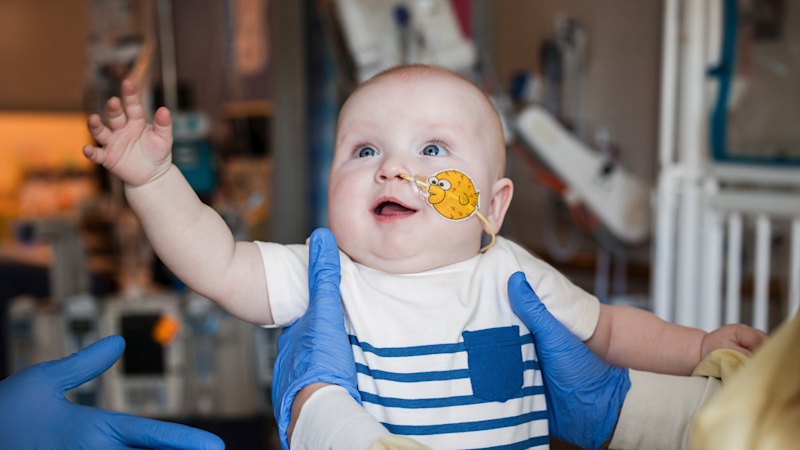
The Miracle of Genetic Surgery: Baby KJ
In a medical first, a baby known as KJ from Pennsylvania underwent genetic surgery to correct a life-threatening enzyme mutation. Using the CRISPR gene-editing tool, scientists successfully modified KJ’s genome, offering hope to millions affected by genetic disorders. This pioneering treatment represents a leap forward in genetic medicine, with potential implications for curing a range of hereditary diseases.
“Millions of people suffer from genetic diseases… Baby KJ is just the start.” – Professor Merlin Crossley
Quantum Encryption: A New Era of Cybersecurity
Professor Nalini Joshi from the University of Sydney has highlighted a pivotal moment in cybersecurity. Google Quantum researcher Craig Gidney’s recent paper suggests that quantum computers could soon break widely-used encryption protocols. This revelation has accelerated efforts to develop quantum-resistant encryption methods, as the potential for quantum computing to disrupt current cybersecurity measures becomes increasingly plausible.
“This paper shows that the looming threat of the breakdown of widely-used cybersecurity protocols by quantum computers is closer than we realised.” – Professor Nalini Joshi
The Dark Metabolome: Unlocking Biological Mysteries
Professor Oliver Jones from RMIT has focused on the burgeoning field of metabolomics, which examines the myriad small molecules within biological systems. Despite advances, a significant portion of these metabolites, known as the “dark metabolome,” remains uncharacterized. Understanding these molecules could lead to breakthroughs in predicting disease and understanding environmental impacts on biological systems.
“Solving this issue could lead to advances in understanding our biology, and that of other species, as well as greater knowledge of how biological systems are affected by things like climate change.” – Professor Oliver Jones
As 2025 draws to a close, these discoveries not only highlight the diverse nature of scientific inquiry but also set the stage for future innovations. The implications of these breakthroughs will continue to unfold, promising to enhance our understanding of the world and our place within it.