


In a 1937 newsreel of the women’s cricket Test at Northampton, the announcer couldn’t resist a jab: “What astonished everybody and annoyed all the men was the skill the ladies showed at this difficult game.” This was a time when women’s cricket was still fighting for recognition, and the series forced many to see the sport in a new light.
England had won the first tour held in Australia in 1933, but the 1937 Test — only the second women’s test series ever — marked a turning point for the sport. Until then, women’s cricket had struggled for acceptance in Australia, a nation where cricket was seen as a masculine domain. Female players often faced scrutiny and ridicule, with critics warning that sports might distract women from their “main task” of procreation.
The Rise of Hazel Pritchard
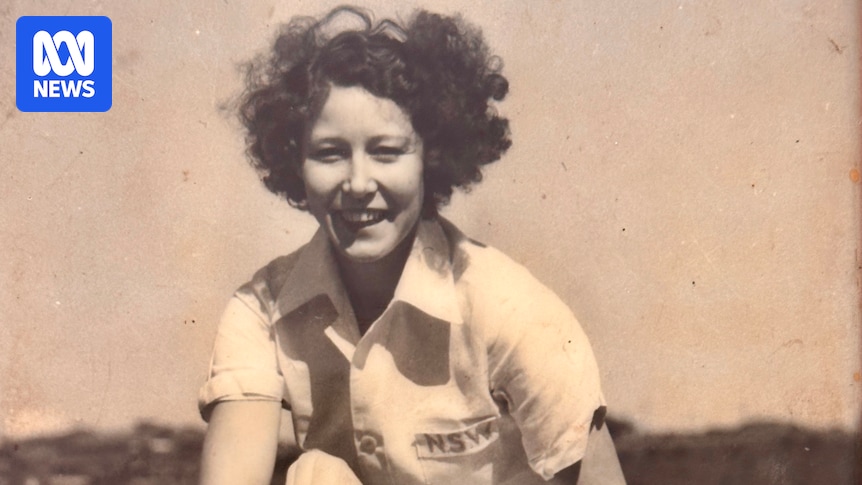
Amidst this challenging backdrop, one Australian player stood out: Hazel Pritchard. Dubbed the “girl Bradman” by British newspapers, the 24-year-old batter became the focus of the press throughout the tour. She was a natural cricketer, admired for her skill and charm. Yet, like many women who helped build the sport, her story faded into obscurity. When she died in 1967 at just 54, she did not receive an obituary.
Fragments of the early games are scattered across museums and private collections, mostly managed by volunteers. In 1990, sports historian Dr. Marion Stell and researcher Mary-Lou Johnson interviewed nine women associated with Australia’s early Tests, but Hazel Pritchard was not among them. There was no central catalogue for these scattered histories, a gap that a new coalition of researchers aims to fill.
Unearthing History: The Women’s Cricket History Network
A coalition of researchers, the Women’s Cricket History Network, has formed to preserve the legacy of women’s cricket. This group, which includes former internationals and grassroots players, is dedicated to recording and documenting the history of the sport. Karen Price, a former international player and the NSW chief research officer for the network, explains their mission: “Our network’s mission is to record and document the history of women’s cricket, gather memorabilia so that it doesn’t get lost to the garbage bin and to tell the stories of these pioneers so they are not lost forever.”
Some of the most precious material has been sitting quietly in a family home in Orange. In a corner of his grandparents’ former home, Ben Keegan discovered an old travelling trunk belonging to his grandparents, rugby international Alan Ridley and his wife, Edna Pritchard, Hazel’s elder sister. The trunk contained scrapbooks, medals, letters, and photographs from the 1920s and 1930s.
Inside the Trunk: A Window to the Past
Among the treasures was a battered envelope containing 20 letters Hazel wrote to her family during the 1937 tour, her first overseas travel. These letters offer a vivid account of the five-week sea voyage to England and the full Test series.
“Touring was a costly undertaking. Players funded their own travel and equipment. The Australian women sailed tourist class on the S.S. Jervis Bay, stopping in Colombo, Aden, Port Said, and Malta before docking at Southampton.”
Hazel embraced every chance to explore, riding a performing elephant in Colombo and crossing the desert by camel in Egypt. Her letters also reveal the challenges of the tour, including strict shipboard rules and the novelty with which the Australians were treated in England.
Legacy and Impact
Despite the challenges, the 1937 team made a significant impact. They attended George VI’s coronation, took tea at 10 Downing Street, and received bats crafted at the Gunn & Moore factory. However, they were not permitted to play at Lord’s, a milestone that would not be achieved until 1976.
Hazel’s letters capture the rivalry with “the Poms” in full color. The English nicknamed her “Schnitzel,” and she noted dryly, “Am sure we took some of the conceit out of them, for although they are really very nice, they have got an annoying superior look about them.”
Australia and England drew the second Test, improving on Australia’s showing in the inaugural 1934 series. Hazel produced some tremendous batting on the tour, but she was hard on herself, expressing disappointment for not scoring a century in one of the tests.
A Life Beyond Cricket
Seven months after returning home, Hazel married Queensland businessman Les Scanlan and moved to Mount Isa, where her cricketing career came to an abrupt end. According to their son, Terry Scanlan, Hazel did not join any cricket team there and was “an unknown person.”
Hazel briefly returned to the game in 1938 but retired from NSW in 1939. Her letters, stored for decades in a family trunk, are a vital piece of the puzzle in rebuilding the early story of women’s cricket. They reveal a gifted, determined young woman who experienced the character-building skills of cricket.
“All these women ask is that they be taken seriously and not judged by male standards,” wrote journalist Pat Jarrett, reflecting on the women’s cricket journey.
As the Women’s Cricket History Network works to preserve these stories, Hazel Pritchard’s legacy and those of her peers continue to inspire future generations of female cricketers.