



For Upul Rathgama, who grew up in Sri Lanka’s bustling capital, the threat of drowning seemed remote, something that occurred far from the inland city. However, the reality struck closer to home than he ever anticipated. “You can drown in two inches of water, not many people know this,” Rathgama reflects, highlighting a critical but often overlooked danger.
Drowning ranks as Sri Lanka’s second-leading cause of accidental death, following road accidents. Surprisingly, nearly 80 percent of these fatalities occur not at the beaches but in domestic settings and other waterways such as uncovered wells, lakes, canals, and irrigation channels that crisscross the island. On average, officials estimate that around eight people die daily on Sri Lanka’s roads, while approximately three succumb to drowning.
A modest initiative, supported by Australian lifesavers, is making strides in reversing these grim statistics. Mevan Jayawardena, the general manager of Life Saving Victoria and a Sri Lankan by birth, began teaching Sri Lankans how to swim in the aftermath of the 2004 Boxing Day tsunami. This catastrophic event, triggered by a magnitude-9.1 earthquake off Indonesia’s west coast, sent waves racing towards Asia’s shores at jet-plane speeds, claiming over 30,000 lives in Sri Lanka alone.
The Birth of a Lifesaving Initiative
“When the tsunami hit, it wasn’t just the first wave that did the most damage — it was the second,” Jayawardena recalls. “I found trains and cars in trees. Morgues couldn’t handle the number of bodies. I remember thinking: I can’t leave. This is why drowning prevention matters.”
Jayawardena, who was on vacation in Sri Lanka at the time, stayed for several months to assist with rescue and clean-up efforts. Amid the devastation, he realized that teaching children how to swim could be as life-saving as any emergency response. “I thought, why don’t I at least try to move things forward — take this on from the front foot,” he said.
With support from Surf Life Saving Australia, Sri Lanka Life Saving has been revamped in recent years, incorporating more training for lifeguards and swimming instructors. Driven by Jayawardena’s commitment, the training has expanded across the country, reaching coastal communities hardest hit by the tsunami.
A Grassroots Effort
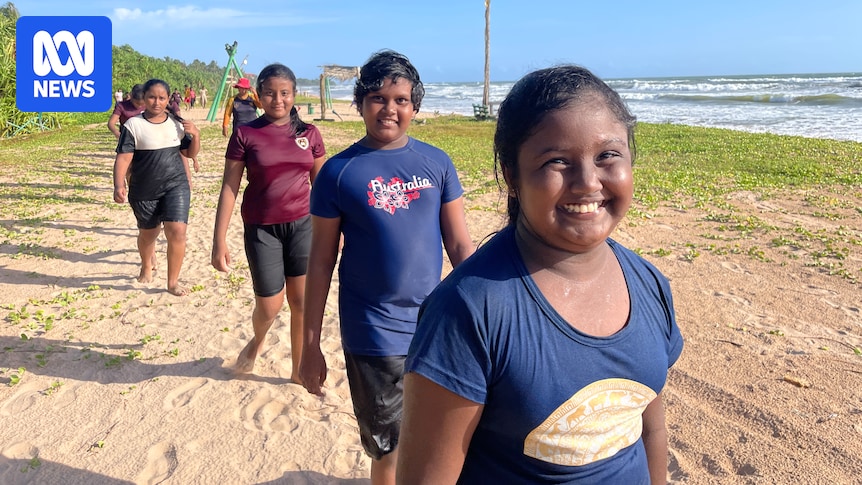
Under the new framework of Sri Lanka Life Saving, volunteers now offer free swimming lessons for children after school in various regions. “It’s nice to give back to the community,” said Kumar Dewapriya, one of the volunteer surf lifesavers. “Even in a small, simple way.”
In the city of Bentota, south of the capital, children learn to float on their backs under the shade of mangrove trees, using foam noodles for support. The lessons progress to kicking drills and freestyle strokes. For 12-year-old Manuthi, these classes have transformed her relationship with water. They make her feel “stronger,” she said, “and not so scared anymore.”
Another young student, Nethya, shares a similar sentiment. “I like being able to swim,” she said. “It gives me confidence in life — in whatever I do.”
Impact and Challenges
Under Sri Lanka’s Disaster Management Act, data is collected from police, hospitals, and local officials to map high-risk drowning zones and conduct public awareness campaigns. According to government and police figures, annual fatalities have decreased from more than 850 in 2014 to 610 last year.
Asanka Nanayakkara, CEO of Sri Lanka Life Saving, attributes part of the reduced toll to Australian training of lifesavers and, subsequently, swimming teachers. “You often see not just one person drown, but a group of friends or an entire family,” he said.
Despite the progress, communicating the risks associated with water remains a challenge. Contrary to common perceptions, not all victims are non-swimmers. Tourists and visitors unfamiliar with local beaches have been caught in rips and strong currents. “Typically, one person enters the water in a dangerous spot, like a rough stretch of sea or a waterfall, and begins to panic. Then everyone panics, no-one knows how to swim or how to rescue properly, so they jump in to help and get pushed under as well,” Nanayakkara explained.
Challenging Norms and Looking Forward
Primary school teacher Soraya Abeysuriya is among a growing number of women who have recently trained to be lifeguards. She believes lifesaving skills should be taught in schools as a requirement, not just as an extracurricular activity. Water safety, she asserts, is a basic survival skill, and ignorance can be fatal.
However, social expectations can limit access to these skills. When Abeysuriya teaches children, the response is immediate and positive. The students are engaged, and for many girls, it is their first experience with outdoor activities and water safety. Abeysuriya hopes that education will not only equip children with lifesaving skills but also encourage parents to grant their daughters more freedom to learn and participate.
Upul Susantha, a surf lifesaver for nearly a decade, takes pride in seeing his former students become instructors themselves. Some have found work guarding beaches at local hotels, while others have ventured overseas, including to resorts in the Maldives. “I love teaching others,” he said. “This is my purpose in life.”
The initiative sparked by a tragic tsunami continues to evolve, aiming to transform Sri Lanka’s relationship with water from one of fear to one of respect and safety. As the country moves forward, the lessons learned from past tragedies are paving the way for a safer future.