



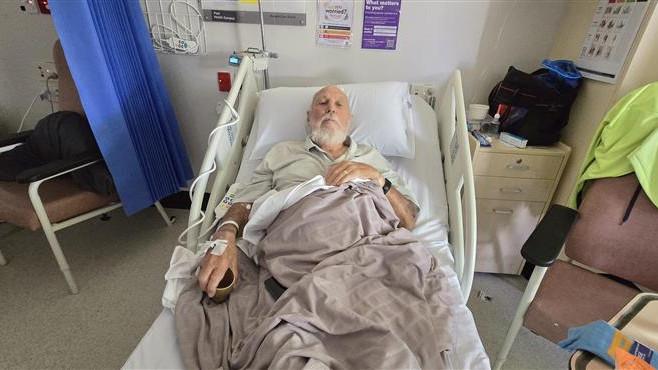
Kevin Walker spoke from his hospital bed about his experience with the deadly Shewanella infection.
A Mandurah grandfather’s routine crabbing trip turned into a life-threatening ordeal after he contracted a rare flesh-eating bacterium from the Peel-Harvey Estuary. Kevin Walker, 82, shared his harrowing experience to alert others about the potential risks lurking in local waters.
On December 9, while crabbing near the Novara boat ramp in Falcon, Mr. Walker’s boat malfunctioned, forcing him and a friend into the water to tow it ashore. Shortly after returning to land, he collapsed and his health rapidly deteriorated. By 3 a.m., he sought medical attention at Peel Health Campus, where doctors swabbed a cut on his leg.
Despite his worsening condition, Mr. Walker initially left the hospital to care for his pets. However, under his GP’s advice, he was admitted the following Wednesday. By then, his leg had swollen significantly, and the bacteria had begun affecting his brain. Tests revealed the presence of Shewanella algae, a rare infection in humans, which had entered his bloodstream through the leg wound.
Understanding Shewanella: A Rare but Serious Threat
Shewanella algae is a naturally occurring bacterium in estuarine environments, yet infections in humans are uncommon. This particular case was so rare that the attending doctor, with 31 years of medical experience, had never encountered it before. Mr. Walker’s age likely increased his vulnerability to the infection, as such bacteria tend to affect those with compromised immune systems or other underlying health conditions.
“The doctor who came in on Sunday and saw me said he’d been a doctor for 31 years and never heard of it, he’d never, ever seen anyone who caught it,” Mr. Walker recounted.
The infection left Mr. Walker’s leg severely swollen and oozing plasma, resembling a condition known as “elephantiasis.” Despite his prior good health, the impact of the infection was profound, leading him to plead for relief from his suffering.
The Broader Implications and Precautions
The Department of Water does not routinely monitor for Shewanella in estuarine waters, as their focus is primarily on phytoplankton levels rather than bacteria. However, the South Metropolitan Health Service advises caution when engaging in activities in such environments, especially with open cuts or wounds. They emphasize the importance of monitoring for infection signs, such as redness, swelling, and pain, and seeking prompt medical attention if symptoms arise.
“It is advised not to swim or crab with open cuts or wounds, and anyone who sustains an injury in these environments should monitor for signs of infection,” a health service spokesperson stated.
Additionally, Shewanella can be transmitted through the consumption of raw seafood, underscoring the need for awareness and timely medical care to mitigate risks.
Personal Reflections and Community Warning
Mr. Walker’s ordeal has left a lasting impression on him, altering his perspective on life and the environment. He described experiencing an out-of-body sensation, a moment where he felt he was given a choice between life and death.
“I see the world in a different light now, completely different, and if I can help somebody else and tell them this is out there, it will be worth it,” he reflected.
As the crabbing season draws thousands to Mandurah’s waterways, Mr. Walker hopes his story serves as a cautionary tale, urging others to be vigilant and informed about the potential dangers of estuarine waters.
“I wouldn’t wish this experience on my worst enemy,” he concluded, emphasizing the severity of his encounter and the importance of public awareness.
The incident underscores the need for increased monitoring and public education on the risks associated with estuarine environments, particularly as recreational activities in these areas continue to grow in popularity.