



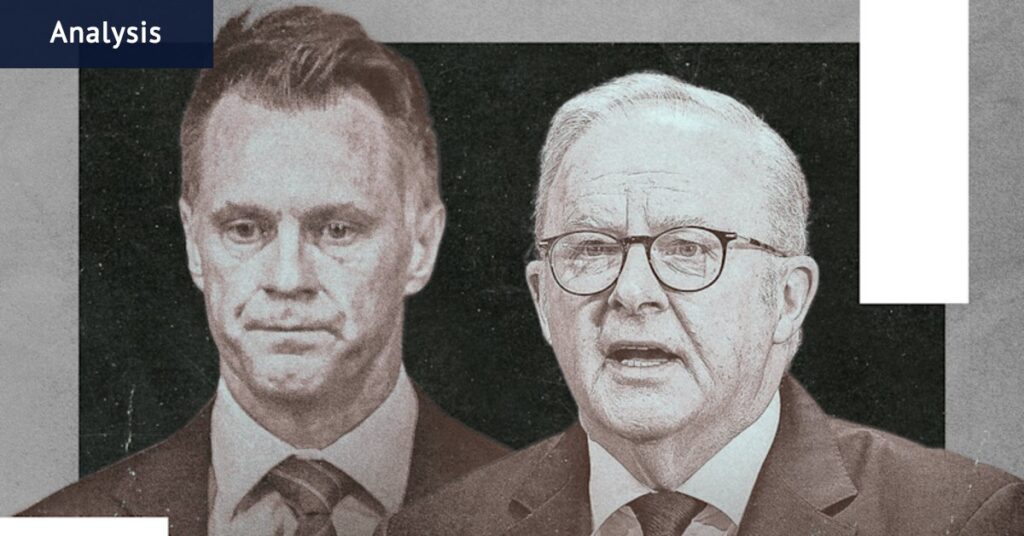
In a rare display of unity, New South Wales Premier Chris Minns and Vaucluse MP Kellie Sloane set aside their political differences on Monday to push through new terror laws following the tragic Bondi shooting. Premier Minns, known for his frequent criticism of Sloane, instead commended the opposition for their cooperative efforts. “The opposition have worked very hard at making as much of these changes as bipartisan as possible, so I am not going to criticise anyone,” he stated.
However, the spirit of bipartisanship celebrated in NSW politics has not extended to the federal level. Prime Minister Anthony Albanese, reflecting on the unity seen during the 1996 Port Arthur massacre gun reforms, called for national solidarity in response to the recent tragedy. “This is not a time for partisanship. This is a time for national unity. This is a time for the country to come together,” Albanese urged at a press conference.
Federal Division: A Breakdown in Bipartisanship
Despite Albanese’s call for unity, the federal political landscape has become increasingly fractured. The timeline of events following the Bondi shooting reveals a growing divide between the government and the opposition. Albanese claims he reached out to Deputy Liberal Leader Sussan Ley immediately after the attack, offering briefings and support. “People can make their own assessments about what has happened since,” Albanese remarked, hinting at a breakdown in communication.
Conversely, Ley’s office disputes this narrative, alleging a lack of genuine engagement from the Prime Minister. “Bipartisanship does not mean the opposition acting as a rubber stamp,” Ley asserted, criticizing Albanese for failing to collaborate or build consensus. The disagreement has escalated into a political dispute, with Ley accusing Foreign Minister Penny Wong of insensitivity towards the victims of the tragedy.
The Political Fallout: Public Perception and Authority
The discord has not gone unnoticed by the public. During a vigil at Bondi, Premier Minns received applause while Prime Minister Albanese faced jeers, highlighting a perceived lack of authority and connection with the community. This reaction underscores Albanese’s challenges in effectively addressing the tragedy and resonates with his unpopularity within the Jewish community.
Meanwhile, Ley has capitalized on this sentiment, criticizing federal failures and advocating for a federal royal commission into antisemitism and the circumstances surrounding the Bondi attack. Although not inherently partisan, the proposal has garnered support from some federal Labor MPs, further complicating the political landscape.
Calls for a Federal Royal Commission
In a bid to foster unity, Ley extended an olive branch, inviting Albanese to collaborate on establishing a royal commission. “This is a good faith offer to work together on a bipartisan basis,” she stated. However, Albanese rejected the proposal, citing the lengthy nature of royal commissions and the need for immediate action.
Albanese’s decision to decline the royal commission has prompted him to address the nation once more, acknowledging the anger and hurt within the community. “A lot of people in the community are hurting and angry, and some of that anger was directed towards me, and I understand that,” he expressed, demonstrating a rare moment of contrition.
Looking Ahead: The Path to Reconciliation
As the political debate continues to unfold, Albanese hopes to move past the controversy and focus on healing the nation. However, achieving this goal will require more than just words; it will demand genuine collaboration and understanding across political lines.
The coming weeks will be crucial in determining whether the federal government can overcome its divisions and work towards a unified response to the tragedy. As the nation grapples with the aftermath of the Bondi shooting, the need for unity and decisive action remains paramount.
For ongoing coverage and expert analysis of the political landscape, subscribers can sign up for our weekly Inside Politics newsletter.