



The next year promises to be a landmark period for Qantas as the airline prepares to receive its new fleet of Airbus A350-1000s. These aircraft will be deployed on the world’s longest flights, offering passengers an unprecedented travel experience. However, in a surprising move, Qantas has announced that its executives, including the CEO, will not be allowed to enjoy the first class seats on these planes.
Qantas has traditionally offered its executives and board members, both current and former, the privilege of positive space travel in first and business class, domestically and internationally. This perk extends not only to the individuals themselves but also to their families, allowing them to travel in luxury aboard the carrier’s Airbus A380 first class. However, this policy will not apply to the new A350s, which will operate the much-anticipated “Project Sunrise” nonstop flights from Sydney and Melbourne to New York and London.
New Policy Reflects Economic Realities
The decision to restrict access to the A350 first class cabin is seen as a pragmatic approach to the economic challenges posed by ultra-long-haul flights. These flights, lasting over 20 hours, require aircraft configured for premium travel, and Qantas aims to fill these seats at high fares to ensure profitability. Allowing executives to occupy these seats without paying could significantly impact the airline’s revenue from these routes.
“Selling first and business class seats at high fares will be a key aspect to making this work,” noted an industry analyst. “The opportunity cost of filling these seats with non-revenue passengers is too great.”
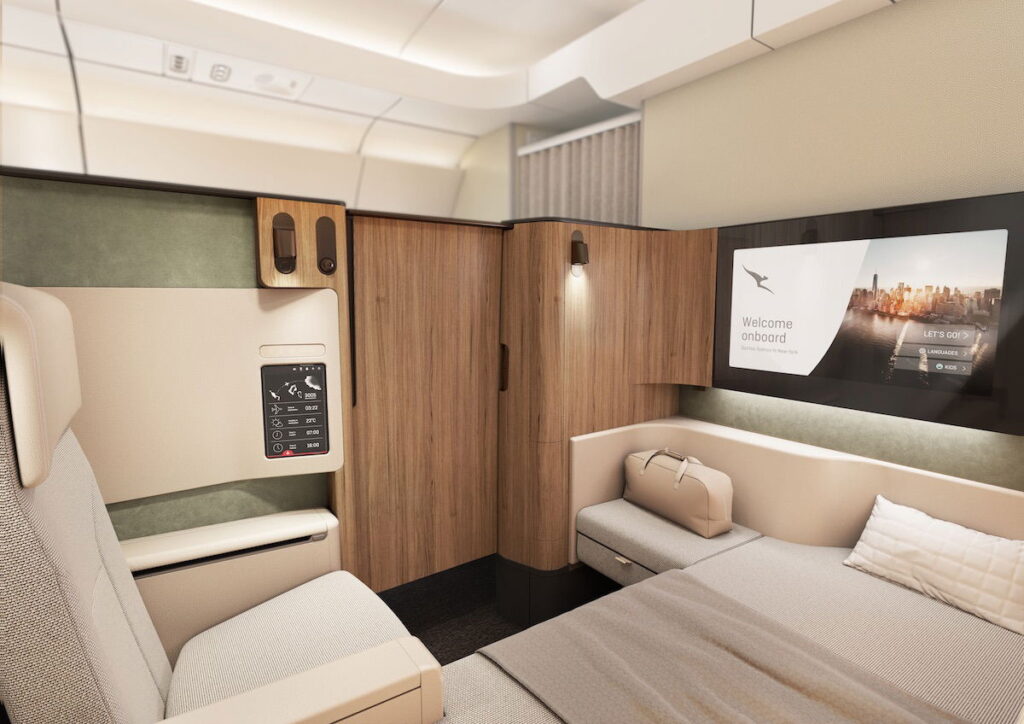
In contrast, the A380’s larger first class cabin, with 14 seats, rarely sells out at full fare, making it feasible for executives to use their travel privileges without affecting the airline’s bottom line. The A350, however, features a more exclusive cabin with just six seats, each designed with a separate seat and bed, making every seat sale crucial.
A Shift in Corporate Culture
This policy shift marks a departure from the typical “country club” atmosphere often associated with airline executive perks. Qantas has been known for its close-knit management style, but this move signals a prioritization of business needs over personal privileges. The decision may also be seen as a response to public scrutiny over executive benefits, especially in light of recent controversies surrounding former Qantas Group CEO Alan Joyce.
“There’s a certain satisfaction in knowing that former executives like Alan Joyce won’t be able to fly in the A350 first class as part of their perks, given the controversies during his tenure,” commented a former Qantas employee.
Implications for the Future
As Qantas gears up for the launch of its A350 fleet, the airline’s decision to restrict first class access reflects a broader industry trend of reassessing executive benefits. With the aviation sector facing financial pressures, airlines are increasingly focusing on maximizing revenue from premium cabins.
Looking ahead, this policy could set a precedent for other carriers considering similar measures. It also raises questions about how airlines balance employee perks with financial sustainability, especially as they navigate the challenges of post-pandemic recovery.
Ultimately, while some executives may be disappointed by the change, the move is likely to be seen as a necessary step in ensuring the success of Qantas’s ambitious new routes. As the airline continues to innovate and expand, maintaining a focus on profitability will be key to its long-term viability.