



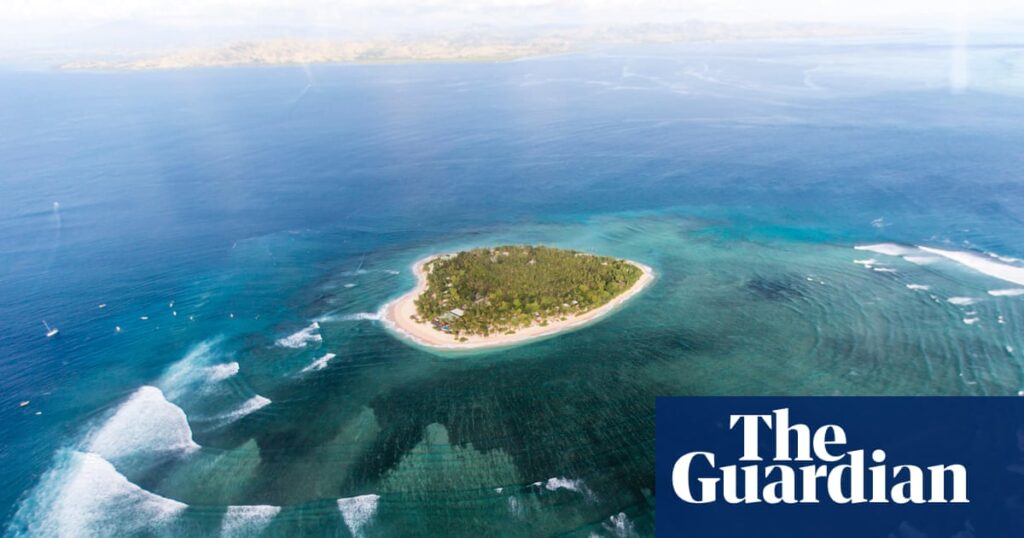
In Fiji, the connection to the sea is as intrinsic as life itself. For the iTaukei, the Indigenous Fijian people, this bond is symbolized by the age-old practice of embedding the vicovico, or umbilical cords, into the coral reefs. This tradition underscores their role as custodians of the ocean. However, for decades, a contentious battle over the rights to Fiji’s seabed has overshadowed this Pacific paradise, which attracts a million tourists annually, many drawn by its world-renowned surf breaks.
Until 2010, access to Cloudbreak, one of the planet’s most famous surf waves, was restricted to Fijian locals due to an exclusivity deal with a luxury resort dating back to the early 1980s. Ian Ravouvou Muller, an iTaukei surfer, recalls the humiliation of being chased from waters where his sons’ vicovico are buried. “We are a saltwater people,” he asserts.
Historical Context and Controversy
In 2010, the military government led by Frank Bainimarama enacted a surfing decree that prohibited payments for using Fiji’s reefs, lagoons, and beaches, effectively nullifying exclusivity agreements. This decree opened the waves to both tourists and locals, fostering a generation of young surfers, including Fiji’s first professional surfer. However, it also disregarded customary marine rights, excluding iTaukei from decision-making and economic benefits as foreign-owned resorts proliferated.
Now, the Fijian government aims to return governance of marine areas, known as qoliqoli, to the Indigenous people, allowing iTaukei to be compensated for tourism activities on their ancestral reefs and fishing grounds. “Tourism going forward will see a huge degree of participation for Indigenous people,” declared Fiji’s Deputy Prime Minister and Tourism Minister, Viliame Gavoka, while introducing a marine areas bill to parliament.
Economic Implications and Reactions
The proposed legislation has been hailed as a victory for iTaukei rights. Tourism is a cornerstone of Fiji’s economy, contributing approximately 40% to its GDP and generating around FJ$2.5 billion (US$1 billion) last year. Despite this, many iTaukei live in rural poverty, surviving on FJ$1.25 a day. “The very people who looked after these reefs for generations have nothing at all,” states Dr. Jekope Maiono, an expert in Indigenous economic development.
However, the bill has sparked concerns among tourism operators who seek clarity on its practical implementation. Jon Roseman, managing director of Tavarua Island Resort, expresses “ongoing uncertainty” about the bill. Others question how the proceeds will be reinvested in Indigenous communities and suggest that additional costs should be borne by the government. The Fiji Hotel and Tourism Association has called for more transparency regarding its impact on tourism leases and marine site accessibility.
Expert Opinions and Challenges
Currently, hotel leases are managed by the state, with customary owners receiving a one-time payment for lost fishing rights, explains environmental lawyer James Sloan. The new bill would require customary groups to register their rights with a government commission, which would oversee lease negotiations. “It will affect business models and funding arrangements,” Sloan notes.
“While the bill suggests additional costs be passed on to tourists, there is a danger it could make Fiji too expensive as a destination, and cause disputes between tribes over custodial rights,” Sloan warns. However, if these issues are resolved, it could be a “transformative and ambitious” piece of legislation.
Historical Resistance and Future Prospects
Since Fiji became a British colony in 1874, there have been numerous attempts to restore customary rights to the iTaukei. Efforts intensified after Fiji gained independence in 1970. Although qoliqoli areas were mapped and fishing grounds recognized, proprietary rights remained with the state. The last failed qoliqoli bill in 2006 was a catalyst for Bainimarama’s coup, with opposition fueled by fears that payments to local tribes would lead to hotel closures and a decline in tourism.
Indigenous rights experts argue that these fears are exaggerated. “The policy objective has always been iTaukei empowerment,” says Usaia Gaunavou, director of iTaukei studies at the University of Fiji. “With this landmark legislation, it looks like we’re going to have this for the first time in Fiji’s history.”
Tourism Fiji’s chief executive, Dr. Paresh Pant, reports widespread support for the bill following consultations with landowners, communities, and tourism operators. A framework could include a “sustainability tax” charged to tourists at the airport. “At its best, this law supports tourism that lifts everyone socio-economically while making the use of Fiji’s natural resources sustainable,” he asserts.
For those like Muller, who live and breathe the ocean, this change is long overdue. “People don’t like the idea of paying for nature in general, they think it’s free for all, but nature comes at a price. It needs to be protected,” he says. “We are correcting the wrongs of the past to create change for the future, respecting how our people once lived. For us, this is surf redemption.”