




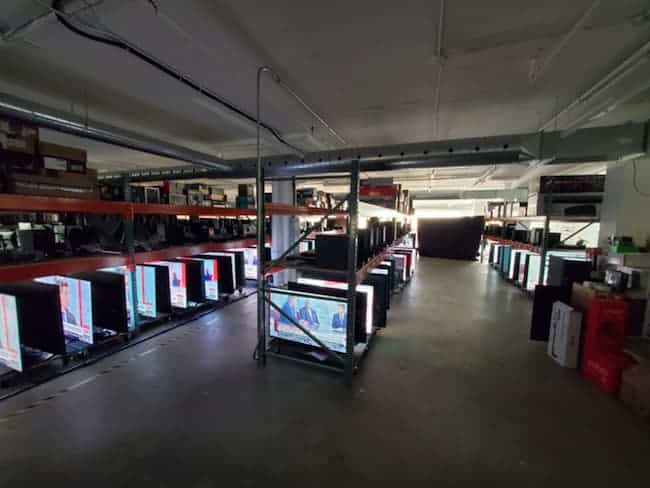
In a rigorous endurance test spanning nearly three years, OLED screens have emerged as more reliable than their LCD counterparts. This extensive study, which put 102 televisions through their paces, highlights significant differences in the durability of screen technologies, offering valuable insights for consumers considering new purchases in 2026.
The findings underscore a crucial technical aspect: the simpler the backlight system, the greater the likelihood of longevity. OLED panels, including WOLED and QD-OLED variants, have shown superior robustness due to the absence of additional backlighting components. In contrast, LED screens with side illumination frequently suffer from significant failures.
Exploring the Technical Edge of OLED
The reliability of OLED technology can be attributed to its inherent simplicity. Unlike traditional LED screens, which rely on complex backlighting systems, OLED panels illuminate each pixel individually. This design not only enhances picture quality but also reduces potential points of failure.
Meanwhile, Mini-LED models, which sit between OLED and conventional LED displays, offer a middle ground. Although they perform better than standard LED screens, approximately one-third still experienced issues. Their advanced backlight management technology, however, provides improved redundancy and thermal protection compared to direct- or side-lit models.
Challenges with LCD and IPS Panels
At the lower end of the reliability spectrum are products equipped with IPS panels. The study found that 15 out of 24 IPS panel displays were affected by anomalies. This may be less about the technology itself and more about industry trends. Manufacturers often pair IPS panels with basic backlighting solutions, prioritizing cost-effectiveness over durability.
The economic focus on aggressively priced IPS models means that savings are often made on electronics, potentially compromising their long-term reliability. This trend reflects a broader market strategy where affordability sometimes comes at the expense of quality.
Repairability and Consumer Protection
A critical finding of the study is the limited repairability of modern televisions. Of the 20 failures observed, only two were repairable, indicating that for most consumers, the warranty period remains their primary safeguard against defects. Beyond the warranty, repairs often prove economically unviable, pushing consumers towards replacement rather than repair.
“Of the 20 failures observed, only two could be repaired, which suggests that for most users, a failure during the warranty period is the only real protection.”
Brand Performance: LG and TCL Lead the Pack
Among the brands tested, LG and TCL stood out for their exceptional reliability. Despite differing marketing and pricing strategies, both brands recorded remarkably low failure rates. TCL demonstrated that affordable pricing does not necessarily equate to poor quality, with only one of its televisions failing towards the end of the test period.
LG’s performance was similarly impressive, particularly in its OLED range, which reported no incidents. The few issues that did arise were confined to its LCD models, underscoring the robustness of LG’s OLED technology.
As consumers look towards 2026 and beyond, these findings offer a clear guide to choosing reliable television technology. The study not only highlights the technical superiority of OLED screens but also points to the importance of brand choice in ensuring long-term satisfaction.
With repairability remaining a challenge, the emphasis on warranty protection and initial quality becomes paramount. As the television industry continues to evolve, these insights will prove invaluable for consumers and manufacturers alike.