




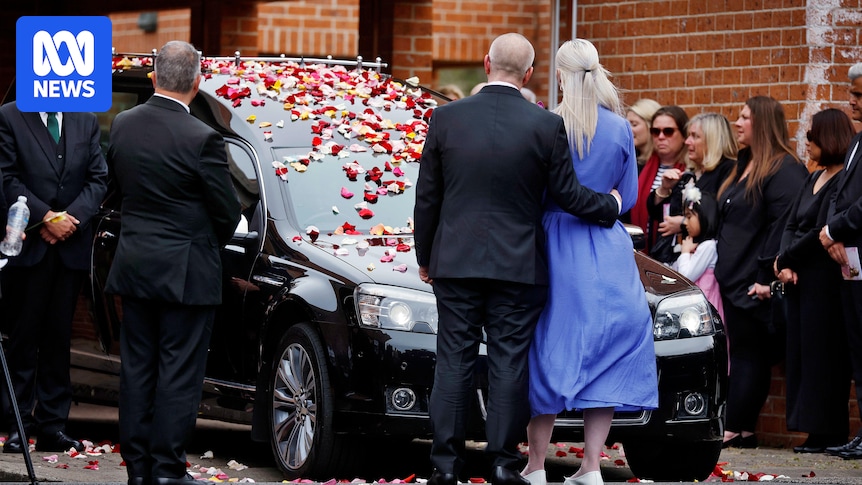
In a poignant moment that crystallized the Australian government’s resolve to impose a social media age ban, Prime Minister Anthony Albanese was deeply moved by a letter from Kelly O’Brien, a grieving mother. O’Brien’s 12-year-old daughter, Charlotte, tragically took her own life in September of the previous year after enduring relentless bullying at school, exacerbated by social media.
Albanese, still haunted by the letter’s details, remarked, “I remember it vividly. It was quite long and went into considerable detail, which must be just heart-wrenching to do that. It was so obvious social media had played a key role in the loss of this young person’s life.” This emotional appeal became a critical factor in his decision to support a legislative push to restrict social media access for Australians under the age of 16.
The Push for Reform
The push for reform began well before Albanese’s decision, with a diverse coalition of parents, media personalities, politicians, and experts working tirelessly to address the pervasive influence of social media on young Australians. South Australian Premier Peter Malinauskas, inspired by his wife Annabel West’s reading of Jonathan Haidt’s “Anxious Generation,” took an early stand. The book argues that smartphones and social media have led to an epidemic of anxiety and depression among children.
Malinauskas recalled a pivotal moment, “I’ll never forget it, we were lying in bed and she put the book down on her lap and she turned to me and said, ‘You just have to do something about this.'” This conversation spurred him to seek legal guidance from former High Court Chief Justice Robert French, who crafted a legislative framework that would eventually influence global policy.
French’s Legislative Framework
French’s 267-page proposal emphasized the need for social media platforms to take “reasonable steps” to restrict underage access, placing the onus of enforcement on the providers rather than parents or children. Describing his approach as a “Swiss Army knife” rather than a “machete,” French’s work laid the groundwork for a novel Commonwealth law.
“You don’t want to take a machete to it, so much as what I called a Swiss Army knife,” French explained.
Community and Political Mobilization
As the legislative framework took shape, community support surged. Radio announcer Michael “Wippa” Wipfli and advertising executive Rob Galluzzo launched the organization 36 Months, advocating for raising the social media age limit from 13 to 16. Their efforts were bolstered by campaigns like News Corp’s “Let Them Be Kids,” which organized parent delegations to meet with lawmakers in Canberra.
Emma Mason, another grieving mother, shared her story at an online child safety event, further galvanizing support. Her address resonated with European Commission President Ursula von der Leyen, who praised Australia’s “bold move” to introduce the ban.
Political Dynamics and Implementation
Albanese’s announcement of the age restriction came after extensive consultations and a growing consensus among mental health experts, who advocated for a minimum age of 16. Simon Wilksch, a researcher specializing in eating disorders, highlighted studies linking social media to increased mental health issues among teens.
Meanwhile, former opposition leader Peter Dutton had already pledged to implement similar restrictions, pressuring Albanese to act swiftly. Dutton’s experience with unresponsive social media companies during his tenure as Home Affairs Minister fueled his commitment to the cause.
“It’s upsetting, and it really is very emotional to hear the stories,” Dutton said. “And then I think you very quickly switch to frustration and anger because you know that a lot more could be done to prevent these cases and the companies just see these kids as a profit line.”
Challenges and Global Implications
The legislation’s passage, described by Malinauskas as “warp speed,” caught many social media companies off guard. Despite their attempts to influence the process, platforms like Meta struggled to adapt to the new requirements. The eSafety Commission, led by Julie Inman Grant, now oversees the law’s enforcement, with new powers to request data on underage accounts.
Internationally, Australia’s approach has sparked interest and debate, with countries considering similar measures. The law’s impact will be closely monitored through longitudinal studies assessing its effects on young Australians’ mental health and well-being.
As the ban takes effect, Albanese remains optimistic about its broader societal impact. “Technology can be liberating, but it can also diminish our lives in so many ways as well if we’re not conscious about it,” he remarked, signaling a commitment to ongoing dialogue about technology’s role in society.
“I think there will be broad community support to strengthen laws to make sure that the original intent is achieved,” Dutton concluded.