


A former New South Wales royal commissioner has called on the Albanese government to launch a federal royal commission into the recent Bondi terror attack, emphasizing that only an inquiry of such magnitude could thoroughly address the myriad factors, including rising antisemitism, that contributed to the tragedy.
Despite the federal government’s stance that antisemitism would be tackled through a review of intelligence and policing services along with new legislation, James Wood, who led the 1995 NSW royal commission into the state’s police service, argued that a national commission could effectively operate alongside these efforts. Wood dismissed concerns that an inquiry would hinder government action, countering claims by Opposition Leader Sussan Ley that Prime Minister Anthony Albanese had underestimated the severity of the national issue.
“I don’t see any reason why a royal commission can’t work alongside specific inquiries by particular agencies,” Wood stated. “The problem is not one which can simply be answered by new laws or new criminal offences, or indeed by extra resources. It goes beyond that.”
Background and Government Response
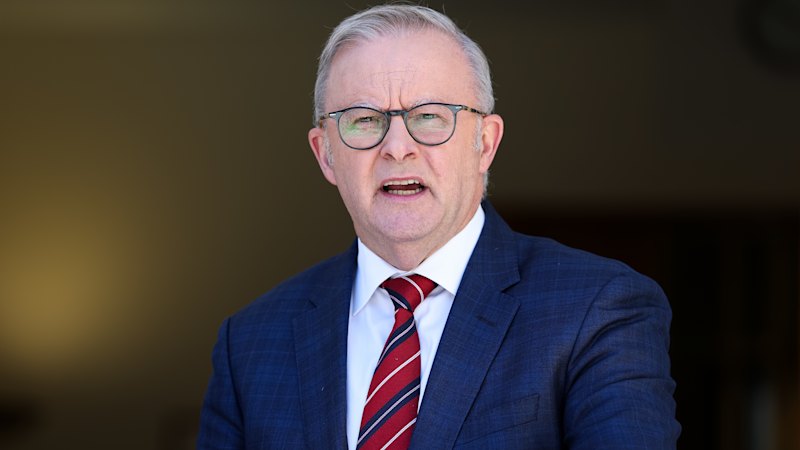
Addressing a press conference in Canberra on Tuesday, following the 10th meeting of the National Security Committee since the December 14 shooting, Prime Minister Albanese reiterated his opposition to a royal commission. He cited historical precedents, noting that no royal commission was called by the Howard government after the Port Arthur massacre or by the Abbott government following the Lindt Cafe siege.
“There hasn’t been a royal commission held recently that has not had an extension of time. We know who the perpetrators are here … We know what the motivation is, that they are motivated by the evil ideology of ISIS and a perversion of Islam,” Albanese told journalists at Parliament House.
In conjunction with hate speech reforms and amendments to gun laws, the federal government has announced a review of federal law enforcement and intelligence agencies, led by former intelligence chief Dennis Richardson. The government has pledged cooperation with the NSW commission.
“The Richardson review will enable action to take place. It will report, as I have said, before April. That review can feed into any royal commission that is established in NSW,” Albanese said.
Opposition and Support for a Federal Inquiry
Opposition Leader Sussan Ley criticized Albanese’s rationale for resisting a commission, arguing that comparisons with previous incidents fail to capture the unique nature of the Bondi attack.
“Drawing comparisons with Port Arthur or the Lindt Cafe fundamentally misunderstands what has happened. This was not an isolated act of violence. It was the culmination of years of unchecked antisemitism and extremist warnings ignored on his watch,” Ley said.
Wood, while advocating for a federal commission, conceded that the NSW royal commission could still be effective if supported by the Albanese government. He stressed the importance of federal cooperation in ensuring the inquiry’s success.
“If they refuse to do it point-blank, then a state one will be certainly better than nothing. But the state one should have an assurance from the federal government that relevant agencies, departments, immigration and so on, will cooperate,” Wood said.
Historical Context and Implications
In an open letter signed by 139 former judges and senior barristers, the call for a federal commission was echoed, highlighting its unique capacity within Australian inquiries to address antisemitism comprehensively.
“Without a federal remit, any inquiry risks producing findings that are necessarily partial and that do not fully reflect the scale, complexity, or interconnected nature of the problem,” the letter read.
Historically, there have been 15 federal royal commissions in the last 25 years, averaging 652 days in duration. The longest was the review of institutional responses to child sexual abuse, which took nearly five years to complete.
Wood acknowledged the lengthy nature of commissions but insisted they can release interim reports to address urgent issues.
“A royal commission for this area can actually release interim reports if it becomes apparent that there’s something which should be addressed, which hasn’t been addressed,” Wood said.
Political Divisions and Future Steps
Within the Jewish Labor MPs, opinions are divided. Former attorney-general Mark Dreyfus, with experience in 10 commissions, argued against the necessity of a federal inquiry at this time. Conversely, backbencher Mike Freelander advocated for a federal investigation earlier this week.
The debate over the need for a royal commission into the Bondi attack continues to unfold, with potential implications for how Australia addresses antisemitism and terrorism moving forward. As discussions progress, the government’s next steps will be closely monitored by both supporters and critics of the proposed inquiry.